There’s a version of Spain with no beach resorts, no sangria jugs and no 35°C afternoons. It rains, it’s covered in forest, there are 2,600-metre limestone peaks half an hour from the sea, and the local drink is poured from above your head.
Asturians call it España Verde — green Spain — and they’re slightly smug about it. Fairly.
The Picos de Europa are the reason to come
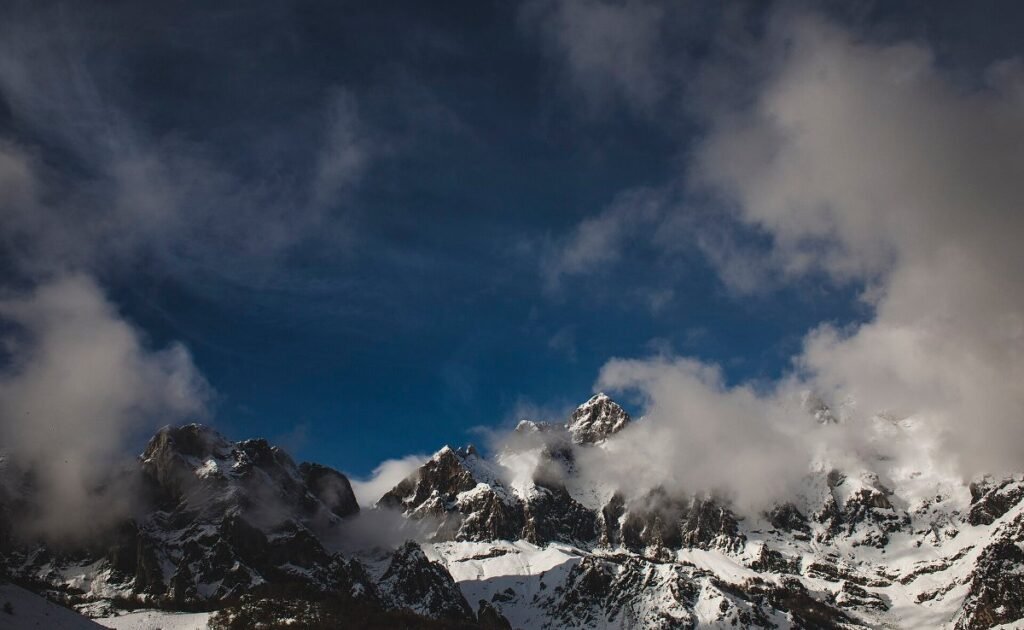
A limestone massif straddling Asturias, Cantabria and León, with peaks over 2,600 metres sitting only about 20km from the Bay of Biscay. Sailors coming back from the Americas supposedly saw them first, hence the name.
It was Spain’s first national park, declared in 1918.
Lagos de Covadonga — two glacial lakes, Enol and Ercina, at about 1,100 metres. The classic drive up, though in summer and at weekends the road closes to private cars and you take a shuttle from Cangas de Onís. Check before you drive up.
Ruta del Cares — the famous walk. A 12km path (24km return) cut into a gorge wall between Poncebos and Caín, with drops of several hundred metres and no railings in places. It’s flat-ish and not technical, but it is exposed and it is busy in August. Allow six hours return.
Fuente Dé cable car — on the Cantabrian side, lifting you 750 metres in four minutes to a plateau at 1,850 metres.
Cider is a whole ritual
Asturias produces around 80% of Spain’s cider, and it is not drunk the way you’d expect.
Sidra natural is flat, sour, unfiltered and low in alcohol. To aerate it, the pourer holds the bottle overhead and the glass down by their hip, and pours a thin stream from about a metre up. You get maybe two fingers of cider — a culín — and you drink it immediately before the fizz dies.
You share one glass around the table. You throw the last sip on the floor, which is why sidrerías have sawdust down. This is normal and nobody will mind.
A bottle costs €3 to €4. Ask them to pour; there’s a knack, and yours will go on the floor.
Oviedo and Gijón
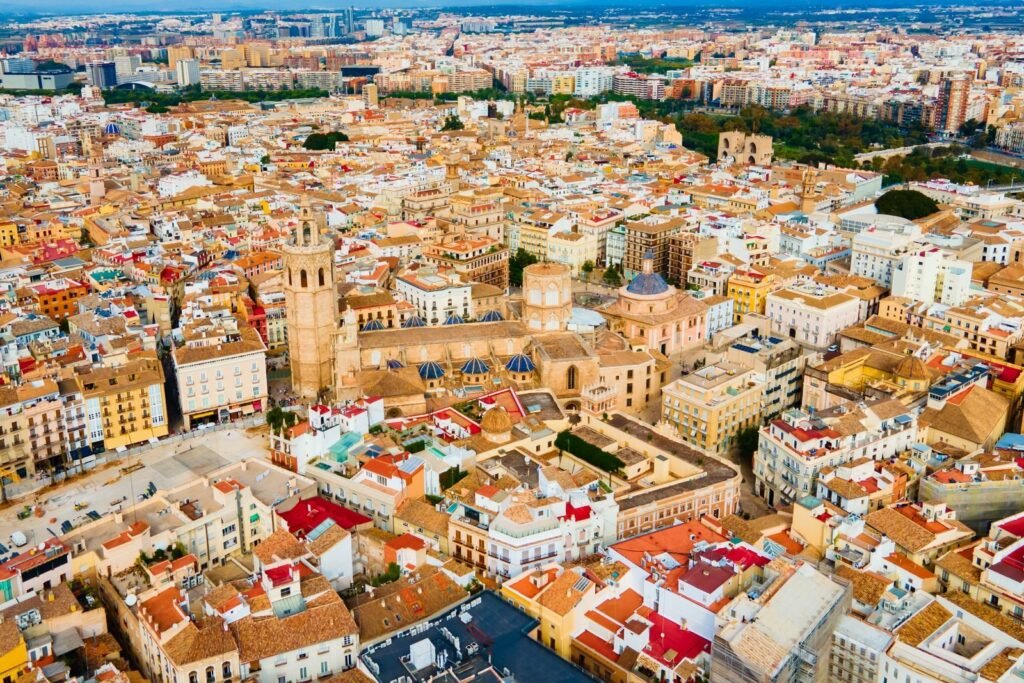
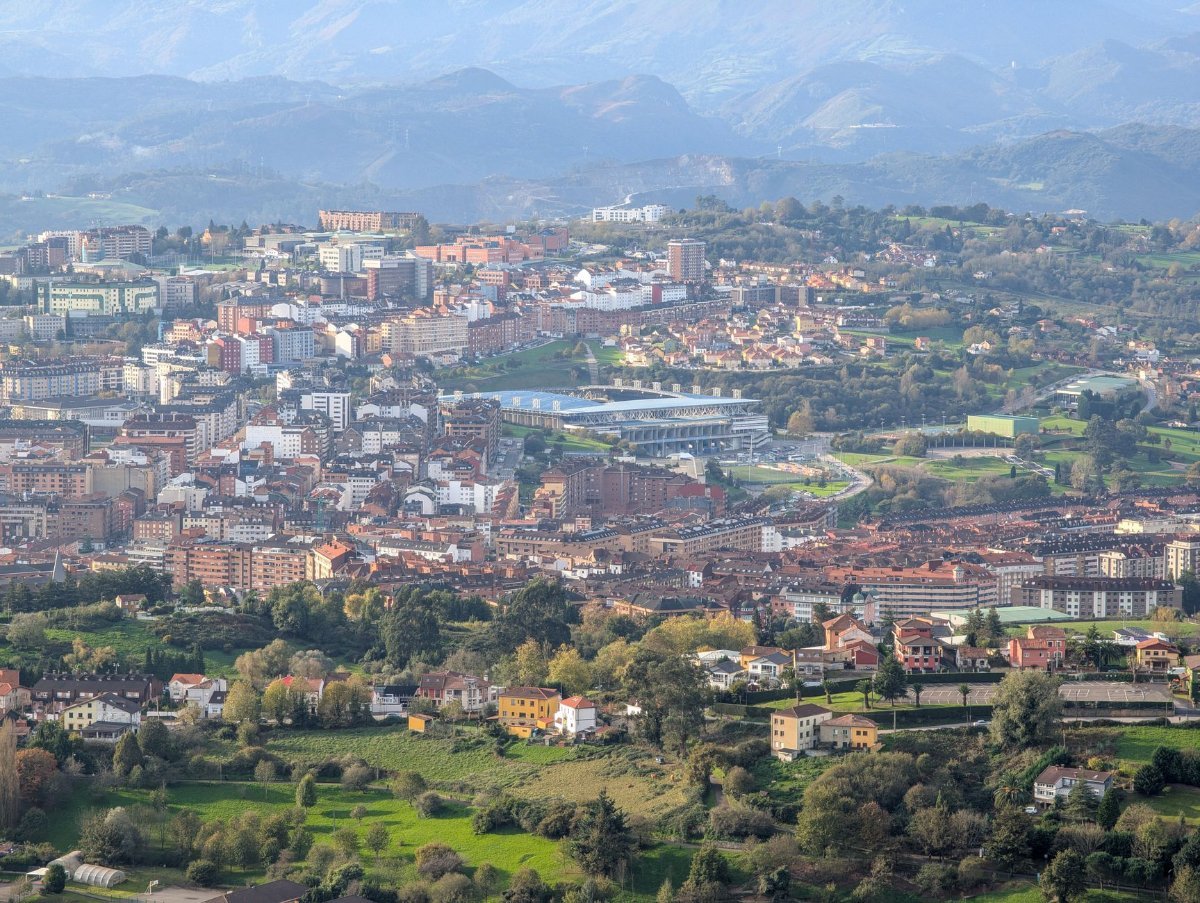
Oviedo is the capital and it’s compact, wealthy and unusually clean. The old town is pedestrianised and the cathedral holds the Cámara Santa, a 9th-century chapel with pre-Romanesque origins.
Which brings up the thing Asturias is quietly important for: pre-Romanesque architecture. When most of Iberia was under Muslim rule, the tiny Kingdom of Asturias held out in these mountains and built churches in a style found nowhere else. Santa María del Naranco and San Miguel de Lillo, on a hillside just above Oviedo, date from the 840s and are UNESCO listed. They look like nothing else in Europe.
Gijón is the bigger city, on the coast, more industrial and more fun — a proper beach in the middle of town, a good old quarter on a headland, and the best nightlife in the region.
The coast is wilder than the Mediterranean
Asturias has about 350km of coastline and it’s cliffs, coves and estuaries rather than long resort strips.
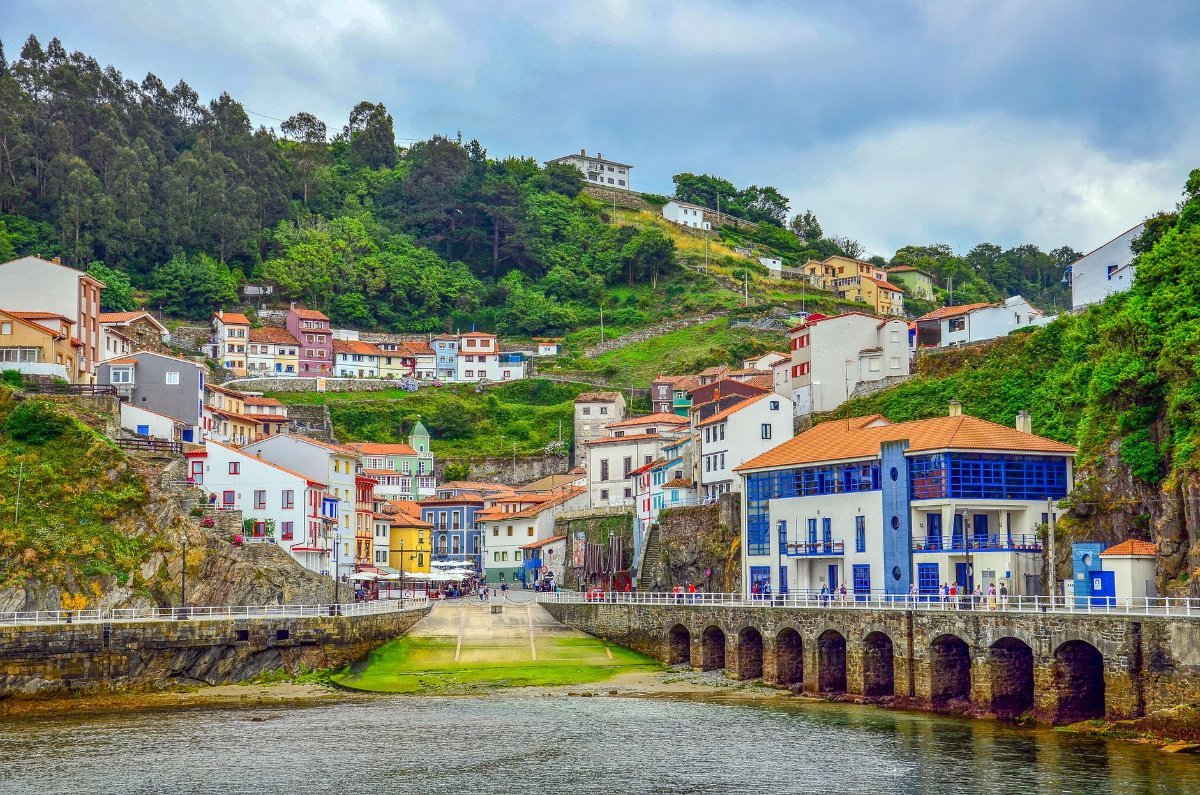
Cudillero — a fishing village of coloured houses stacked in an amphitheatre around a tiny harbour. The most photographed place in Asturias and rightly.
Llanes — a working fishing town with good beaches nearby and the Cubos de la Memoria, a harbour breakwater painted by the artist Agustín Ibarrola.
Playa de Gulpiyuri — an inland beach. A sinkhole about 100 metres from the sea that fills with seawater through underground channels, so you get a tidal beach in the middle of a field. It’s tiny and it’s very odd.
Playa del Silencio — a curve of pebbles under high cliffs, reached down a steep path.
The water is Atlantic and it is cold. August highs of 22 to 24°C on land are normal.
▶ Watch This Before You Go
The food is heavy and excellent
Fabada asturiana — the regional dish. White beans stewed with chorizo, morcilla and pork. Enormous. Order it at lunch and plan nothing afterwards.
Cachopo — two veal escalopes with ham and cheese between them, breaded and fried. Frequently the size of a dinner plate and often sold for two people.
Cabrales — a blue cheese aged in mountain caves, and one of the strongest in the world. Approach with respect.
Seafood along the coast, particularly percebes (goose barnacles), which are harvested off wave-battered rocks by people taking genuine risks, which is why they cost what they cost.
Asturias is inexpensive. A menú del día runs €12 to €16.
Practical bits
Hire a car. The mountains and the coast both need one, and public transport between villages is thin.
Asturias Airport is near Avilés with limited international routes. Many people fly to Bilbao or Santander and drive, about 2 to 3 hours.
Five to seven days is right: two on the coast, two or three in the Picos, one in Oviedo.
It rains. That’s the whole reason it’s green. Bring a proper waterproof whatever the season, and don’t plan a trip entirely around one clear day.
Best months: June and September. July and August are the busiest and the Cares route in particular gets crowded. May is beautiful and wetter.
FAQ
Do I need to be a hiker? No. The Covadonga lakes, Fuente Dé and most of the coast are drive-and-look. The Cares route is the one that needs legs.
Is it good in summer? Yes, and it’s the sensible Spanish summer — 24°C instead of 40°C. Just expect rain.
Can I combine it with the Camino? Easily. The Camino del Norte runs along this coast and the Primitivo starts in Oviedo.
Is English spoken? Considerably less than on the Mediterranean coast. Bring some Spanish.
What about Asturian? Asturianu is a separate Romance language, still spoken and taught, and you’ll see it on signs. Nobody expects you to use it.
Best single day? Covadonga lakes in the morning, Cudillero in the late afternoon, cider in Oviedo that night.