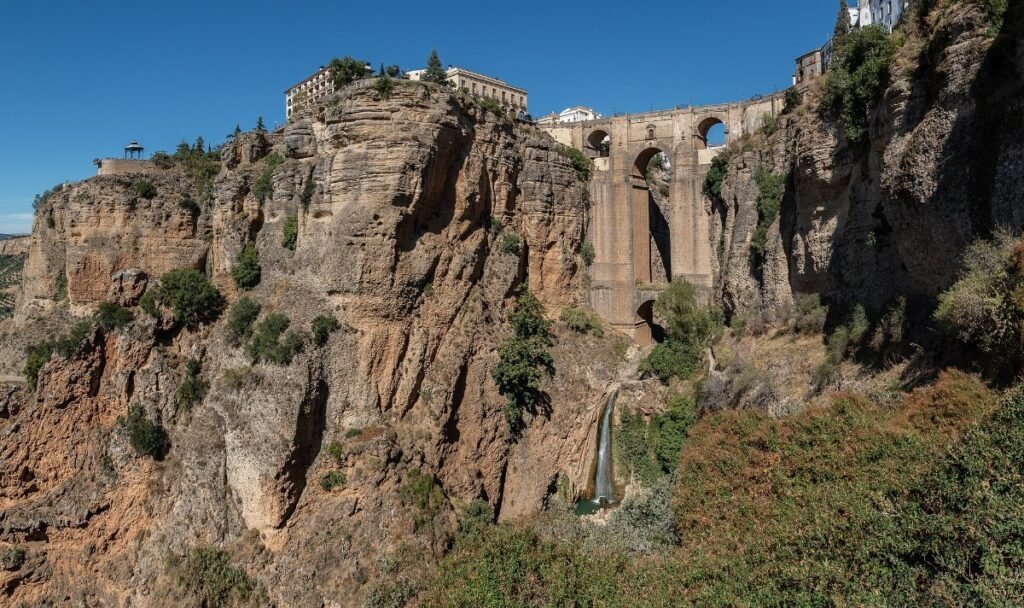
Ronda is a town split in half by a gorge 120 metres deep, with an 18th-century bridge spanning it. That’s the photo you’ve seen. It’s about 90 minutes from Málaga and it is genuinely as dramatic in person.
It’s also the gateway to the pueblos blancos, a scatter of whitewashed villages across the hills of Cádiz and Málaga provinces that most people drive past on the way to the coast.
Ronda itself
The Puente Nuevo took 42 years to build and was finished in 1793. “New” is relative — there are two older bridges further down the gorge.
The best view is not from the bridge, it’s from below or beside it. Walk down the path from Plaza María Auxiliadora into the gorge for the classic angle, or cross to the Mirador de Aldehuela. There’s also a chamber inside the bridge itself, now a small museum, that was used as a prison.
The bullring is one of the oldest in Spain, opened in 1785, and modern bullfighting on foot was largely codified here. Whatever you think of the practice, the building and its museum are historically significant, and it only hosts fights once a year now.
The Arab Baths at the bottom of the old town are among the best-preserved in Spain, from the 13th century.
Casa del Rey Moro has a staircase of 200-odd steps cut down through the rock to the river, built so the town could reach water during sieges.
Ronda has a literary reputation too, which explains some of the visitor numbers. Hemingway and Orson Welles both spent time here, and the scene in For Whom the Bell Tolls where villagers are thrown off a cliff is generally taken to be modelled on real killings in Ronda during the Civil War. Welles’s ashes are buried on a friend’s farm just outside town. None of this is signposted much, which is rather in keeping with the place.
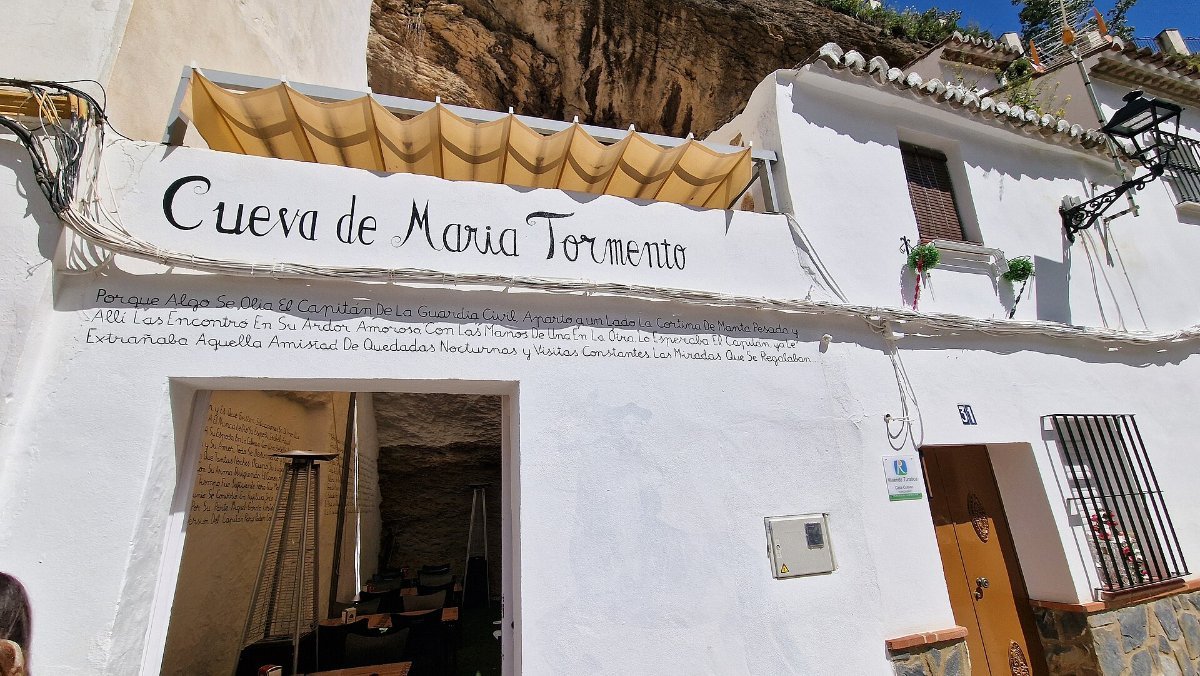
Setenil de las Bodegas is the strange one
Twenty minutes from Ronda, and unlike anywhere else. The village is built into the gorge — houses tucked under huge overhanging rock shelves, so the street has a ceiling of stone above it.
The two main streets, Calle Cuevas del Sol and Calle Cuevas de la Sombra, are the ones to walk. Bars and restaurants sit under the rock with tables outside, in permanent shade.
It takes an hour to see and it’s free. Go early or late; the streets are narrow and it clogs with coaches midday.
The other villages worth the drive
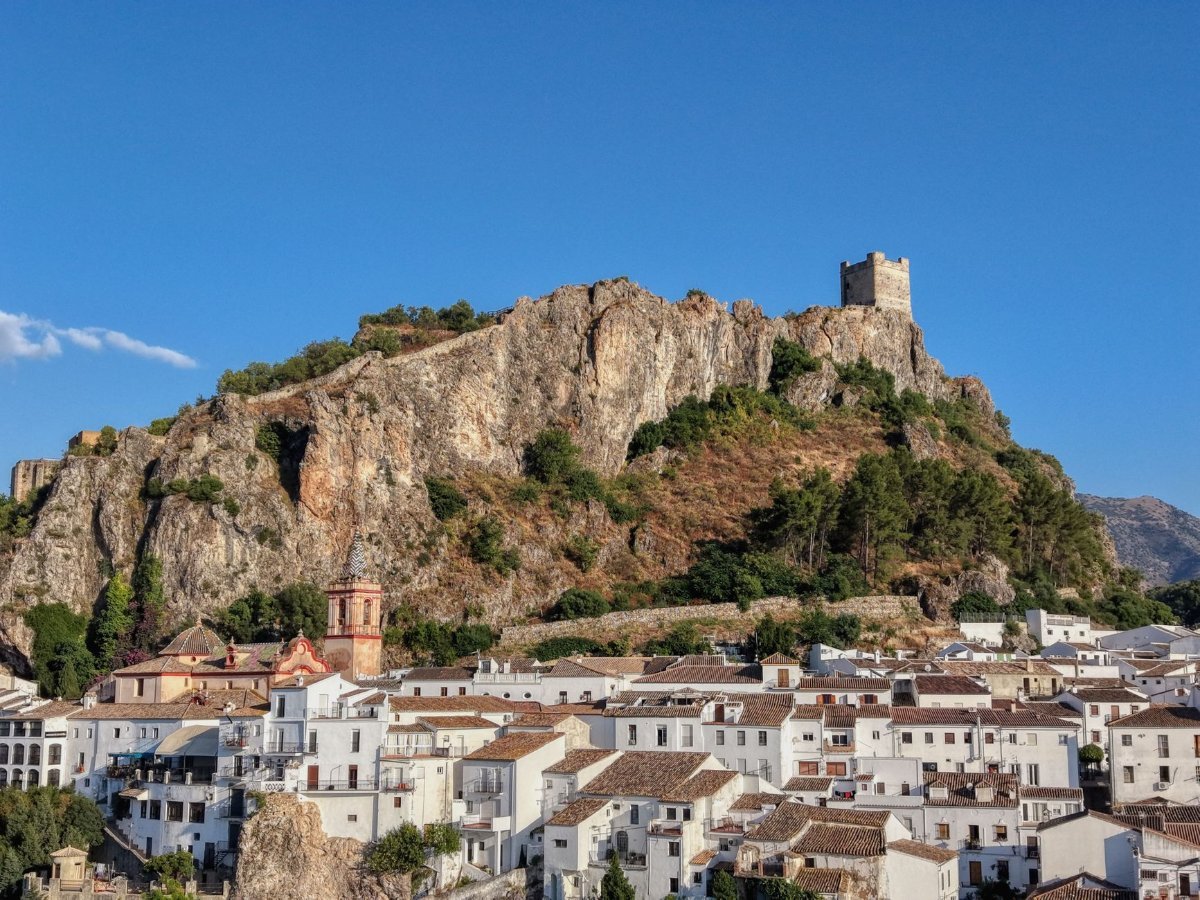
Zahara de la Sierra — a Moorish castle on a crag above a turquoise reservoir, with the village spilling down beneath it. Probably the prettiest of the lot.
Grazalema — in a natural park that is, oddly, the wettest place in Spain. Green, cool, and the base for the region’s best hiking.
Olvera — church and castle on a hill above a sea of olive trees, and the start of the Vía Verde de la Sierra.
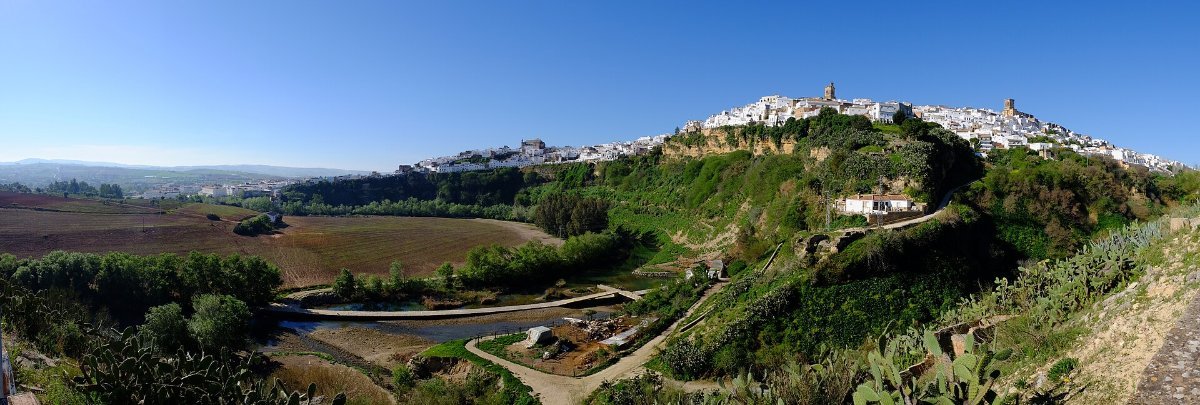
Arcos de la Frontera — the largest, on a sheer cliff, with a genuinely alarming main square viewpoint.
Vejer de la Frontera — closer to the coast, and the most gentrified in a good way, with excellent food.
▶ Watch This Before You Go
The Vía Verde is the underrated bit
Spain converted hundreds of disused railway lines into cycling and walking greenways. The Vía Verde de la Sierra, between Olvera and Puerto Serrano, is often rated the best of them — 36km, almost flat, through 30 tunnels and over four viaducts, past a cliff colony of griffon vultures.
Bike hire at either end, around €15 to €20 a day. It’s traffic-free and suitable for anyone who can ride a bike.
Doing it without a car
You can reach Ronda by train — it’s on a scenic line from Málaga (about 2 hours) and from Seville (about 3), and the Málaga route through the mountains is worth the journey on its own.
The villages, though, really need a car. Buses exist but run once or twice a day and won’t let you link two villages sensibly.
If you’d rather not drive, day tours from Seville, Málaga and Marbella cover Ronda plus one or two villages, typically €60 to €90.
A two-day loop
- Day 1 — Ronda in the morning before the coaches, lunch, then Setenil and Olvera in the afternoon. Sleep in Ronda.
- Day 2 — Zahara de la Sierra, then Grazalema for lunch and a short walk, then Arcos de la Frontera on the way out towards Cádiz or Seville.
Ronda is best in the evening, after the day-trippers leave, which is the argument for sleeping there rather than in Seville.
Eating
This is inland Andalusia, so it’s mountain food rather than seafood.
Rabo de toro — oxtail stewed in red wine, the regional dish.
Jamón ibérico — the mountain villages here cure ham, and Jabugo is not far away.
Sopa de tomate and migas, both peasant dishes and both excellent.
Ronda has its own small wine denomination with a dozen or so bodegas, mostly reds, and several are open to visitors.
Prices are low. A menú del día is €12 to €15 even in Ronda.
The name pattern is worth knowing while you’re driving around, because half the villages here share it. Any town called something de la Frontera sat on the frontier between Christian and Muslim territory during the centuries of the Reconquista, and the castle on the hill above it is why the village exists at all. Once you notice it you start reading the whole landscape as a defensive line, which is exactly what it was.
When to go
April to June — wildflowers, green hills, comfortable temperatures. The best window.
September and October — warm, quieter, and the light is superb.
July and August — inland Andalusia gets to 40°C. Doable if you’re out early and indoors at midday.
Winter — cool, sometimes wet, very quiet, and Grazalema can get snow.
FAQ
Is Ronda a day trip or an overnight? Overnight, if you can. The town is transformed once the coaches go.
How many villages should I do? Two or three a day, maximum. They’re small, and the pleasure is in the drives between them.
Are the roads difficult? Winding but well surfaced. Nothing technical.
Is it worth it if I’ve seen Seville and Granada? Yes — it’s a completely different Andalusia, rural and mountainous rather than urban and Moorish.
Where should I sleep? Ronda for the first night, then Grazalema or Vejer if you’re continuing.
Is Setenil really that special? It’s a one-hour stop, not a half-day. But yes, you won’t have seen anything like it.