Around 500,000 people now walk some part of the Camino de Santiago each year, and a fair share of them arrive having read a lot about the spiritual journey and almost nothing about their feet.
This is the practical version. Where to start, what it costs, and what actually goes wrong.
There isn’t one Camino
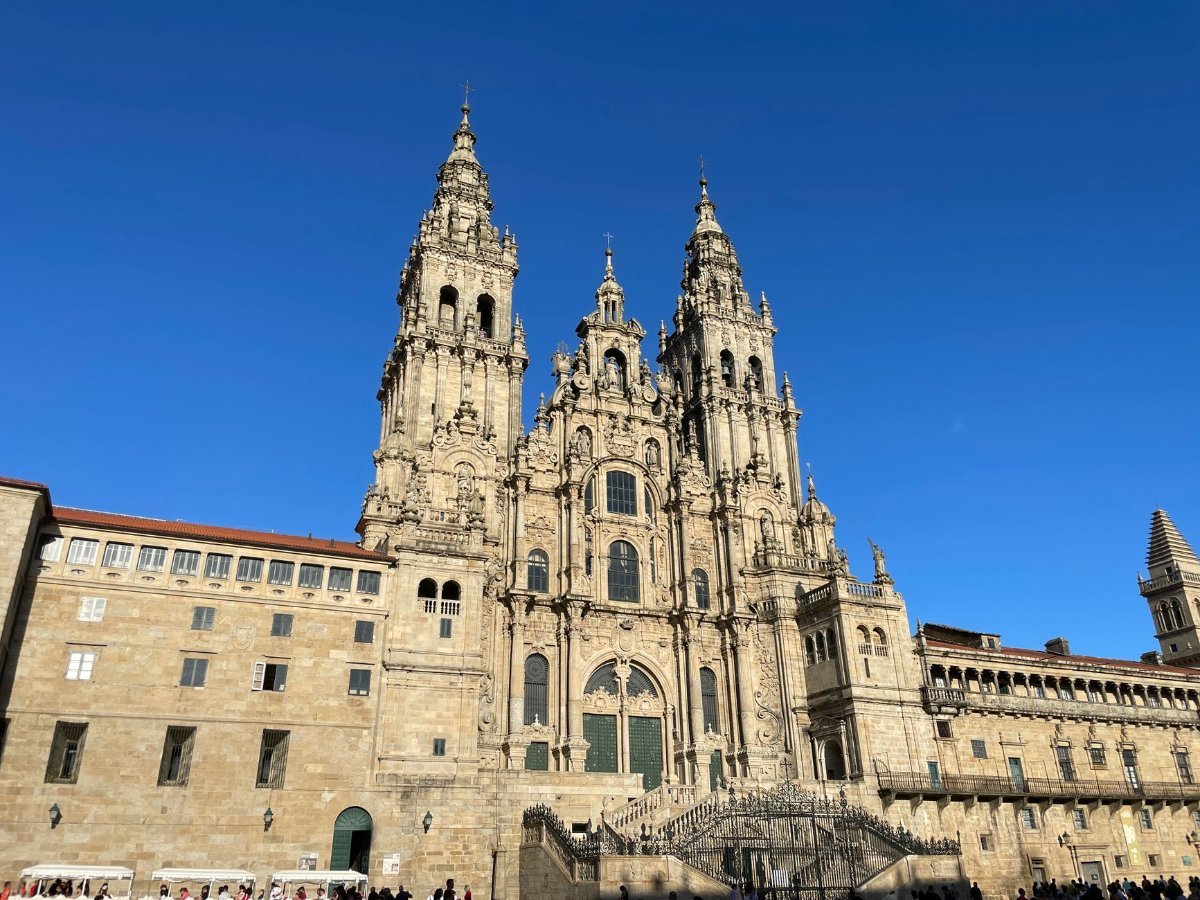
There are several routes, all ending at the cathedral in Santiago de Compostela.
Camino Francés — 780km from Saint-Jean-Pied-de-Port in France, over the Pyrenees and across northern Spain. About 30 to 35 days. This is the classic, the busiest, and the one with the best infrastructure. Roughly half of all pilgrims walk it.
Camino Portugués — 610km from Lisbon or 260km from Porto. The Porto start is the fastest-growing option: about 12 days, flat, coastal variant available.
Camino del Norte — 825km along the north coast. Harder, hillier, quieter, and spectacular.
Camino Primitivo — 320km from Oviedo. The original route, the toughest, and increasingly popular with people who’ve done the Francés.
Camino Inglés — 120km from Ferrol. Five days. The shortest route that still qualifies for a certificate.
The 100km rule
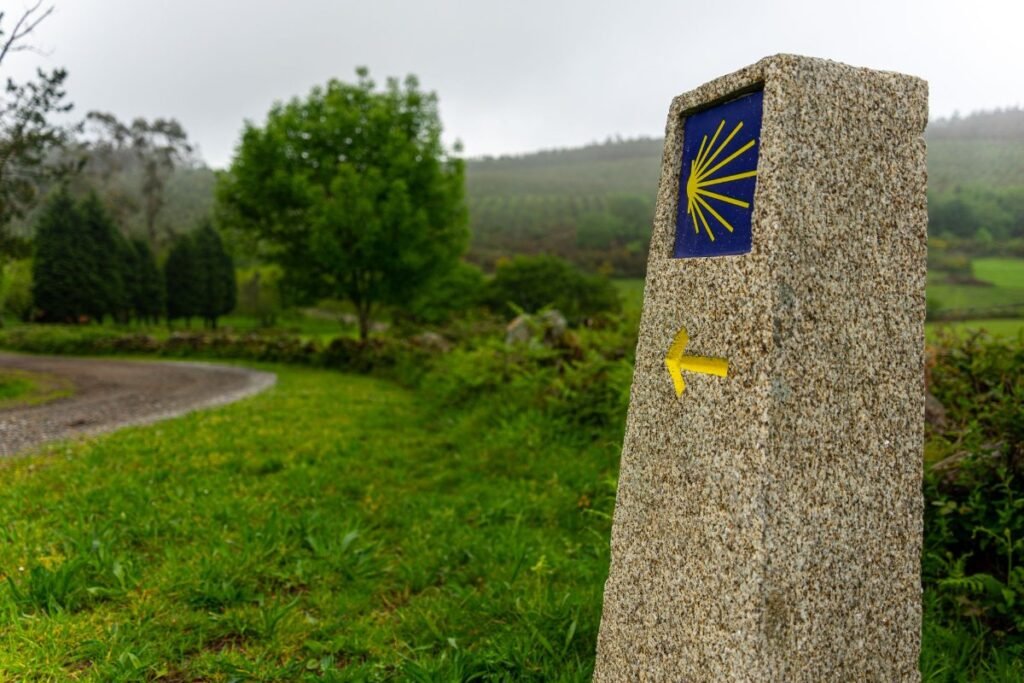
To receive the Compostela, the certificate from the cathedral, you need to walk the final 100km (or cycle 200km) and collect at least two stamps per day in your pilgrim passport.
This is why Sarria, exactly 115km out on the Francés, is the single most common starting point. It’s also why the last five days are dramatically busier than the previous twenty-five.
If you have a week, Sarria to Santiago works. Just know you’re joining the crowded finale rather than the quiet middle.
If the crowds put you off but a week is all you have, the Camino Inglés from Ferrol is the better answer. It’s 120km, so it still qualifies for the certificate, it takes five or six days, and it sees a small fraction of the traffic. The route is hillier than the last stretch of the Francés and the albergues are sparser, which is precisely why fewer people walk it and precisely why it feels more like the thing you came for.
What it costs
Cheaper than almost any other European holiday of the same length.
- Municipal albergues — €8 to €15 a night. Dorms, basic, first come first served, pilgrim passport required.
- Private albergues — €15 to €25. Better facilities, bookable.
- Pensiones and hotels — €35 to €70 for a private room.
- Pilgrim menu — €12 to €15 for three courses with wine, offered by restaurants along the whole route.
Budget €35 to €50 a day staying in albergues and eating pilgrim menus. €70 to €90 for private rooms.
Add the pilgrim passport (credencial), a few euros from any cathedral or pilgrim office.
What actually goes wrong: your feet
Blisters end more Caminos than anything else. Here’s what genuinely helps:
Break in your boots properly. Not two walks. A hundred kilometres before you go, minimum.
Buy footwear half a size up. Feet swell over consecutive walking days and the downhills will destroy your toenails otherwise.
Trail runners over boots for most people on the Francés. It’s largely tracks and quiet roads, not mountain terrain, and lighter shoes mean less fatigue.
Stop the moment you feel a hot spot. Not at the next town. Tape it there and then. A hot spot is two minutes of work; a blister is three days.
Two pairs of proper wool or synthetic socks. Never cotton.
Second most common problem: shin splints and knee pain from doing too much too early. Almost everyone walks 30km on day one because they feel great, then loses a week. Start at 15 to 20km a day and build.
▶ Watch This Before You Go
What to carry
The rule is 10% of your body weight, maximum. For most people that’s 6 to 8kg including water.
Two changes of clothes, not five. You’ll wash things every evening; that’s part of the rhythm. A lightweight sleeping bag or liner, sun protection, a rain jacket that genuinely works (Galicia rains a great deal), a small first aid kit with blister tape, and a water bottle.
Leave behind: jeans, a second pair of shoes beyond sandals, books, anything “just in case”. Every town has a pharmacy and a shop.
If your pack is too heavy, luggage transfer services will move it between albergues for €5 to €8 a stage. There’s a certain amount of purist grumbling about this. Ignore it; walking further because your back doesn’t hurt is not cheating.
When to go
May, June, September — the best months. Decent weather, everything open, busy but manageable.
July and August — hot, especially on the Meseta, the flat middle section with little shade. Very busy, and albergue beds go by mid-afternoon.
April and October — quieter, cooler, more rain, some private albergues closed.
Winter — the Pyrenees route from Saint-Jean can be genuinely dangerous with snow, and many albergues close. Experienced walkers only.
The bit people don’t expect
Most walkers describe the Camino in three phases: the first week is physical, the second is mental, and the third is something else that people struggle to name without sounding daft.
You don’t need to be religious. Surveys consistently show most modern pilgrims aren’t walking for religious reasons. The structure — walk, eat, sleep, repeat, no decisions to make — does something to people regardless of what they believe.
You’ll also end up walking with the same faces for days at a time. That’s the actual social mechanism of the Camino and it’s why solo walkers rarely feel alone on it.
FAQ
Do I need to be fit? Reasonably. If you can walk 20km comfortably at home, you can do this. Build up beforehand.
Can I book albergues ahead? Private ones, yes. Municipal ones don’t take bookings — arrive by early afternoon in summer.
Is it safe solo? Yes, and it’s one of the most solo-friendly long walks anywhere. Plenty of women walk it alone.
Do I need Spanish? It helps a lot in the small villages. Along the Francés you’ll manage without.
What if I can’t finish? Buses and trains run parallel to most of the route. Stopping is completely normal.
Can I do it in sections? Yes, and many people walk a week each year over several years. The credencial carries over.