Extremadura sits on the Portuguese border between Madrid and Seville, and its main claim to fame is that almost nobody stops. It’s the least visited region in mainland Spain, it has the best-preserved Roman city in the country, and you can eat extraordinarily well for very little.
The name means “the land beyond the Duero”, and historically it meant the frontier. It still feels like one.
Mérida has the best Roman ruins in Spain
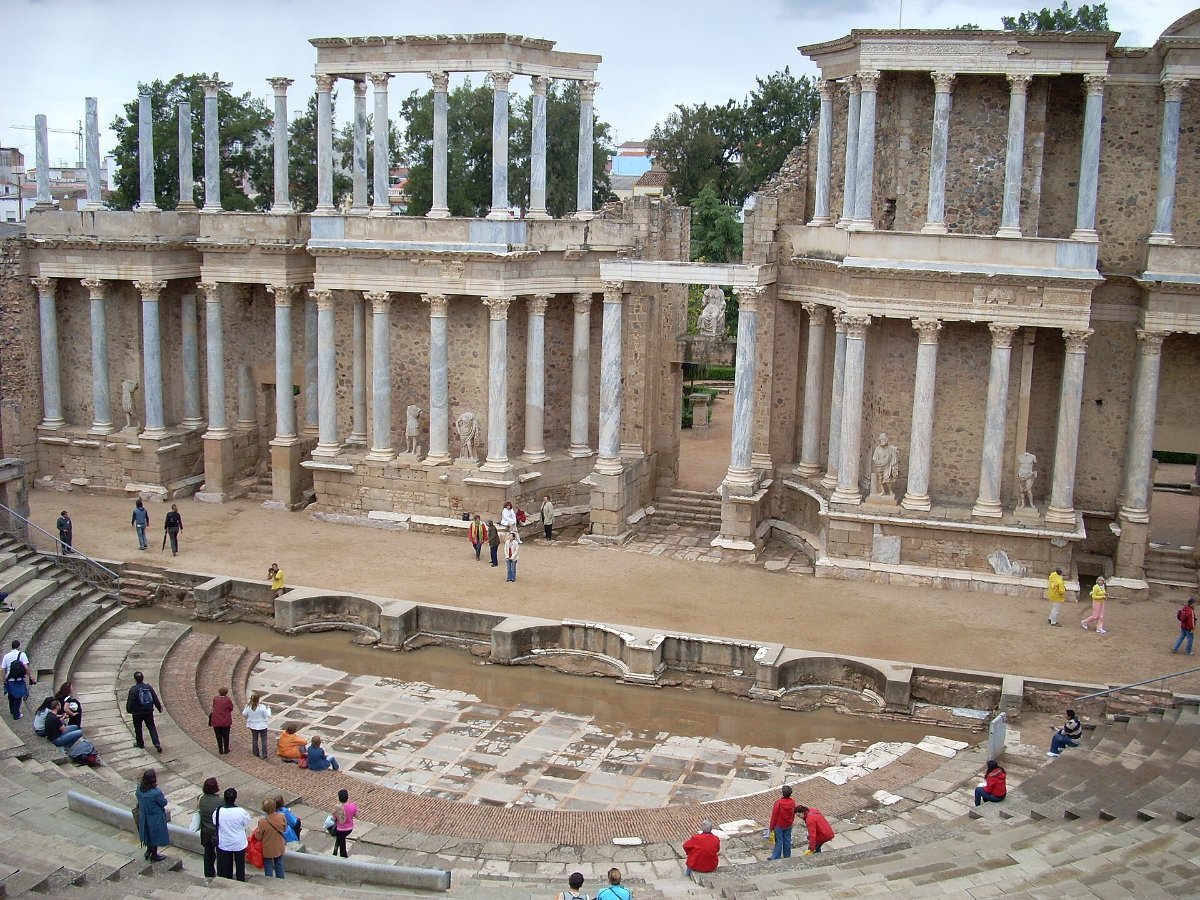
Founded in 25 BC as Emerita Augusta for retired legionaries, and it became the capital of the province of Lusitania. What survived is remarkable.
The Roman theatre — built around 15 BC, seating 6,000, with the stage backdrop of columns still standing. It’s not a ruin you squint at; it’s a theatre, and it still hosts a classical drama festival every July and August.
The amphitheatre next door held 15,000.
The Puente Romano — 60 arches, 790 metres, the longest surviving Roman bridge in the world. Pedestrians still cross it.
The National Museum of Roman Art — a Rafael Moneo building, itself an architectural landmark, over an excavated Roman road.
Also here: an aqueduct, a temple of Diana, a circus, and a reservoir dam still in use after 2,000 years. A combined ticket covers most of the sites for around €17.
Cáceres is a medieval old town with almost nobody in it
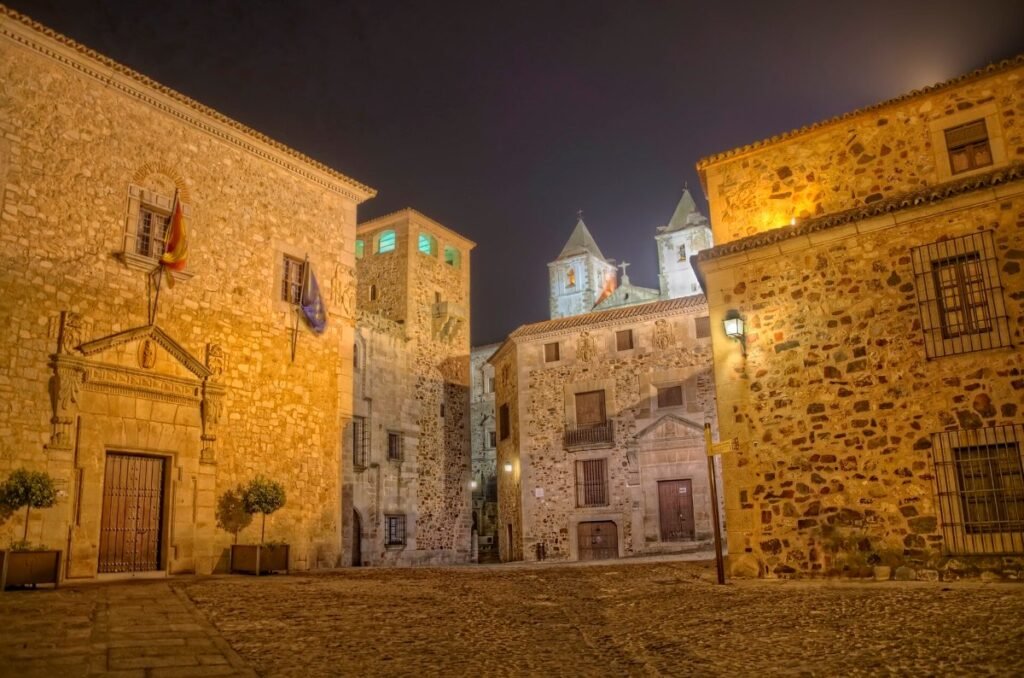
The walled old town is UNESCO listed and it is genuinely startling — a compact grid of golden stone palaces, towers and churches, largely untouched since the 16th century, with no cars and very few people.
Much of it was built with money brought back from the Americas by conquistadors from the region, which is the uncomfortable thread running through Extremadura’s grand architecture.
It has been used repeatedly as a filming location, including for Game of Thrones, because it needs no set dressing at all.
Go in the evening when the stone goes orange and the storks are clattering on the towers. There are dozens of stork nests on the church spires and it’s one of the defining sounds of the place.
The storks are worth pausing on, because they’ve changed behaviour here in a way that’s visible to anyone. White storks used to migrate to Africa every winter, and a large share of the Extremaduran population now simply stays put year-round, feeding on landfill and in the dehesa. So the nests on the towers are occupied in January as well as June. Ornithologists have been tracking the shift for decades; visitors just notice that the birds never seem to leave.
Trujillo and the conquistadors
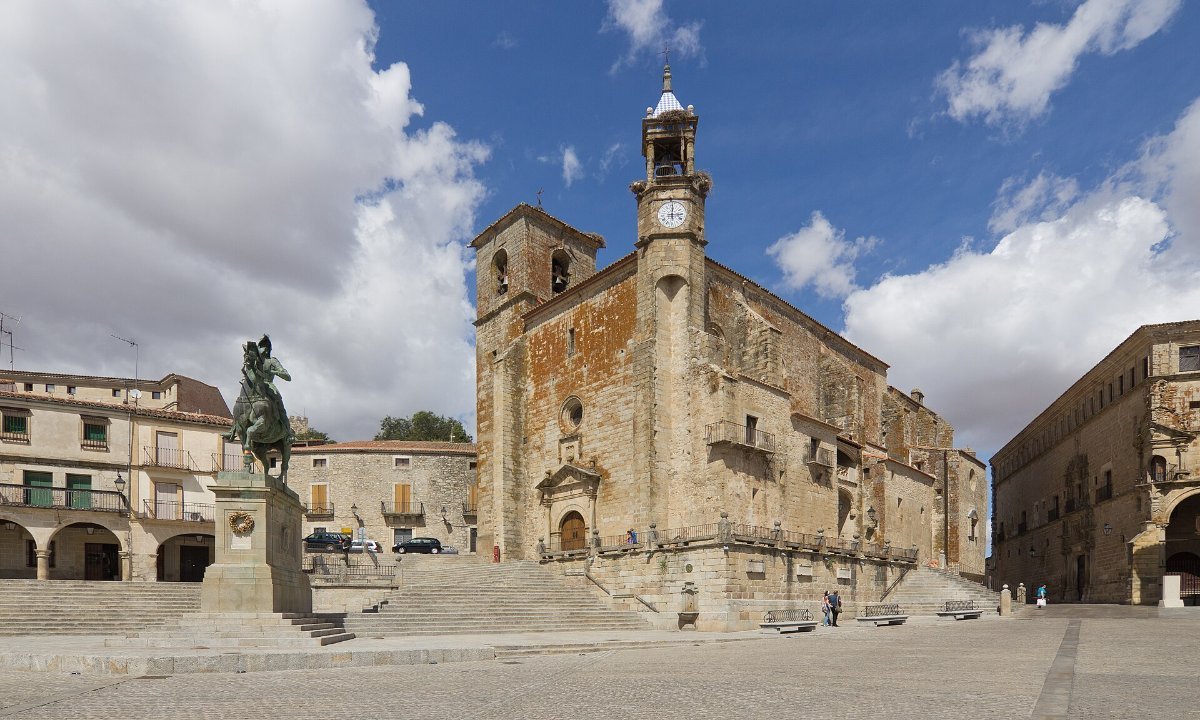
Forty minutes from Cáceres, a hill town with a huge Plaza Mayor and a castle above it.
Francisco Pizarro, who conquered the Inca Empire, was born here, and there’s a statue of him on horseback in the square. Hernán Cortés came from Medellín, an hour away. Extremadura was poor, and a striking number of the men who went to the Americas came from these few towns.
The region doesn’t hide this and doesn’t especially celebrate it either. The palaces built with Peruvian silver are simply there, with plaques.
Trujillo also holds a well-regarded cheese fair in late April and early May.
▶ Watch This Before You Go
Monfragüe, for birds
A national park along the Tagus gorge, and one of the best places in Europe for raptors.
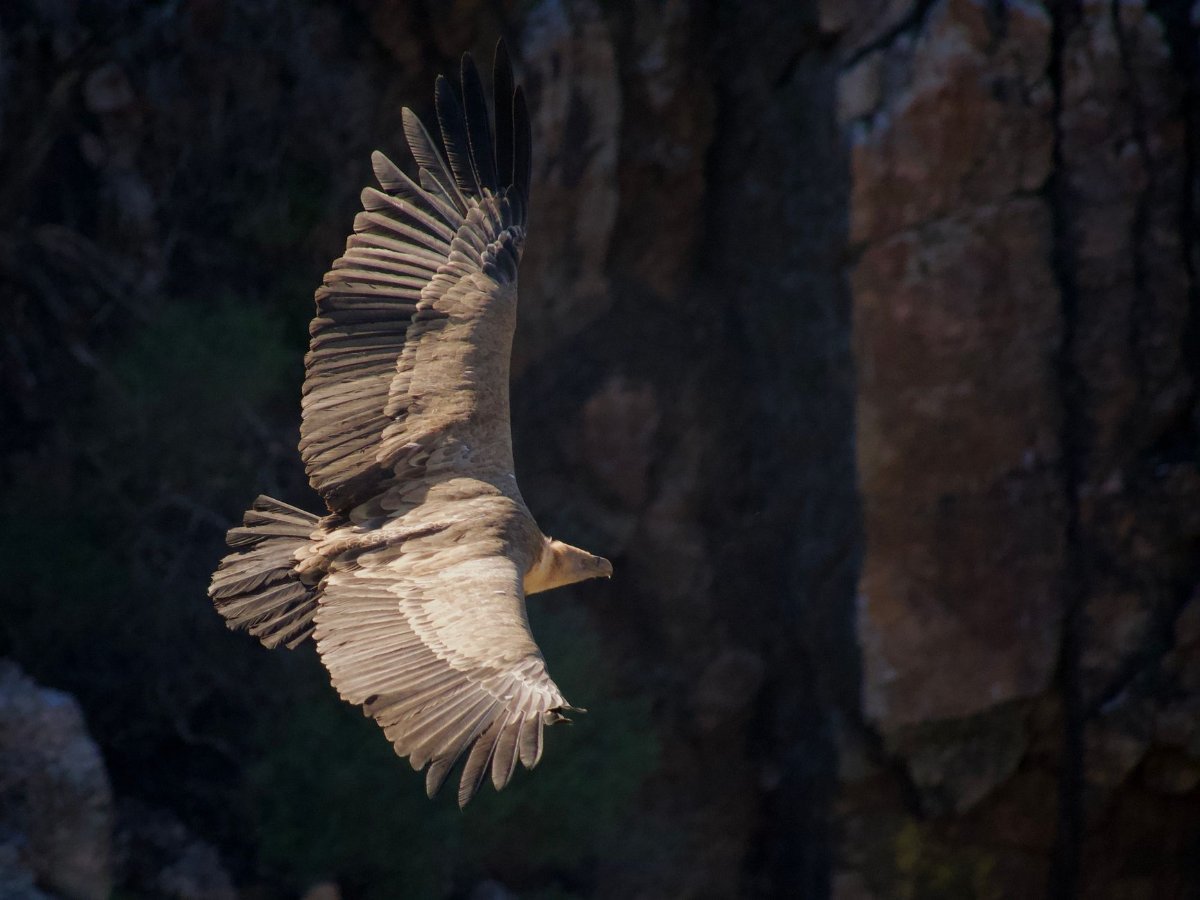
Griffon vultures in large numbers, plus black vultures, Spanish imperial eagles (one of the rarest raptors in the world), Bonelli’s eagles and black storks.
The Salto del Gitano viewpoint puts you looking straight across at a cliff full of nesting vultures, and you don’t need binoculars to appreciate the scale of them.
Best in spring, March to May, for breeding activity. Free to enter, and there are marked walking routes from Villarreal de San Carlos.
The ham is the real reason to come
Extremadura’s dehesa — a landscape of oak-studded pasture — is where Iberian black pigs are raised, and it produces some of the best cured ham in the world.
Jamón ibérico de bellota comes from pigs that spend the autumn eating acorns in the dehesa. It’s expensive everywhere else and comparatively cheap here.
Also: Torta del Casar, a sheep’s cheese so soft you cut the top off and spoon it out; pimentón de la Vera, smoked paprika that gives Spanish cooking a lot of its character; and migas extremeñas, fried breadcrumbs with pork.
The wines from Ribera del Guadiana are inexpensive and improving fast.
A menú del día here runs €10 to €14, which is about as cheap as Spain gets.
If you want to see where the ham comes from, several dehesa estates near Montánchez and Jerez de los Caballeros run visits during the autumn montanera, when the pigs are out under the oaks eating acorns. It’s an hour of walking through open woodland with pigs wandering around, followed by a tasting, and it costs a fraction of what an equivalent food experience would in Tuscany or Provence.
How to fit it in
Extremadura works best as a two or three-day detour on a Madrid–Seville or Madrid–Lisbon route, rather than a destination flown into.
Madrid to Cáceres — about 3 hours by car.
Cáceres to Seville — about 3 hours.
Cáceres to Lisbon — about 3 hours 30.
A good loop: Madrid, Trujillo, Cáceres, Monfragüe, Mérida, then on to Seville or Lisbon.
You need a car. Rail connections exist but are slow and infrequent, and the park and the villages need driving.
When to go
March to May — the best window by a distance. Green, wildflowers, birds breeding, comfortable temperatures.
October and November — warm, quiet, and the acorn season in the dehesa.
June to September — Extremadura is one of the hottest parts of Spain and regularly exceeds 40°C. Avoid unless you’re organised around early mornings.
Winter — cool and clear, and excellent for birdwatching with wintering cranes.
FAQ
How many days? Three covers Cáceres, Trujillo, Mérida and Monfragüe without rushing.
Is it worth it if I’ve seen Seville and Granada? Yes, it’s completely different — Roman and medieval rather than Moorish, and rural rather than urban.
Is English spoken? Much less than in the tourist regions. Bring some Spanish.
Is it expensive? It’s the cheapest region in mainland Spain for food and accommodation.
Best base? Cáceres, with everything within about an hour.
Is Mérida worth a full day? Yes, easily, with the museum.