Turin gets skipped. People fly into Milan, head for Lake Como or Venice, and never consider the city an hour and a half west that has 18km of covered arcades, the best Egyptian museum outside Cairo, and the place where chocolate and hazelnut were first combined into a paste.
Yes. Nutella starts here. We’ll come back to that.
It doesn’t look like the rest of Italy
Turin was the capital of the Kingdom of Savoy and briefly the first capital of unified Italy, and it was laid out on a Roman grid then rebuilt in Baroque style by architects who liked straight lines.
So instead of the tangled medieval lanes you get elsewhere, Turin has long straight boulevards, enormous formal squares, and those arcades — porticoes running along the streets so you can walk much of the centre without ever being rained on. The aristocracy wanted to move around the city without getting wet, and the result is one of the most pleasant walking cities in Europe.
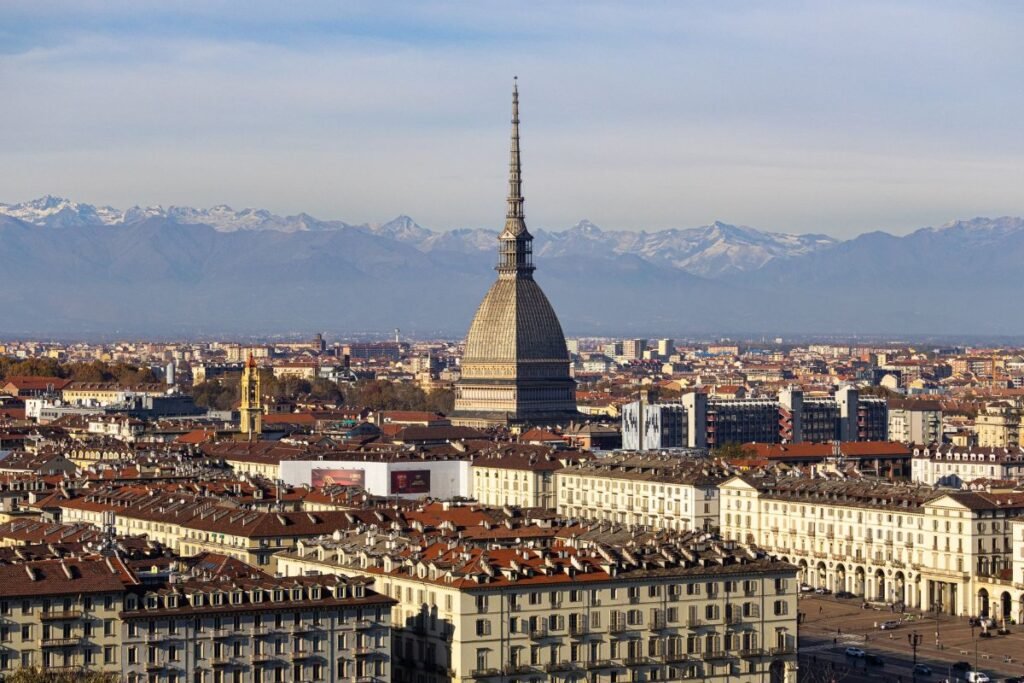
It also has the Alps directly behind it, visible from the river on a clear day.
There’s a industrial layer to all this too, which is part of why the city feels different. Turin was Fiat’s company town for most of the twentieth century, and at its peak a huge share of the working population was tied to the car industry. When that shrank, the city had to reinvent itself, and a lot of what makes it interesting now — the museums in old factories, the food and wine push, the design scene — came out of that. It’s a place that has quite recently decided what it wants to be.
The Egyptian Museum is the reason to book a day
The Museo Egizio holds around 40,000 items and is generally considered second only to Cairo. That’s a strange thing for a city in northern Italy to have, and it comes from Savoy-era collecting in the 1800s.
The Gallery of Kings, the intact tomb of Kha and Merit with all its contents, the Book of the Dead papyri. Give it three hours minimum. Around €18, book online in peak season.
If you only do one paid thing in Turin, do this.
The Mole Antonelliana and the cinema museum
The Mole is the building on the skyline and on the two-cent euro coin. It was started in 1863 as a synagogue, ran wildly over budget, and ended up as a 167-metre tower that the city bought and didn’t know what to do with.
It now houses the National Cinema Museum, which is genuinely excellent — a spiral ramp winding up through the interior with film exhibits, and a glass lift that runs up the middle of the void to a viewing platform at 85 metres.
Buy the combined museum and lift ticket. The view over the city to the Alps is the best in Turin.
Eating and drinking, which is the real point
Piedmont is one of Italy’s great food regions and Turin is its capital.
- Aperitivo — invented here, and Turin still does it properly. Buy a drink between 6 and 9pm and a substantial buffet comes with it. In some bars it’s effectively dinner for €10.
- Vermouth — also invented here, by Antonio Benedetto Carpano in 1786. Order it neat, over ice, the way locals do.
- Bicerin — the local drink: espresso, drinking chocolate and cream in layers, served in a glass. Caffè Al Bicerin has been making it since 1763.
- Gianduja — chocolate and hazelnut paste, created when Napoleonic blockades made cocoa scarce and local hazelnuts filled the gap. Gianduiotti are the wrapped ingots you’ll see everywhere.
- Agnolotti del plin — small pinched pasta parcels, the regional dish.
- Barolo and Barbaresco — the great Piedmontese reds, grown an hour south in the Langhe.
▶ Watch This Before You Go
The historic cafés are worth the markup
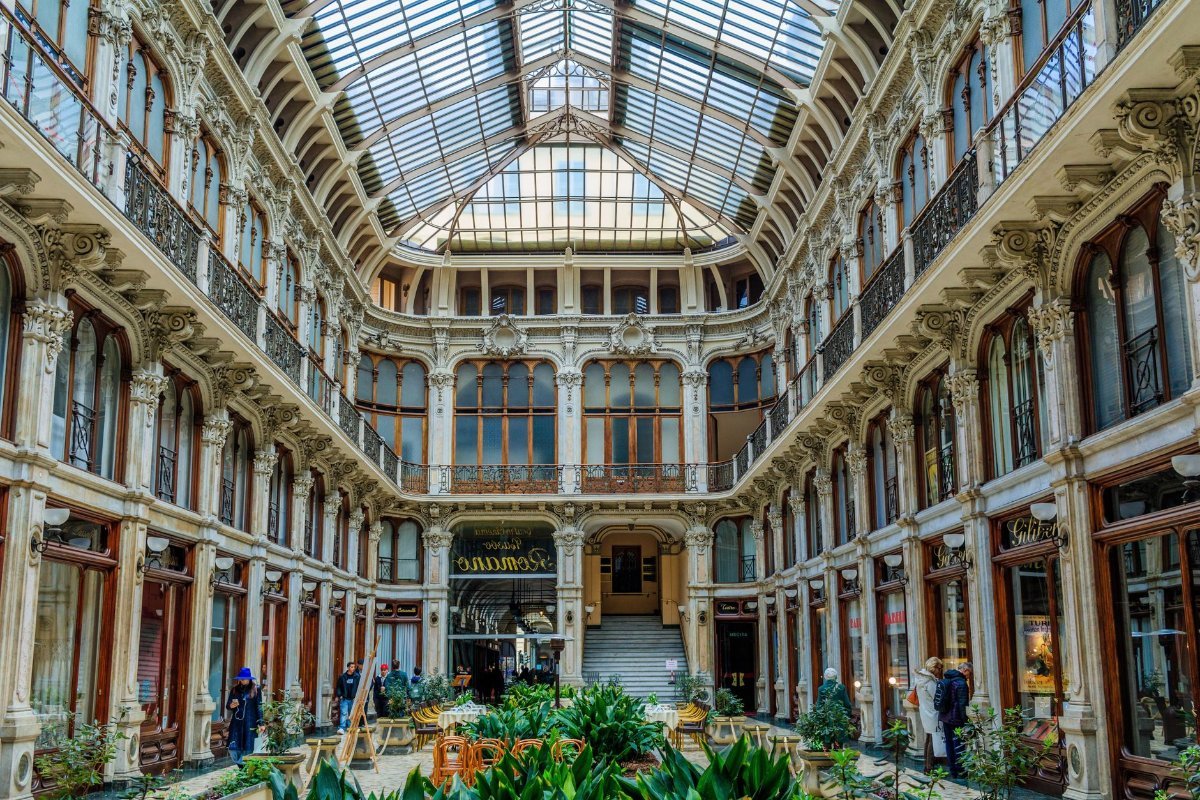
Turin has a set of 18th and 19th-century cafés with original interiors — mirrors, marble, dark wood. Caffè San Carlo, Baratti & Milano, Caffè Mulassano (where the tramezzino sandwich was invented), Al Bicerin.
You’ll pay €6 to €9 for a coffee sitting down instead of €1.20 at the bar. Do it once. These are not tourist reconstructions; they’ve been running continuously for two centuries.
What else to see
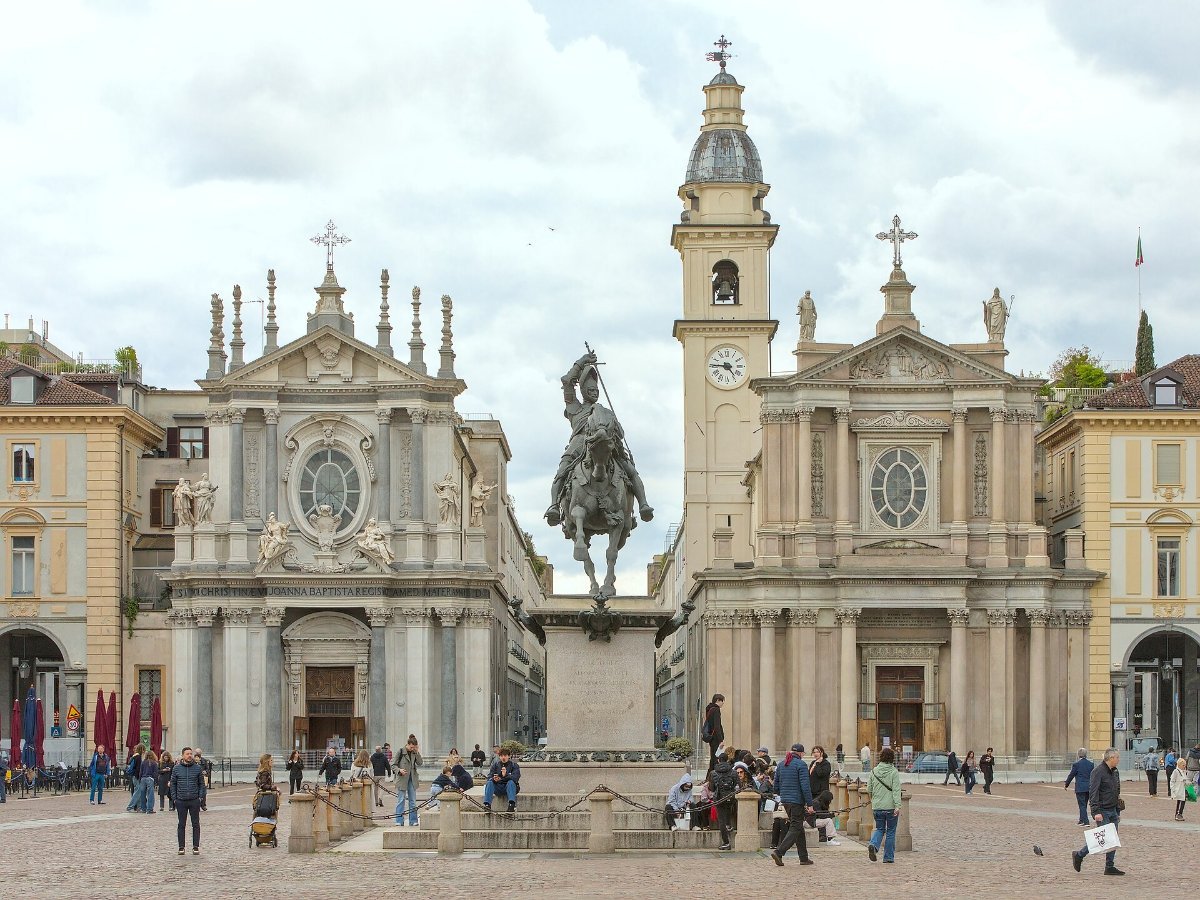
Piazza San Carlo — the city’s drawing room, twin churches at one end, arcades all round.
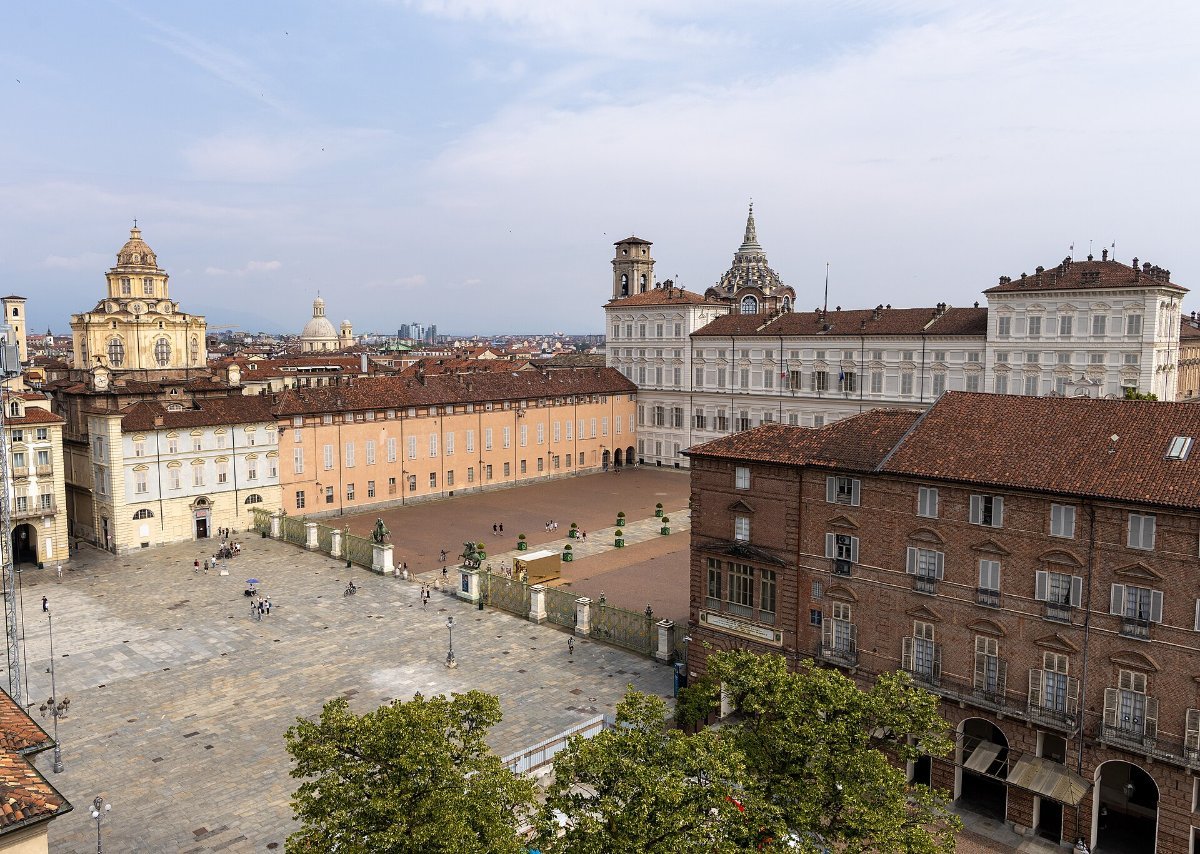
The Royal Palace and Royal Museums — Savoy state rooms plus the Armoury and the Galleria Sabauda.
The Turin Shroud is kept in the Cathedral but is almost never on display. There’s a museum about it nearby. Manage expectations.
Parco del Valentino — a riverside park with a mock medieval village built for an 1884 exhibition.
Basilica di Superga — a hilltop church reached by an old rack railway, with the best panorama of the city and Alps.
Lingotto — the old Fiat factory with a car test track on the roof, now a shopping centre and gallery. Weird and brilliant.
Day trips
The Langhe, about an hour south — Barolo, Barbaresco, Alba, white truffles in October and November. This is the wine country most people go to Tuscany for, with fewer visitors.
The Sacra di San Michele, 45 minutes west, an abbey on a rock outcrop that inspired The Name of the Rose.
Milan is an hour by train if you want to combine.
Practical bits
Two full days covers the city comfortably. Three lets you add the Langhe.
The Torino+Piemonte Card covers most museums and transport. Worth it if you’re doing three or more paid sites.
Turin is properly cold in winter and hot in August. April, May, September and October are best. October and November are truffle season, which is its own reason.
Getting there: Turin has its own airport, or fly to Milan and take the train (about an hour). From Milan Centrale trains run constantly.
FAQ
Is Turin worth a trip on its own? For two or three days, yes. It’s also the best base for the Langhe wine region.
How does it compare to Milan? Cheaper, calmer, better food, less shopping, more elegant. Milan for fashion and business, Turin for eating and walking.
Is it touristy? Noticeably less than anywhere else on this scale in Italy. That’s most of its appeal.
Do people speak English? Less than in Rome or Florence. Some Italian helps.
What’s the one unmissable thing? The Egyptian Museum, then aperitivo in Piazza Vittorio Veneto at sunset.