Millions of people fly into Bergamo every year and immediately get on a bus to Milan. The airport is even marketed as “Milan Bergamo”, which does the city no favours at all.
Bergamo is a walled medieval town on a hill, 50 minutes from Milan, and it’s genuinely one of the loveliest small cities in Italy. The airport is 15 minutes from it.
Two cities, one on top of the other
Città Alta — the upper town, inside 16th-century Venetian walls, all narrow streets and stone. This is what you came for.
Città Bassa — the lower town, 19th and 20th century, where most people actually live and work. Good shops, good restaurants, less charming.
Getting between them: the funicular from Viale Vittorio Emanuele, running since 1887, takes two minutes and costs the price of a normal bus ticket. There’s a second funicular from the upper town up to San Vigilio, higher still, for the best view.
You can walk it in about 20 minutes uphill. The funicular is more fun.
The walls are a UNESCO site
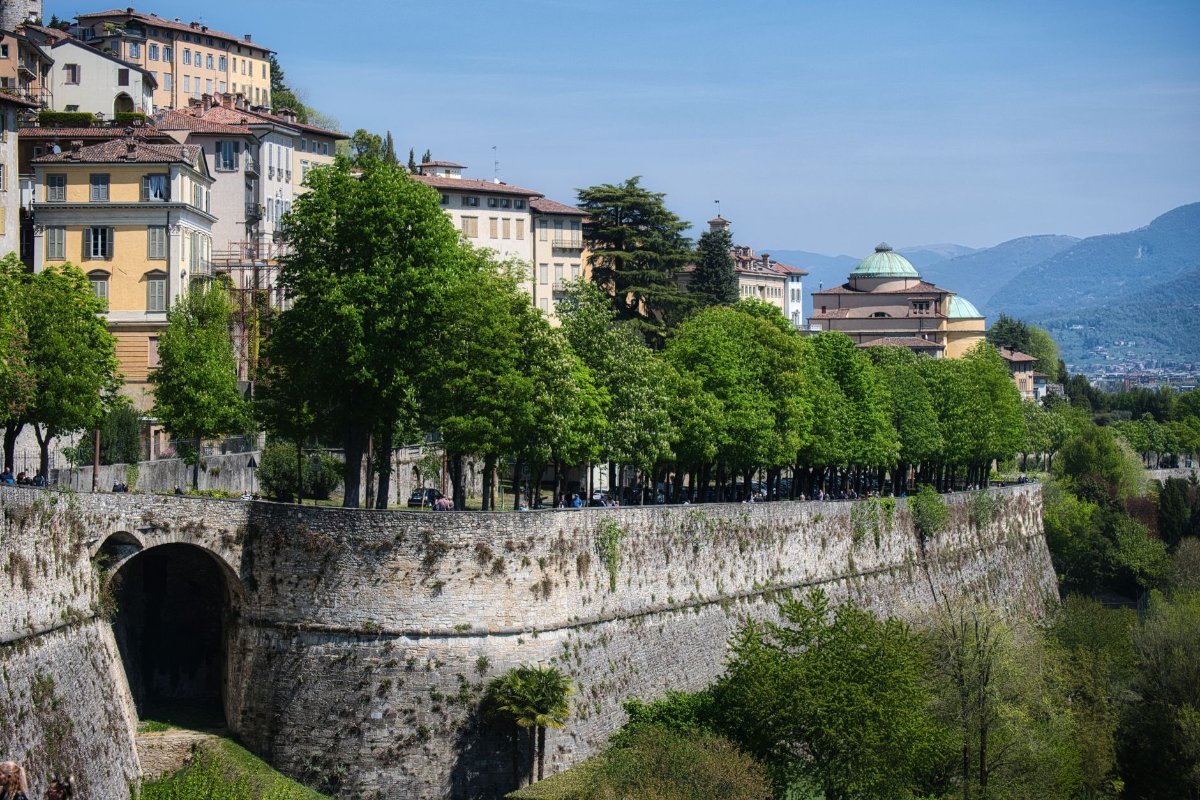
Bergamo’s Venetian walls, built from 1561, run 6km around the upper town. They were never attacked, which is why they’re so well preserved, and they were listed by UNESCO in 2017 as part of a group of Venetian defensive works.
The walk around the top of them is free, takes about an hour and a half, and gives you views over the Lombard plain on one side and the Alps on the other. On a clear day you can see a long way.
Do it at sunset. It’s the single best thing in Bergamo and it costs nothing.
Piazza Vecchia
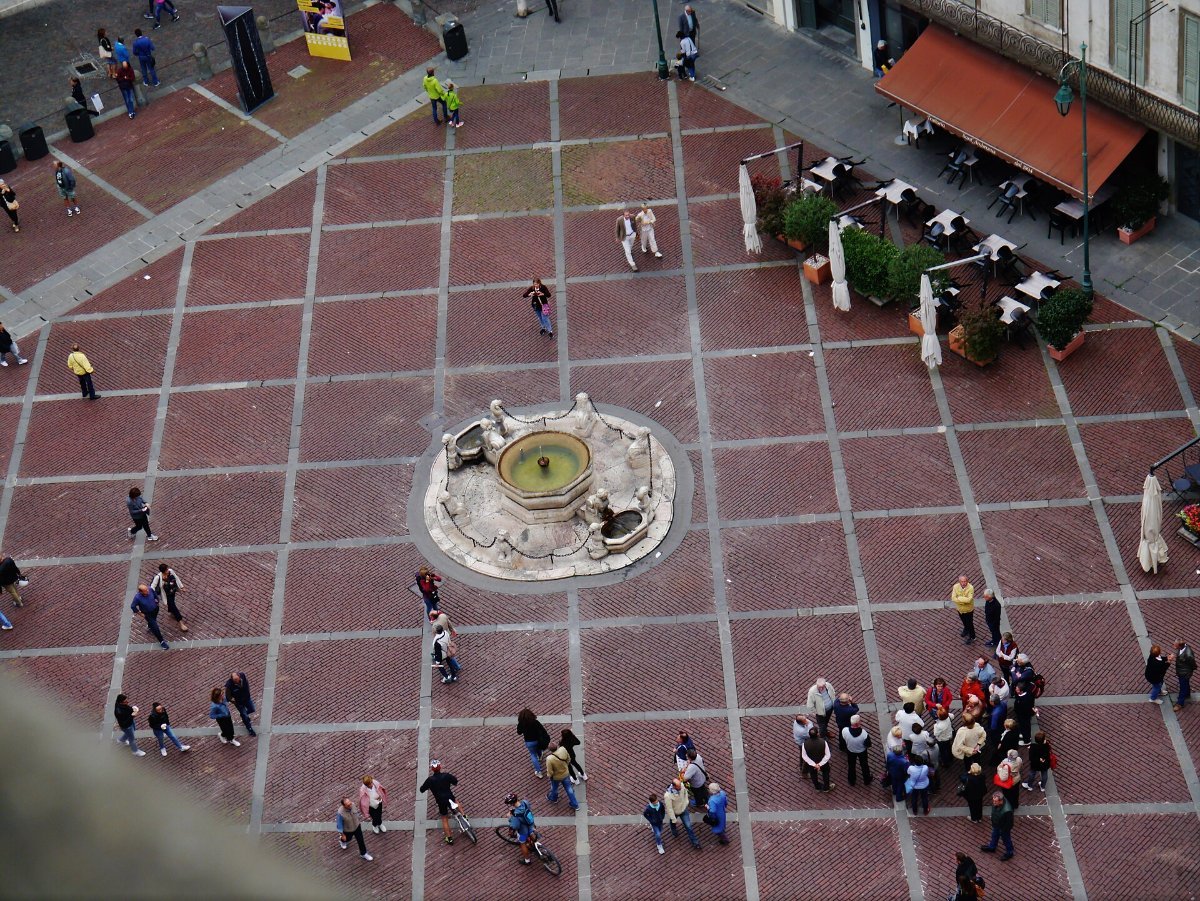
Le Corbusier apparently called it the most beautiful square in Europe, which gets quoted on every sign in the city and is a defensible claim.
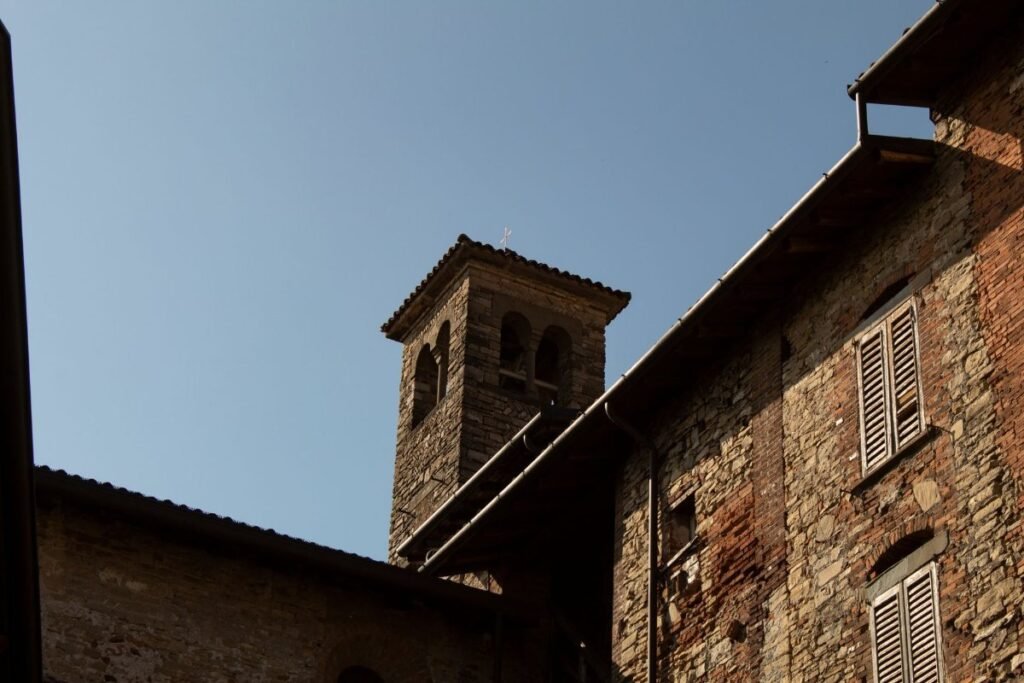
Around it: the Palazzo della Ragione (12th century, one of the oldest town halls in Italy), the Campanone bell tower, which still rings 100 times at 10pm as it did to signal the closing of the city gates, and the Contarini fountain in the middle.
Through an archway is Piazza Duomo, crammed with the cathedral, the Basilica di Santa Maria Maggiore and the Cappella Colleoni. That last one — a coloured marble chapel built by a mercenary commander for himself — is extraordinary, and free.
Inside Santa Maria Maggiore, look at the wooden inlay panels in the choir. They were designed by Lorenzo Lotto and they’re some of the finest marquetry anywhere.
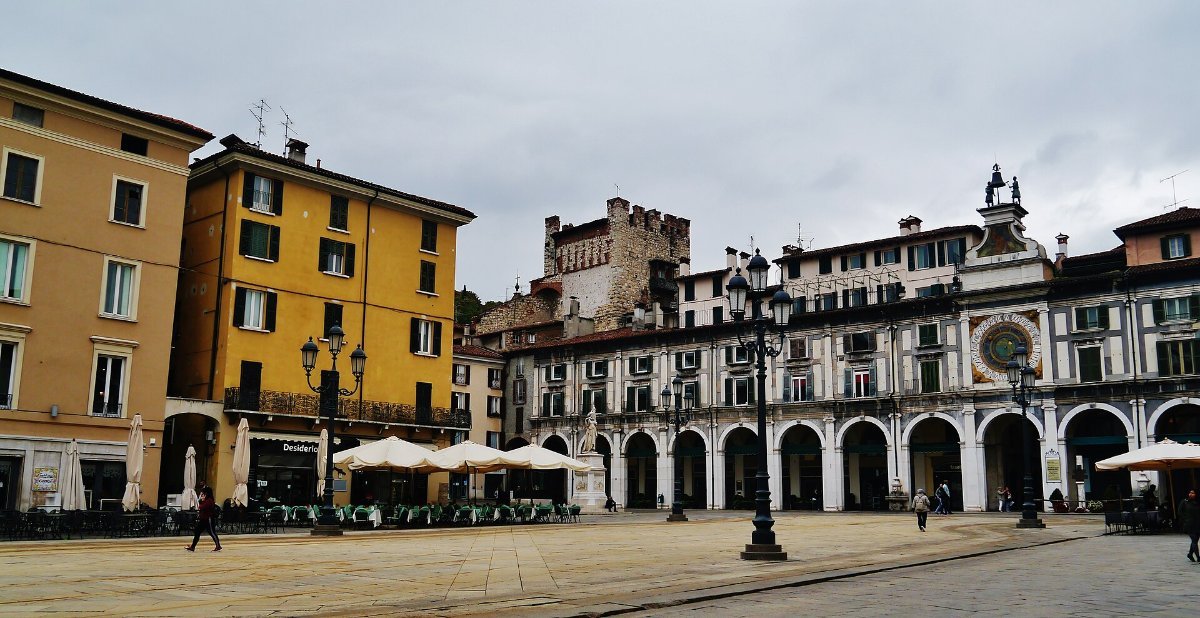
Brescia is 50 minutes away and was Capital of Culture
Brescia shared the title of Italian Capital of Culture with Bergamo in 2023, and it’s the more underrated of the two.
The Capitolium and the Roman forum — the best-preserved Roman public complex in northern Italy, UNESCO listed, with a Winged Victory bronze that was found buried and is now displayed properly.
The Santa Giulia museum — a monastery complex built over Roman houses, so you walk down through the layers.
Piazza della Loggia — a Venetian-influenced square with an astronomical clock.
Brescia is also almost entirely tourist-free, which for a city of 200,000 with this much Roman material is remarkable.
▶ Watch This Before You Go
Eating in Bergamo
This is Lombardy, and the food is northern and rich.
Casoncelli — the local filled pasta, with meat, amaretti and breadcrumbs, served with butter, sage and pancetta. It’s the dish.
Polenta — served everywhere, often with braised meat or with cheese. Bergamo is serious about it.
Cheese — the province has nine DOP cheeses, more than any other in Italy, including Taleggio and Gorgonzola.
Polenta e osei — a sponge cake shaped like a mound of polenta with marzipan birds on top. Sold in every pastry shop. It’s odd and it’s the local souvenir.
Prices in the upper town are tourist-ish but reasonable; walk five minutes off the main street and they drop.
Bergamo carries something else that visitors rarely know about, and locals very much do. The city was the epicentre of Italy’s first COVID wave in early 2020, and the images of army trucks carrying coffins out of the town came from here. There’s a memorial woodland planted in the lower town for the people who died. Nobody will raise it with you, but it explains a certain quietness in how the city talks about itself, and it’s worth knowing you’re in a place that went through that.
What else is nearby
Lake Iseo — 40 minutes. The least visited of the big northern lakes, with Monte Isola, the largest lake island in Europe, where cars are banned.
Lake Como — about an hour to Lecco, on the quieter eastern branch.
Franciacorta — 45 minutes, Italy’s best sparkling wine region, made by the traditional method. Far cheaper than Champagne and largely unknown outside Italy.
Milan — 50 minutes by train.
The Val Brembana and the Orobie Alps — proper mountains directly north of the city.
Practical bits
Bergamo airport (BGY) is the main Ryanair hub for the region. The bus to Bergamo city takes about 15 minutes and costs a few euros; the bus to Milan takes an hour.
Trains from Milan Centrale take about 50 minutes and run frequently.
One full day covers the upper town comfortably. Two nights lets you add Brescia or Franciacorta.
Best time: April to June and September to October. It’s inland northern Italy, so summer is humid and winter is foggy and cold.
The upper town is cobbled and steep in places. Sensible shoes.
FAQ
Is it worth staying rather than transferring to Milan? Yes, particularly on a late arrival or early departure. It’s a nicer place to spend an evening than Milan’s station district and cheaper.
How long do I need? A day for Città Alta, two nights for the area.
Is it expensive? No. Noticeably cheaper than Milan for accommodation and food.
Can I do it as a day trip from Milan? Easily. Train up, funicular, walk the walls, eat, train back.
Do I need a car? Not for the city. Yes for Franciacorta and the valleys.
What’s the one thing not to miss? The walls at sunset, then the Campanone ringing at 10pm.