Bologna sits an hour from Florence and two from Venice, and most people go straight past it on the train. Their loss, genuinely.
It has the oldest university in the world, 38 kilometres of covered walkways, a tower you can climb, and the best food in a country that takes food more seriously than almost anywhere.
It also has a fraction of the tourists. Here’s what to do with two days.
The Nicknames Tell You Everything
Bologna has three: la Dotta, la Grassa, la Rossa. The learned, the fat, the red.
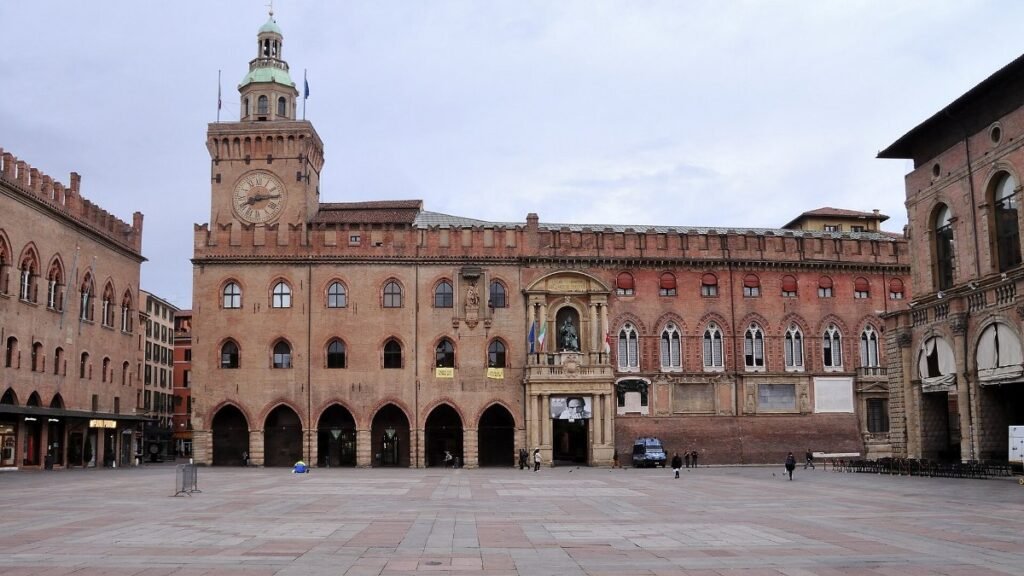
Learned because the university was founded in 1088 and is the oldest continuously operating one on earth. Fat because of the food, which we’ll get to. Red for the terracotta rooftops, and also for the politics, which have leaned firmly left since the war.
All three are still true and you’ll notice all three within a day.
Climb the Asinelli Tower
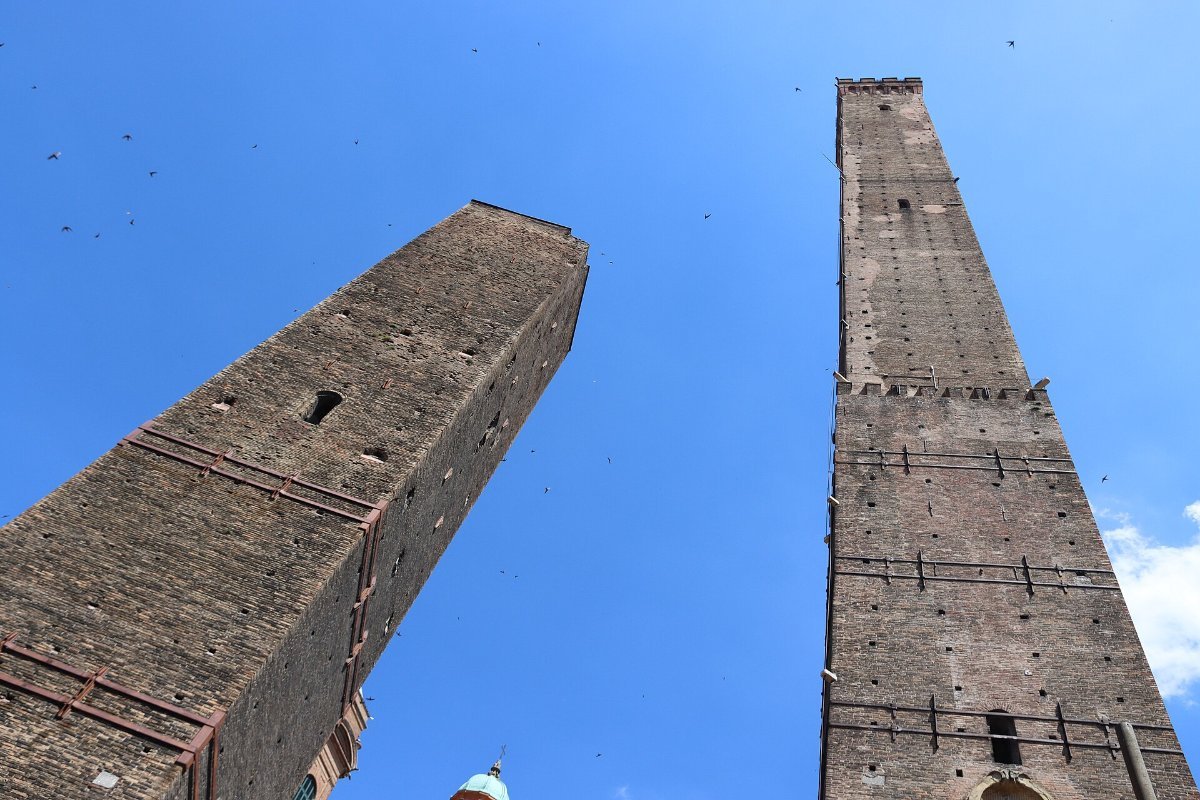
Bologna once had well over a hundred defensive towers, built by competing families in a medieval status contest. About twenty survive.
The two in the centre are the icons. Asinelli is 97 metres and you can climb it, 498 wooden steps up a narrow staircase, and the view over the red roofs at the top is the one photo everyone takes home.
Garisenda next to it leans alarmingly, so much so that it’s currently fenced off and being stabilised. Dante mentioned it in the Inferno, which gives you a sense of how long it’s been leaning.
Book the Asinelli climb ahead. Slots are timed and limited, and it does sell out.
Walk the Porticoes
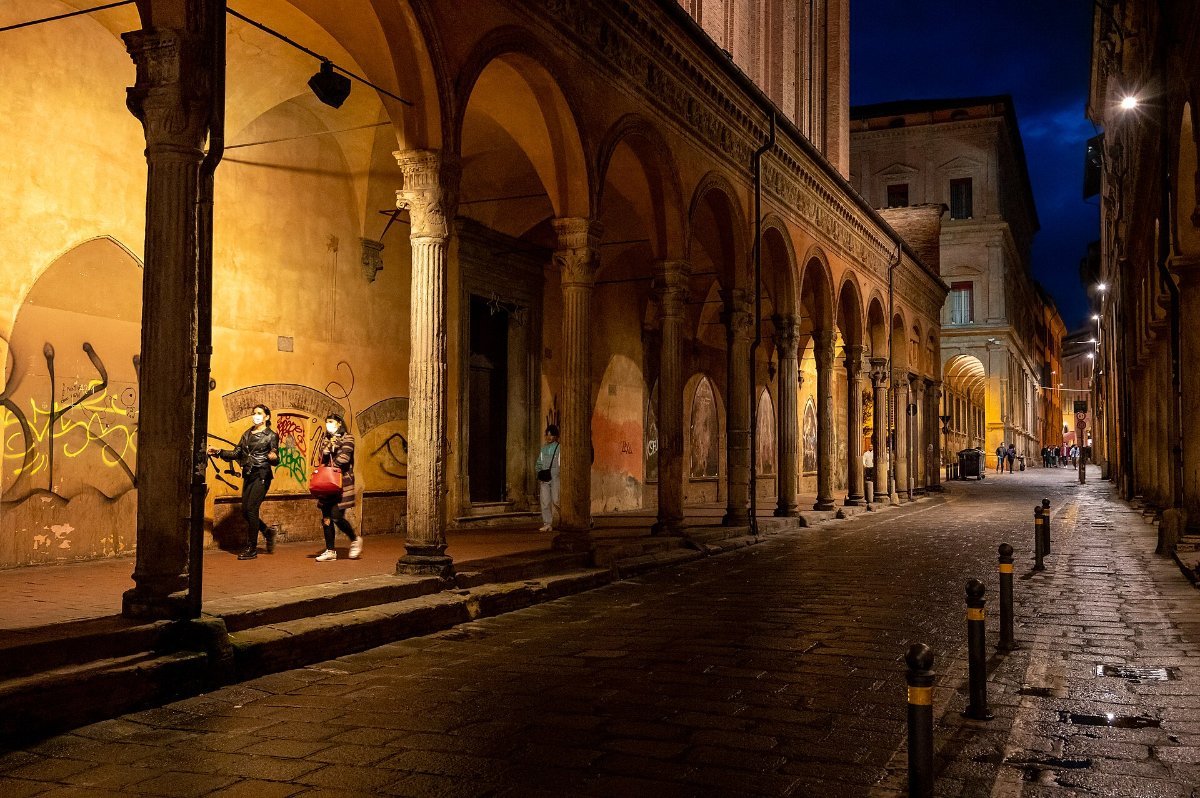
Bologna has 38 kilometres of covered walkway in the historic centre and 62 in total, which is more than anywhere else in the world. UNESCO listed them in 2021.
They exist because the medieval university drew so many students that landlords built out over the street to add rooms, and eventually the city regulated the whole thing.
Practically, it means you can walk across the entire centre in rain without an umbrella. In a country where it rains, this is a genuine quality-of-life feature.
Look up as you go. The ceilings are painted, vaulted or beamed and no two stretches are the same.
▶ Watch This Before You Go
Eat, Which Is Really Why You Came
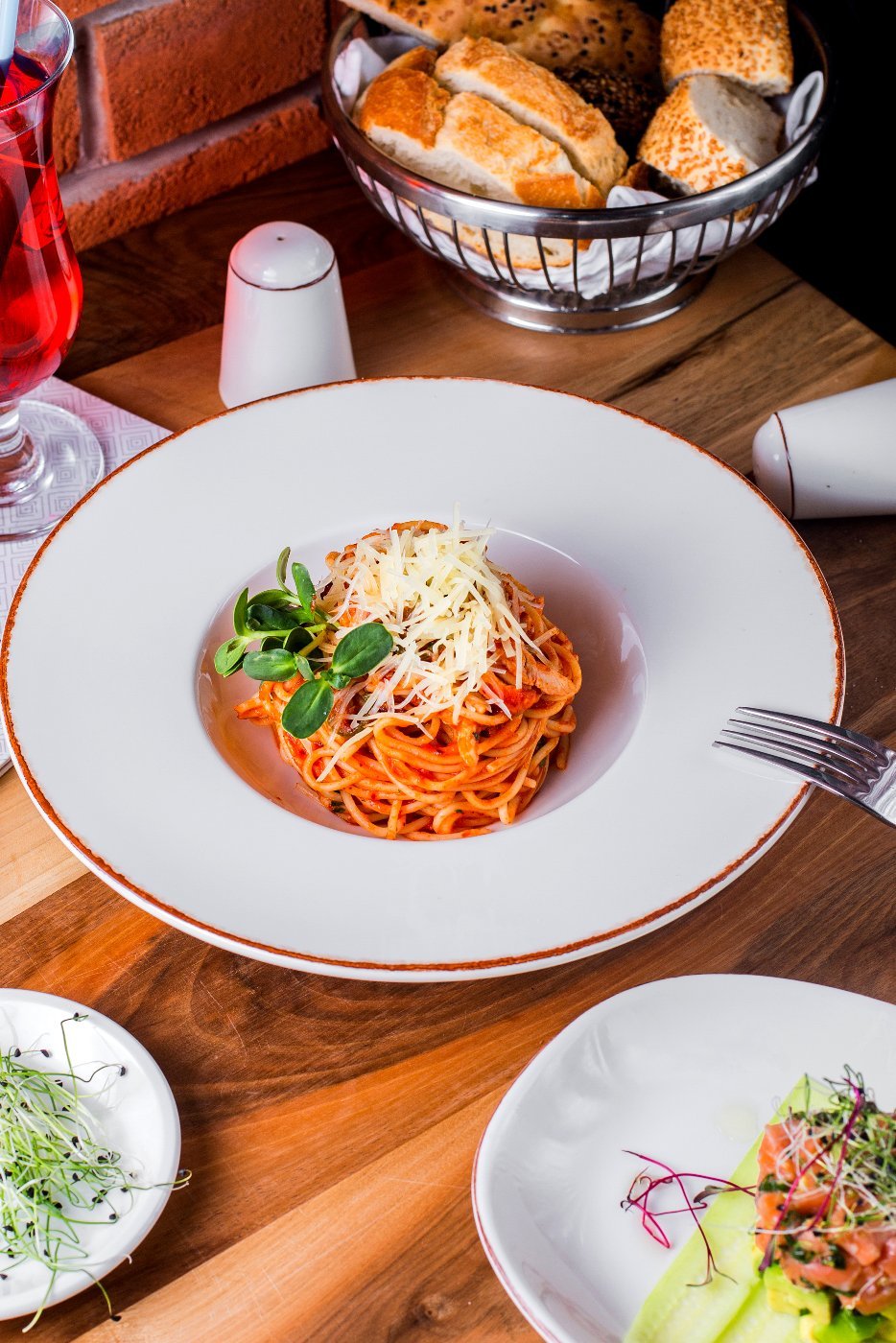
Right, the food. Bologna is the capital of Emilia-Romagna, which is the region responsible for parmesan, prosciutto di Parma, balsamic vinegar, mortadella and tortellini. It’s an unfair concentration.
Two rules that will save you. First, do not order spaghetti bolognese. It does not exist here. The dish is tagliatelle al ragu, and the ragu is a slow meat sauce with very little tomato.
Second, tortellini belong in broth, not cream. Tortellini in brodo is the local Sunday dish and it is much better than it sounds on paper.
Also eat: mortadella, which is the original of what the world calls baloney and is nothing like it. Crescentine, small fried dough pillows served with cured meat and squacquerone cheese.
The Quadrilatero
A grid of narrow medieval streets just off the main square that has been the market district since the Middle Ages. The street names still say what was sold there: Via Pescherie Vecchie is old fish, Via Drapperie is drapers.
It’s stalls of fish, meat, cheese, pasta and produce, wedged between tiny bars where people stand outside with a glass at six in the evening.
Go in the morning for the market and back in the evening for the aperitivo. Completely different atmospheres in the same fifty metres.
Mercato delle Erbe a few streets away is the bigger covered market and has a food hall attached.
Santo Stefano, the Strangest Church in Italy
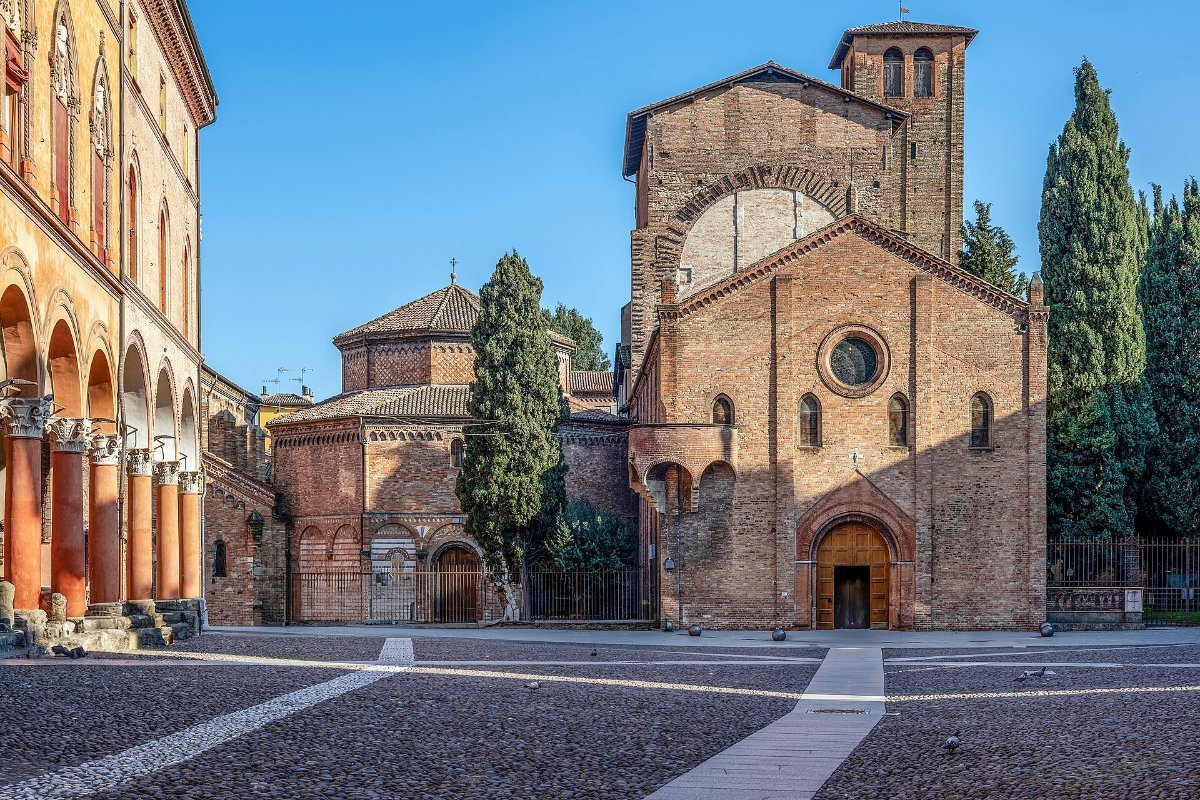
Also called the Seven Churches, because it’s a complex of interconnected chapels and courtyards built and rebuilt from the 5th century onwards.
You walk from one building into another across a thousand years of architecture without going outside. There’s a Roman column, a Romanesque courtyard, a basin the locals call Pilate’s, and a proper sense of accumulated time.
It’s free and it’s quiet and it takes half an hour. The piazza outside is the loveliest in the city and full of people just sitting.
Walk Up to San Luca
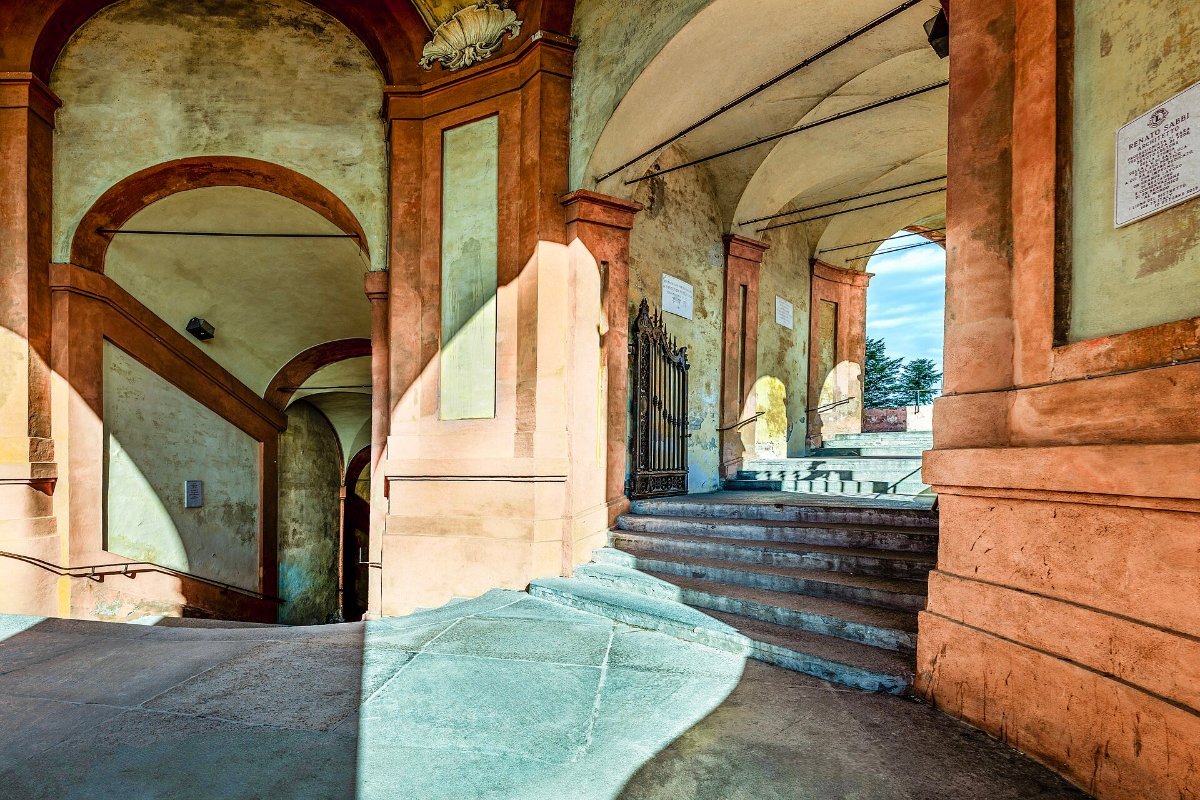
The Sanctuary of the Madonna di San Luca sits on a hill above the city, and it’s connected to the centre by a covered portico with 666 arches running 3.8 kilometres uphill.
It was built in the 1670s so the annual procession carrying an icon into the city wouldn’t get rained on. It’s the longest portico in the world.
The walk takes about an hour uphill and it’s a proper climb near the top. You can also get a bus or the little tourist train if the legs aren’t up to it.
The view back over the city and out to the plain is worth it, and the church itself is nicer inside than the exterior suggests.
The University Quarter
Via Zamboni and the streets around it are the student area, and it’s where Bologna feels alive rather than preserved.
The Archiginnasio, the old university building, has an anatomical theatre from 1637 carved entirely in wood, with skinned figures holding up the canopy. Genuinely eerie and completely worth the small entry fee.
Cheap food, cheap drinks and busy bars on a Tuesday. In August the students leave and the city is noticeably quieter :/
Day Trips Worth Taking
Bologna is the best rail hub in Italy and that’s a real reason to base yourself here.
Modena is 20 minutes and does balsamic vinegar and Ferrari. Parma is under an hour for the ham and the cheese. Ravenna is just over an hour and has Byzantine mosaics that are among the best in Europe.
Florence is 35 minutes on the fast train. Venice is under 90. You can base in Bologna, pay Bologna prices, and day-trip to the famous cities.
Common Questions
How many days do you need in Bologna? Two for the city itself. Four if you’re using it as a base for Modena, Parma and Ravenna.
Is Bologna worth visiting? Yes, particularly if you’ve done Rome, Florence and Venice and want somewhere that still feels like a working Italian city.
What food is Bologna famous for? Tagliatelle al ragu, tortellini in brodo, mortadella and lasagne. Not spaghetti bolognese, which is not an Italian dish.
Is Bologna expensive? Noticeably cheaper than Florence or Venice for food and hotels, while being just as central for travel.
When is the best time to visit? April to June and September to October. Summer is hot and humid on the Po plain, and August is very quiet with closures.