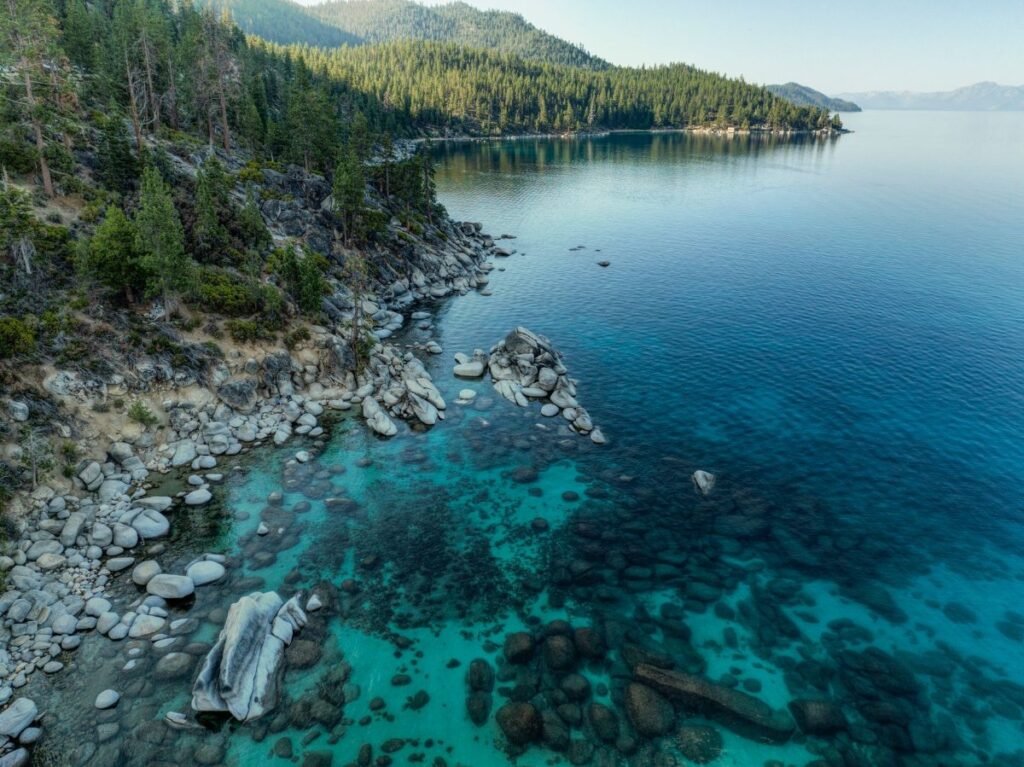
Lake Tahoe is the largest alpine lake in North America, sitting at 1,900 metres on the California and Nevada border, and it is one of very few places that is genuinely a headline destination in two completely different seasons.
Most places have an obvious best time. Tahoe doesn’t. It has two, and they suit different people.
Here’s the honest comparison.
The Lake Itself, Year Round
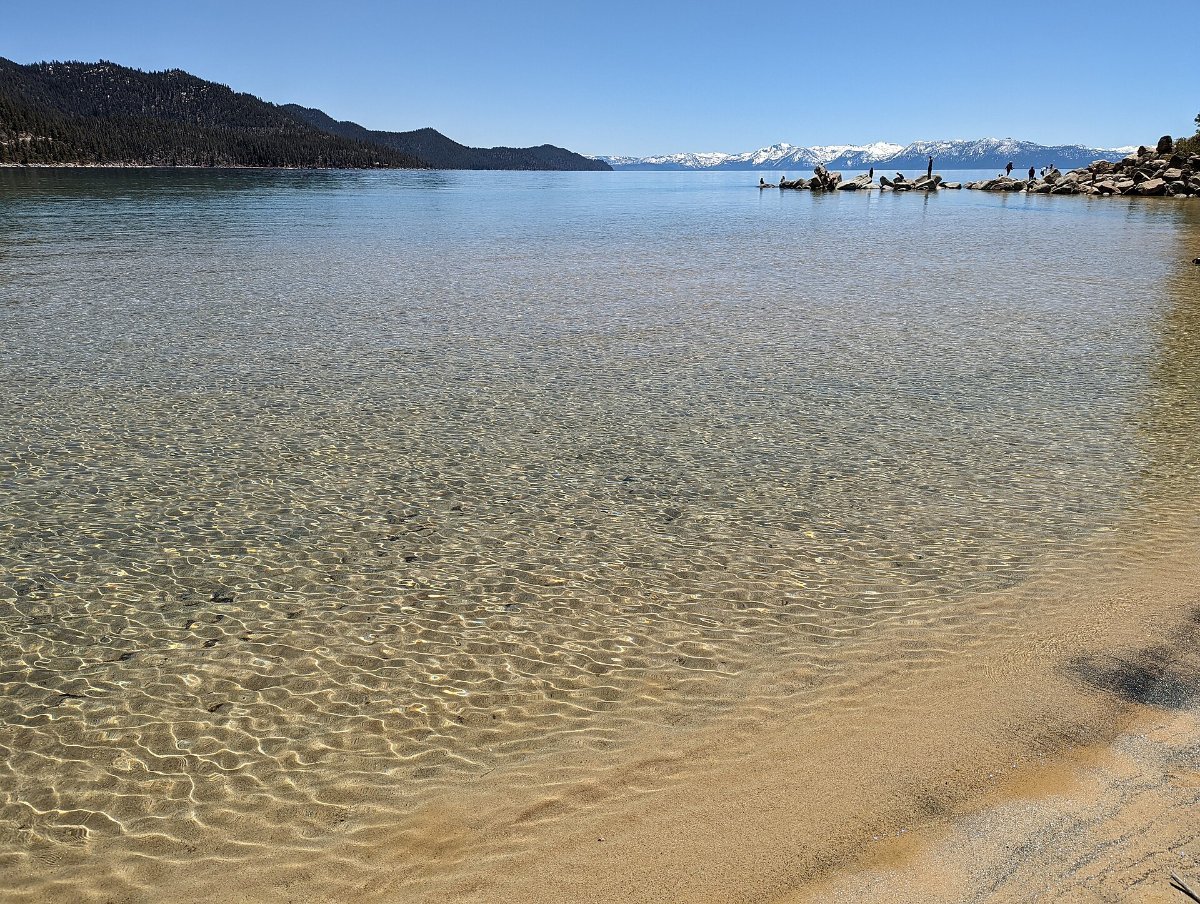
First, the thing that doesn’t change. Tahoe is 1,645 feet deep, the second deepest lake in the United States, and the water clarity is famous. On a calm day you can see 20 or 30 metres down.
It’s also so large and deep that it never freezes, which is why you get the striking winter image of blue water with snow right down to the shoreline.
The 72 mile shoreline drive circles the whole thing and takes about three hours without stopping. Do it in either season.
Summer: What You Get
Roughly June through September, with July and August the peak.
Daytime highs of 25 to 28 degrees, cool nights, and almost no rain. Alpine sunshine at altitude, so the UV is fierce.
The water warms to about 18 to 21 degrees on the shallow sandy shores by August, which is swimmable if you don’t dawdle. Away from the shallows it stays properly cold all year.
Sand Harbor on the Nevada side is the classic beach: pale sand, huge granite boulders, and water so clear the kayaks look like they’re floating on air.
Emerald Bay is the postcard, with a small island and a Scandinavian-style mansion called Vikingsholm at the bottom of a steep path.
▶ Watch This Before You Go
Summer: The Activities
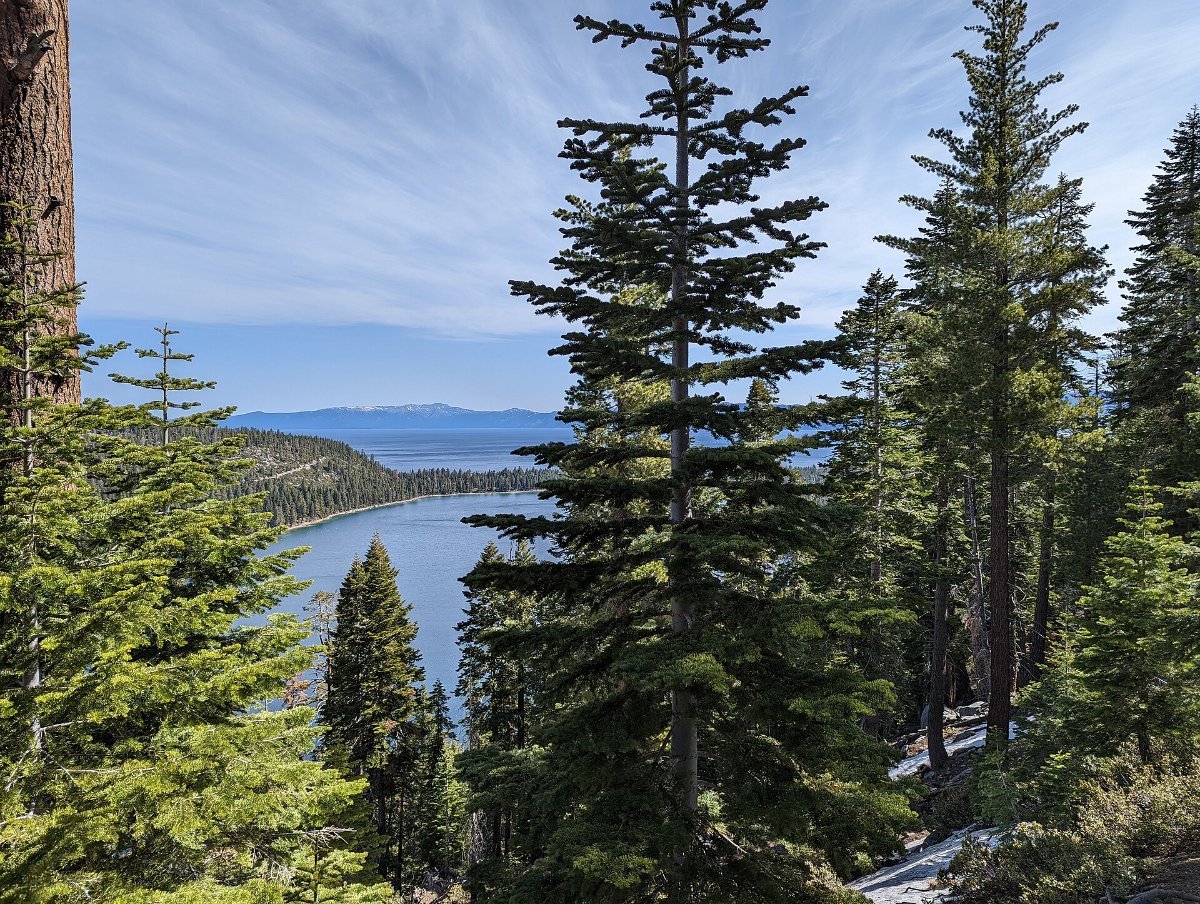
Hiking is the main event. The Tahoe Rim Trail runs 165 miles right around the lake and you can walk sections of it as day hikes. Eagle Lake, Mount Tallac and the Rubicon Trail are the popular ones.
Kayaking and paddleboarding on that clear water is the thing people remember. Rentals are everywhere.
Mountain biking is excellent, and several ski resorts run their lifts in summer for downhill trails and for the view.
Boat trips, parasailing, cliff jumping at Emerald Bay for the brave. Golf, if that’s your thing.
One summer warning that catches people out: the altitude. Tahoe sits at around 1,900 metres and the trailheads go higher, so a hike that would be easy at sea level is noticeably harder here on day one. Drink more water than feels necessary and take the first day gently.
Wildfire smoke is the other summer variable. Late summer in California can bring haze that flattens the views for days at a time, and it is worth checking air quality before committing to a photography-led trip in August or September.
Winter: What You Get
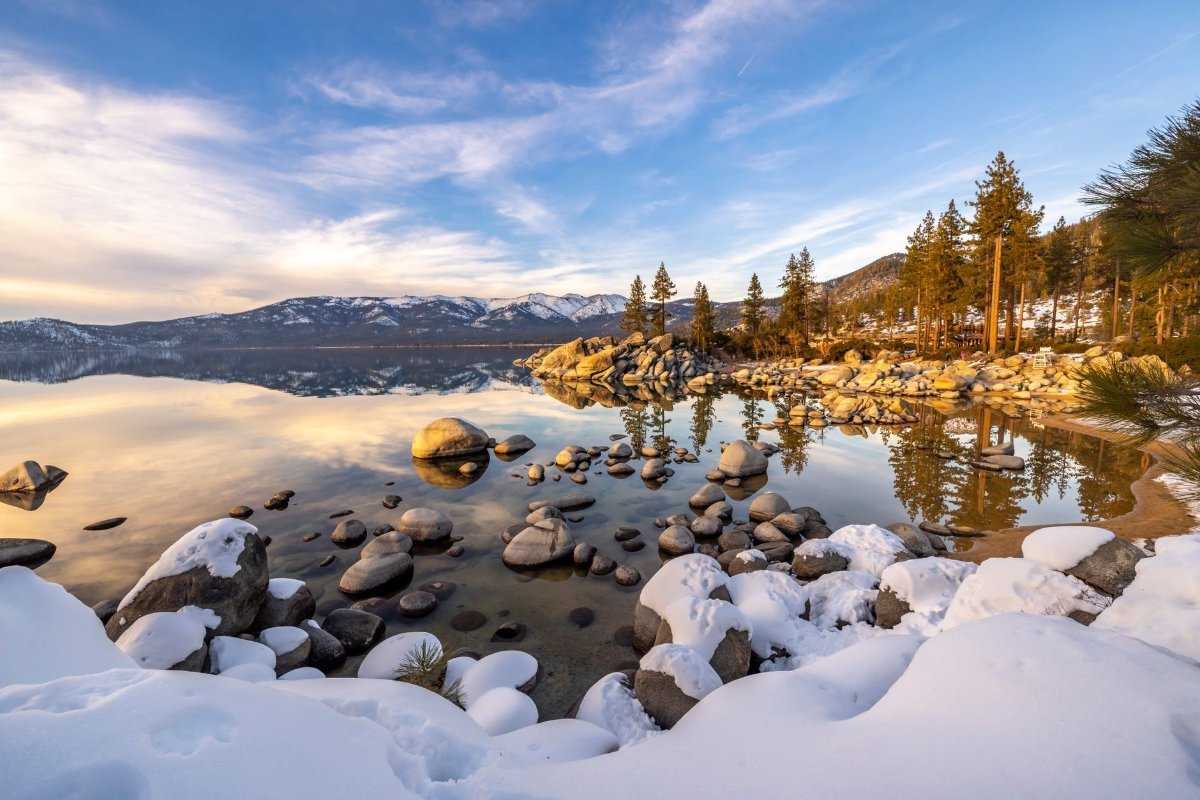
December through March, with the best snow usually January to March.
Tahoe has around a dozen ski resorts, more than almost any single region in North America. Palisades Tahoe hosted the 1960 Winter Olympics, Heavenly runs down to the lake at South Lake Tahoe with views over the water from the runs, and Northstar and Kirkwood have their own followings.
The lake view from a chairlift, blue water below a white mountain, is the thing that makes skiing here different from Colorado or Utah.
Snowshoeing, cross-country, snowmobiling and sledding all run. Several resorts have night skiing.
And the après scene is real, particularly around South Lake Tahoe, which also has casinos immediately over the Nevada state line.
Winter: The Catches
Tahoe snow is heavy and it arrives in enormous storms. A single system can drop several feet in a couple of days.
That means chain controls on the mountain passes, and sometimes full closures on Interstate 80 and Highway 50. People do get stuck for a day.
Practical: rent a four wheel drive, carry chains and know how to fit them, and build a buffer day around a flight. Check Caltrans before every drive.
Weekend traffic from the Bay Area is heavy in both directions, and Sunday afternoons on the way back are genuinely grim.
Cost
Winter is more expensive, and by a wide margin over the Christmas and February holiday weeks. Lift tickets bought at the window are eye-watering, so buy in advance or use a multi-resort pass.
Summer accommodation is cheaper than peak winter but still high in July and August.
The genuine value windows are late spring, roughly May, and autumn, September into October. Fewer people, mild weather, much lower prices.
North Shore or South Shore
This matters as much as the season.
South Lake Tahoe is bigger, busier and has the casinos, the nightlife and Heavenly. It’s the choice for a livelier trip and it’s where most first-timers stay.
North Shore, around Tahoe City, Incline Village and Truckee, is quieter, more residential and generally more expensive. Better for a calm trip and closer to Palisades and Northstar.
The east shore on the Nevada side has the best beaches and the fewest people.
So Which One
Choose summer if: you want to be outdoors all day for less money, you like hiking and water, you’re travelling with people who don’t ski, or you want the clear-water photographs.
Choose winter if: you ski or snowboard, you want a proper snow holiday, or you like the idea of a chairlift view over an alpine lake.
And if you’d rather not choose, go in late September. The lake is still warm enough, the aspens are turning, the crowds have gone and the prices have dropped. That’s my actual answer 🙂
Common Questions
Does Lake Tahoe freeze? No. It’s too large and deep, which is why you get snow-covered shores around open blue water in winter.
Can you swim in Lake Tahoe? Yes in summer, on the shallow sandy shores, where it reaches about 18 to 21 degrees in August. Elsewhere it stays cold year round.
Do I need chains in winter? Carry them and know how to fit them. Chain controls are common on the passes and are enforced.
North Shore or South Shore? South for nightlife, casinos and Heavenly. North for quiet, and the east shore for the best beaches.
What’s the cheapest time to visit? Late spring and autumn, particularly May and late September into October.