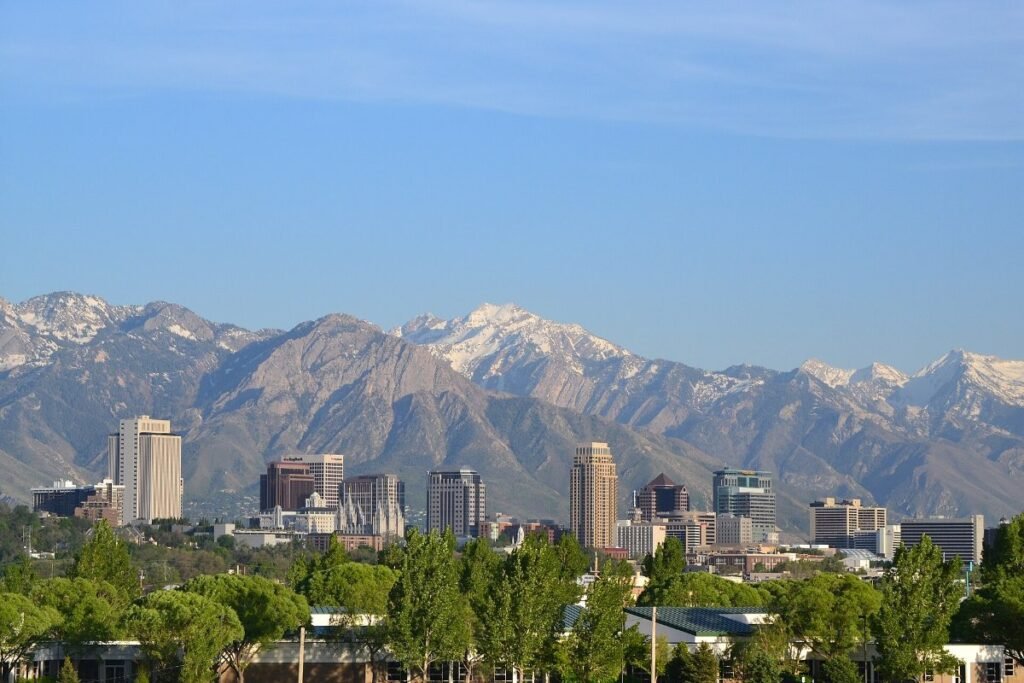
Salt Lake City has an international airport, four world-class ski resorts within an hour, five national parks within a day’s drive, and hotel prices well below Denver or Jackson. As a base for the American West it’s arguably the best-positioned city in the country.
It’s also a genuinely odd place, and the odd bits are interesting.
Temple Square, and the city’s founding
Brigham Young led the Mormon pioneers here in 1847, reportedly saying “this is the right place” on seeing the valley. The city was laid out on a grid centred on the temple, with streets numbered outward from it.
That grid is why the addresses look like coordinates. “700 East 300 South” means seven blocks east and three blocks south of Temple Square. Once it clicks, the city is impossible to get lost in.
Temple Square is free and open to non-members. Note that the Salt Lake Temple itself has been closed for a major seismic renovation for years and is not open to the public in any case.
The Tabernacle is the thing to actually catch — the Tabernacle Choir rehearses on Thursday evenings and broadcasts on Sunday mornings, both free to attend and open to anyone. The acoustics are famous; guides demonstrate by dropping a pin.
The Great Salt Lake, and its problem
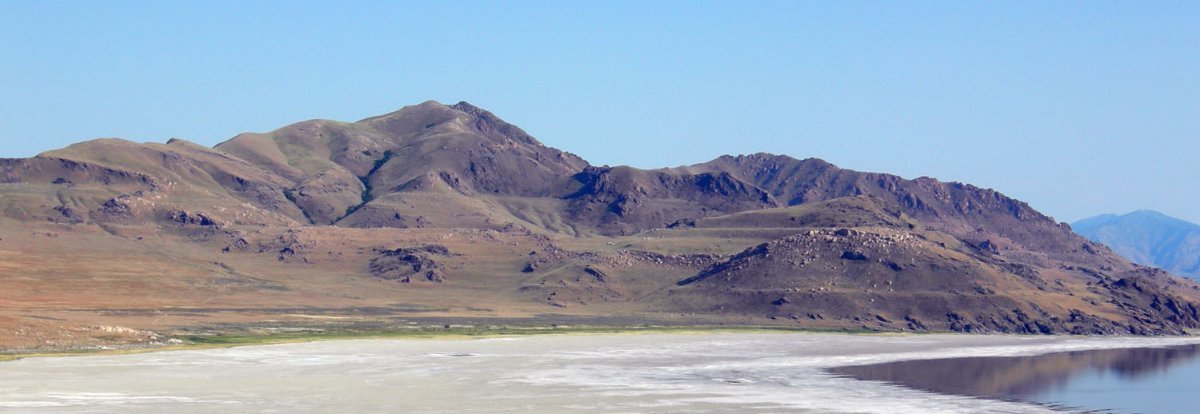
The largest saltwater lake in the Western Hemisphere, saltier than the ocean, and you float in it the way you do in the Dead Sea.
Antelope Island State Park is the way to see it — a causeway out to an island with a free-ranging bison herd of around 500, plus pronghorn and bighorn sheep. Around $15 per vehicle.
Two honest warnings. The shoreline can smell strongly of sulphur depending on wind and season. And there are brine flies in enormous numbers in summer — harmless, but the shore can be black with them.
The bigger issue: the lake has been shrinking badly, hitting record lows in 2022 as water is diverted upstream. Exposed lakebed carries arsenic-laden dust, and it’s now one of the more serious environmental situations in the American West. There’s been some recovery in wet years, but it’s a live problem and worth understanding rather than being surprised by.
Park City is 35 minutes away
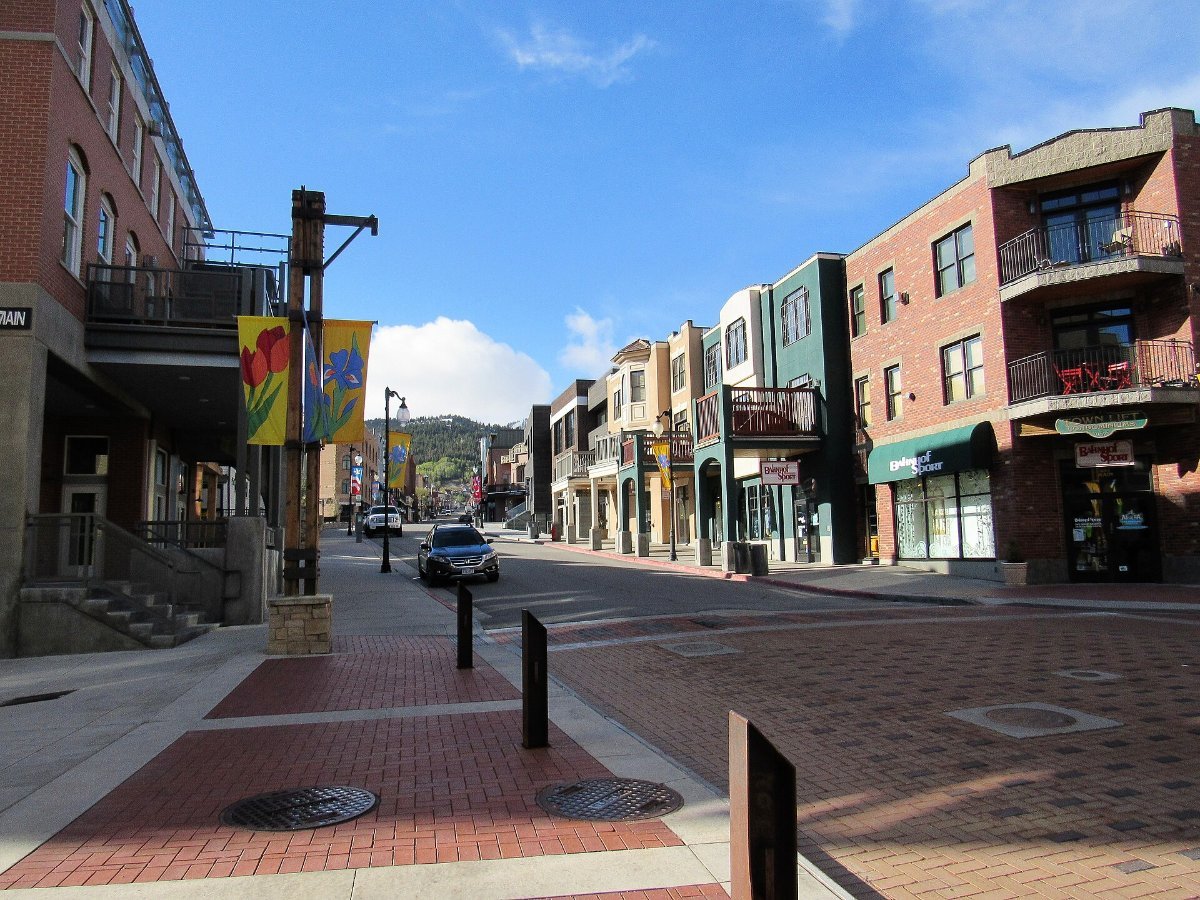
An old silver mining town turned ski resort, and the host of the mountain events for the 2002 Winter Olympics. Salt Lake is due to host the Games again in 2034.
Winter: Park City Mountain is the largest ski resort in the US by area, and Deer Valley next door is skiers-only and famously well groomed. Utah’s marketing line about “the greatest snow on earth” is about the snow being unusually dry, which is a real effect of the lake and the elevation.
Summer: mountain biking, alpine slides, hiking, and hotel rates that fall by half or more.
January: the Sundance Film Festival takes over the town, and prices and crowds go accordingly.
Main Street is preserved 19th-century mining architecture and is pleasant to wander in any season.
▶ Watch This Before You Go
The Cottonwood canyons are closer still
Big and Little Cottonwood Canyons are 30 to 45 minutes from downtown and contain four resorts: Snowbird, Alta (one of three US resorts that still bans snowboarders), Brighton and Solitude.
This is the genuine selling point of Salt Lake — you can land at the airport and be on a chairlift in under an hour, which is not true of Denver.
In summer the same canyons are excellent for hiking, and Albion Basin above Alta has one of the best wildflower displays in the Rockies in late July.
Note that the canyon roads require snow tyres or chains in winter and close during avalanche control.
What else is in the city
Utah State Capitol — on a hill with a good view over the valley.
Natural History Museum of Utah — genuinely excellent, with one of the best dinosaur collections anywhere, because Utah has an extraordinary fossil record.
Liberty Park and the 9th and 9th district — where the city’s independent shops and restaurants are.
The alcohol rules — Utah’s liquor laws are unusual but far less restrictive than the reputation. Restaurants serve alcohol, bars operate normally, and beer sold in grocery stores is capped at 5% ABV. You will not struggle to get a drink.
The national parks, which is why most people come
Driving times from Salt Lake City:
- Arches and Canyonlands (Moab) — 3 hours 45.
- Capitol Reef — 3 hours 30.
- Bryce Canyon — 4 hours.
- Zion — 4 hours 30.
- Grand Teton — 4 hours 30.
- Yellowstone — 5 hours 30.
Flying into Salt Lake for a Mighty 5 road trip is usually cheaper than flying to Las Vegas and it puts you closer to the northern parks.
Practical bits
The city sits at about 1,300 metres and the resorts go well above 2,500. Take altitude seriously on day one.
SLC airport was rebuilt recently and is efficient. A light rail line runs from the terminal into downtown for a couple of dollars.
Two days for the city and Antelope Island. Add ski days or use it as a road trip start.
Best time: December to March for skiing, May and September for hiking and mild weather. July and August in the valley regularly exceed 35°C.
FAQ
Do I need to be Mormon to visit Temple Square? No, it’s open to everyone and free, and the guides are used to visitors of all kinds.
Can I actually float in the lake? Yes, salinity varies by section but it’s more buoyant than the sea. Shower afterwards.
Is it a good ski base? Among the best anywhere, because of the airport-to-lift time.
Is it expensive? The city is reasonable. Park City in ski season and during Sundance is not.
Is it walkable? Downtown yes, though the blocks are unusually large. Light rail covers the rest.
Best single day trip? Antelope Island in the morning, a Cottonwood canyon in the afternoon.