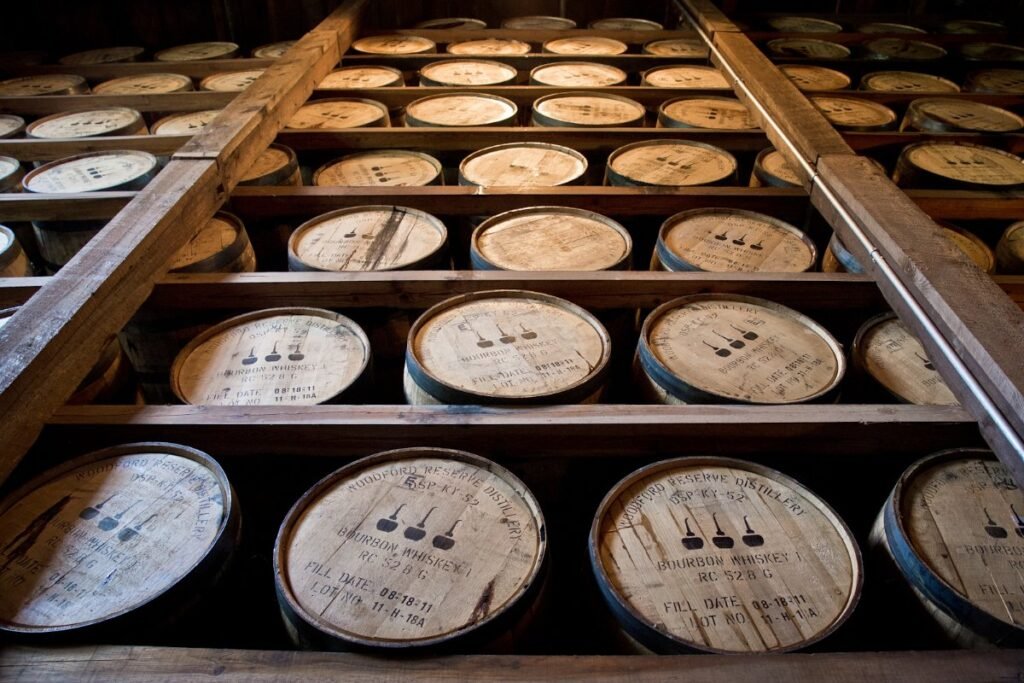
Ninety-five percent of the world’s bourbon is made in Kentucky, and there are more barrels ageing in the state than there are people living in it — roughly 14 million barrels to 4.5 million residents.
The Bourbon Trail is the tourism programme built around that, and it’s genuinely well organised. It’s also easy to do badly, mostly by attempting too many distilleries in too few days.
What bourbon actually has to be
Worth knowing before someone tells you at a tasting. By US law, bourbon must be:
- Made in the United States (not just Kentucky, despite what you’ll hear).
- At least 51% corn in the mash bill.
- Aged in new, charred oak containers.
- Distilled to no more than 160 proof, barrelled at no more than 125.
- Nothing added but water.
The “new barrel” rule is why Scotland and Ireland have so much cheap oak — they buy the used ones.
Kentucky’s role comes down to limestone-filtered water, which is high in calcium and free of iron, and a climate with big temperature swings that push whiskey in and out of the wood.
The two trails
The Kentucky Bourbon Trail covers the large, well-known distilleries. The Craft Tour covers smaller producers. Both are run by the Kentucky Distillers’ Association, and there’s a passport you get stamped, with a prize for completing it.
Don’t treat the passport as a to-do list. Three distilleries in a day is the practical maximum and two is more enjoyable.
Woodford Reserve — the prettiest site, a stone distillery in horse country with the oldest working rickhouse in Kentucky.
Buffalo Trace — in Frankfort, the oldest continuously operating distillery in America. It ran through Prohibition on a medicinal licence. Tours are free, which is unusual, and it makes Pappy Van Winkle.
Maker’s Mark — Loretto, and the most visually striking. You can hand-dip your own bottle in the red wax.
Four Roses — Lawrenceburg, Spanish mission architecture, and unusually generous tastings.
Heaven Hill, Wild Turkey, Jim Beam, Willett — all worth it, all different in scale and character.
How to actually plan it
The distilleries cluster in three areas, and mixing them badly means a lot of driving.
Bardstown — the self-declared “Bourbon Capital of the World”, with Willett, Heaven Hill, Bardstown Bourbon Company and Maker’s Mark nearby. The best single base.
Lexington and Versailles — Woodford Reserve, Four Roses, Wild Turkey, plus the horse farms.
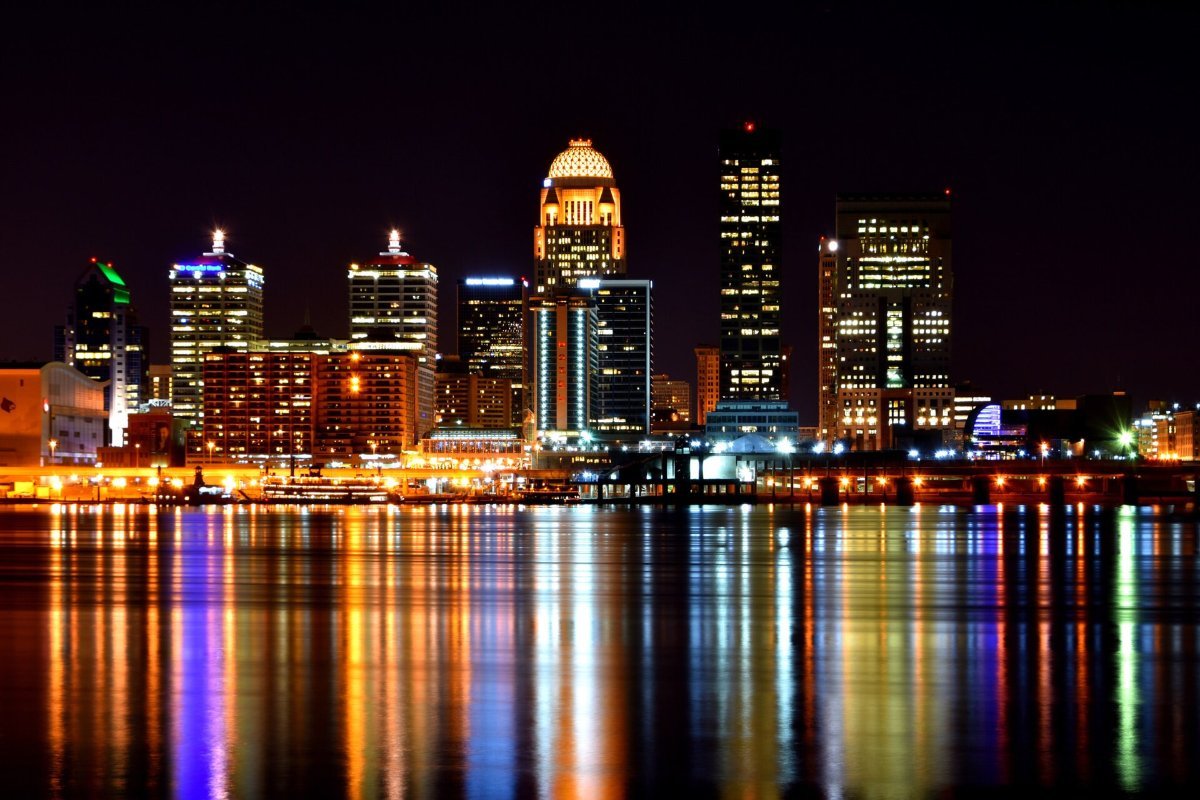
Louisville — the city, with Whiskey Row downtown: Evan Williams, Angel’s Envy, Michter’s and Old Forester all within walking distance of each other. This is the one part you can do without driving.
A sensible four days: two nights Louisville, two nights Bardstown or Lexington.
Book tours in advance. The popular ones sell out weeks ahead, especially at weekends and in autumn.
▶ Watch This Before You Go
The driving problem, and how people solve it
You’re tasting whiskey and the distilleries are 30 to 60 minutes apart on rural roads. This needs thinking about before you go, not after the second tasting.
Options: a designated driver, a guided tour with transport (widely available, roughly $150 to $250 per person for a day), or basing yourself on Whiskey Row in Louisville and walking.
Most distilleries will give you a small container to take your pours away in if you’d rather not drink and drive. Ask — they’re used to it.
Horse country is the other half of the trip
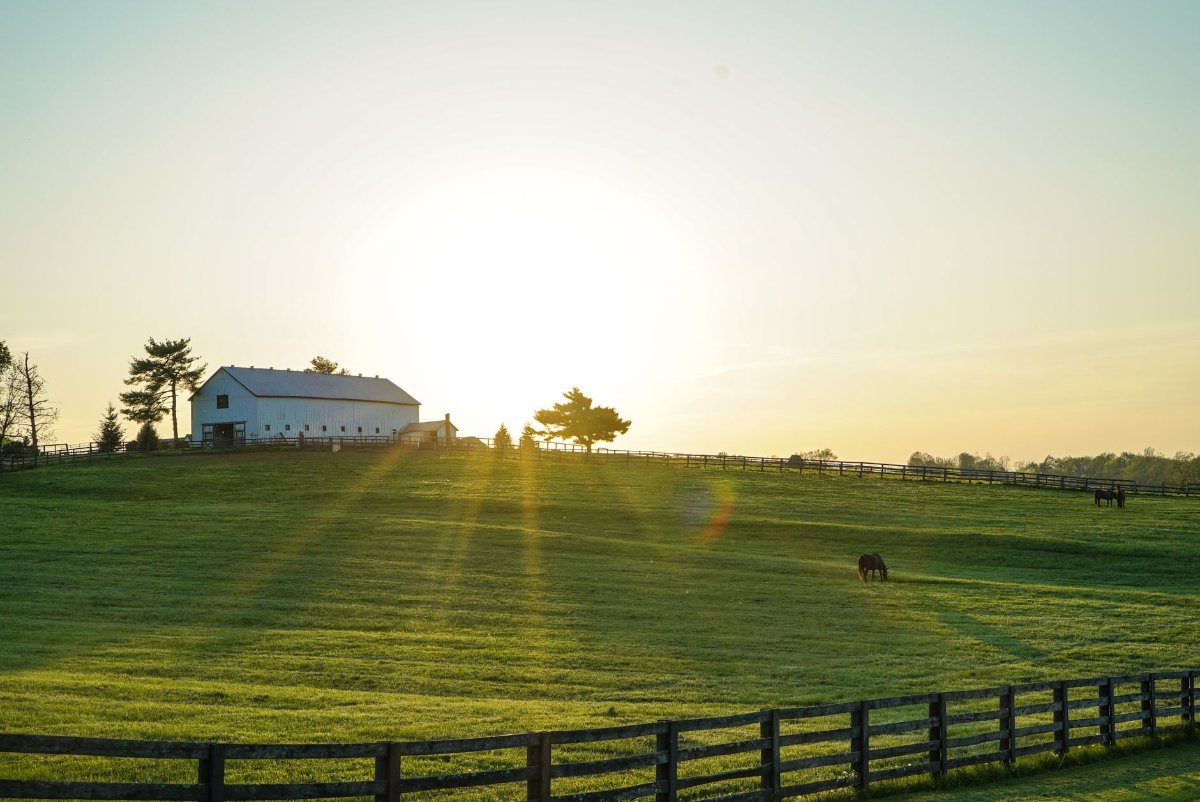
Lexington sits in the Bluegrass, and the horse farms with their white or black fences are as much a part of the landscape as the rickhouses.
Kentucky Horse Park — a working farm and museum near Lexington.
Keeneland — a beautiful racecourse with meets in April and October, and free morning workouts you can watch most of the year.
Churchill Downs in Louisville — home of the Kentucky Derby, with the Derby Museum open year round. The Derby itself is the first Saturday in May and prices for everything in the state go vertical around it.
Many farms offer tours; some let you meet retired champions.
Eating and the other things
The Hot Brown — an open-faced turkey sandwich under Mornay sauce with bacon, invented at the Brown Hotel in Louisville in 1926. Enormously rich.
Burgoo — a thick stew, traditionally of whatever meat was around.
Beer cheese — a Kentucky invention, served with pretzels and celery everywhere.
Bourbon balls — chocolate confections, sold at every gift shop.
Also worth a stop: Mammoth Cave National Park, about 90 minutes from Bardstown, the longest known cave system in the world at over 685km mapped.
When to go
September and October — the best time. Warm days, autumn colour, and this is when the distilleries are most active.
April and May — spring in horse country, Keeneland’s spring meet, and the Derby. Book far ahead.
Summer — hot and humid, and the rickhouses are hotter still.
Winter — quiet and cheap, some smaller places reduce hours.
Practical bits
Louisville and Lexington both have airports; Louisville has more flights. Cincinnati is also within about 90 minutes of the northern end.
Tours run $15 to $40 typically, more for premium tastings.
Four days is right. Two is enough for Louisville plus one distillery day.
Shipping bottles home has restrictions that vary by state and country. Check before you buy the expensive one.
FAQ
How many distilleries a day? Two or three, maximum. More becomes a blur and a lot of driving.
Do I need to like whiskey? It helps, but the sites, the history and the horse country carry a fair bit on their own.
Can I buy rare bottles at the distillery? Occasionally, usually by lottery. Don’t plan a trip around getting Pappy.
Is it family-friendly? Tours are generally 21+ for tastings, though some allow younger visitors on the walking portion. The Horse Park and Mammoth Cave fill the gaps.
Best single distillery if I only do one? Buffalo Trace for history and value, Maker’s Mark for the experience, Woodford for the setting.