Michigan touches four of the five Great Lakes and has more freshwater coastline than any other US state — about 5,300km of it. That’s more shoreline than California, Florida or Hawaii. Most people outside the Midwest have no idea.
It also has an island where cars have been banned since 1898.
Mackinac Island runs on horses and bicycles
No cars. None. The ban came in 1898 after motor vehicles spooked the horses, and it has held ever since. Emergency vehicles and one or two service exceptions aside, everything moves by horse-drawn carriage, bicycle or on foot.
The effect is stranger and better than it sounds. You step off the ferry into a town of about 500 permanent residents where the loudest sound is hooves on the road.
Getting there: ferries from Mackinaw City or St Ignace, roughly 16 to 20 minutes, around $30 to $35 return. They run from about May to October. In winter the island has an ice bridge to St Ignace marked with discarded Christmas trees, which is a genuine thing that genuinely happens.
What to do on the island
Cycle M-185 — the only state highway in America with no motor vehicles. It loops 13km around the island’s edge, it’s flat, and it takes about 90 minutes with stops. Bike hire is everywhere, roughly $12 to $15 an hour.
Fort Mackinac — a Revolutionary War-era fort above the town with cannon firings and a view over the straits.
Arch Rock — a limestone arch 45 metres above the water on the island’s east side, on the cycle loop.
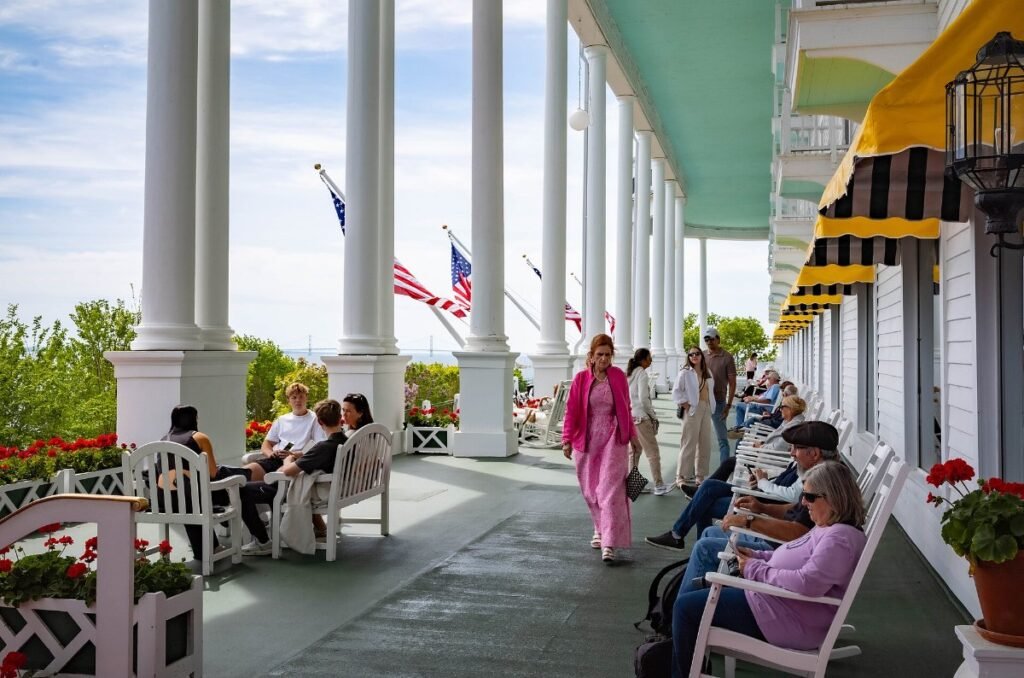
The Grand Hotel — opened 1887, with what’s claimed to be the world’s longest front porch at 200 metres. Non-guests pay a fee to walk the grounds. There’s a dress code after 6pm, jackets for men, and they mean it.
Fudge. The island takes fudge extremely seriously and day visitors are locally nicknamed “fudgies”. Join in.
Sleeping Bear Dunes is the other must
On the Lake Michigan side near Traverse City, sand dunes rising 140 metres straight out of the lake.
The Dune Climb is exactly what it sounds like — a steep sand slope you haul yourself up. Going down is a delight and coming back up is not.
The Pierce Stocking Scenic Drive is a 12km loop with overlooks, and the Lake Michigan Overlook at stop 9 is the view that gets photographed.
Fair warning posted at the top: the descent to the water from that overlook takes minutes and the climb back takes hours. Rescues here cost several thousand dollars and happen regularly. Look, don’t slide.

The Upper Peninsula is a different state entirely
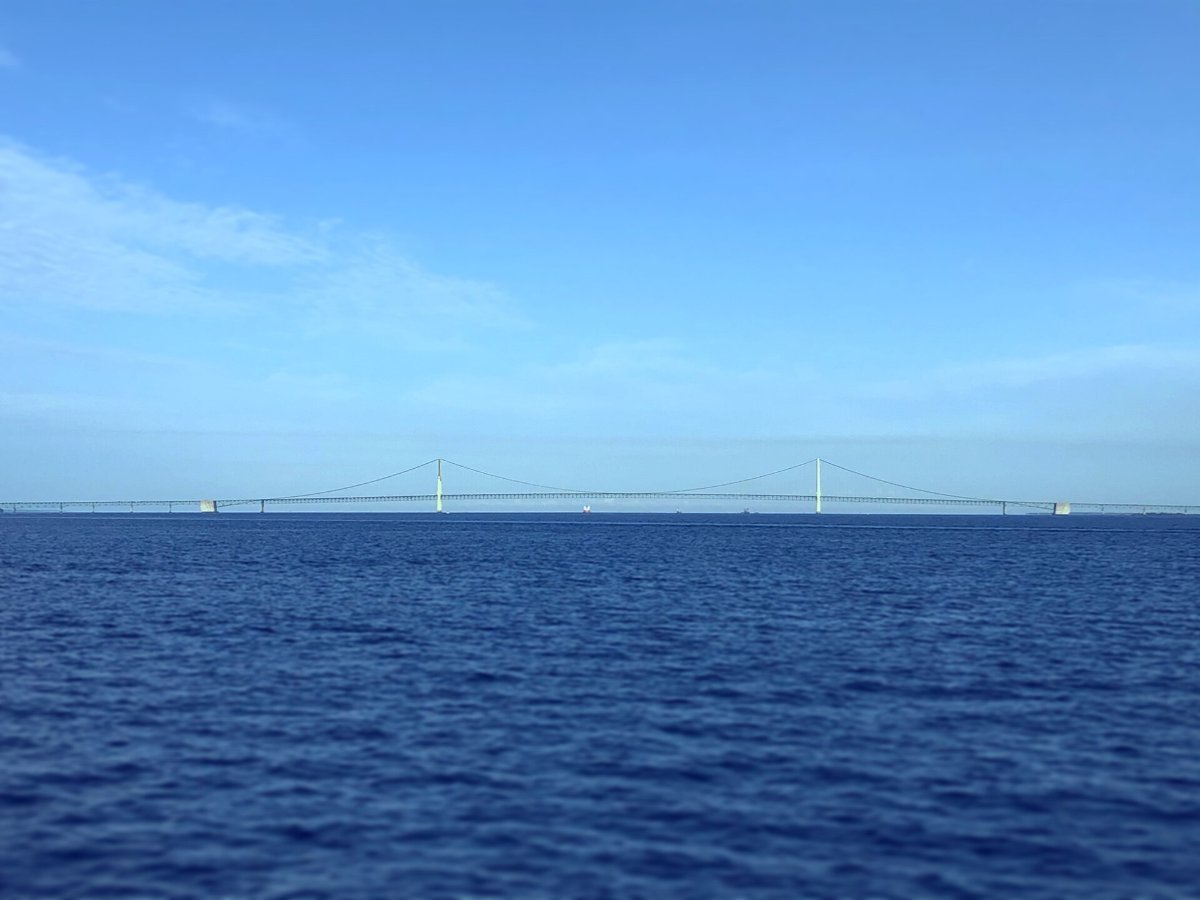
The UP is connected to the rest of Michigan only by the Mackinac Bridge, and locals call everyone below it “trolls” because they live under the bridge. There are about 300,000 people in an area the size of Denmark.
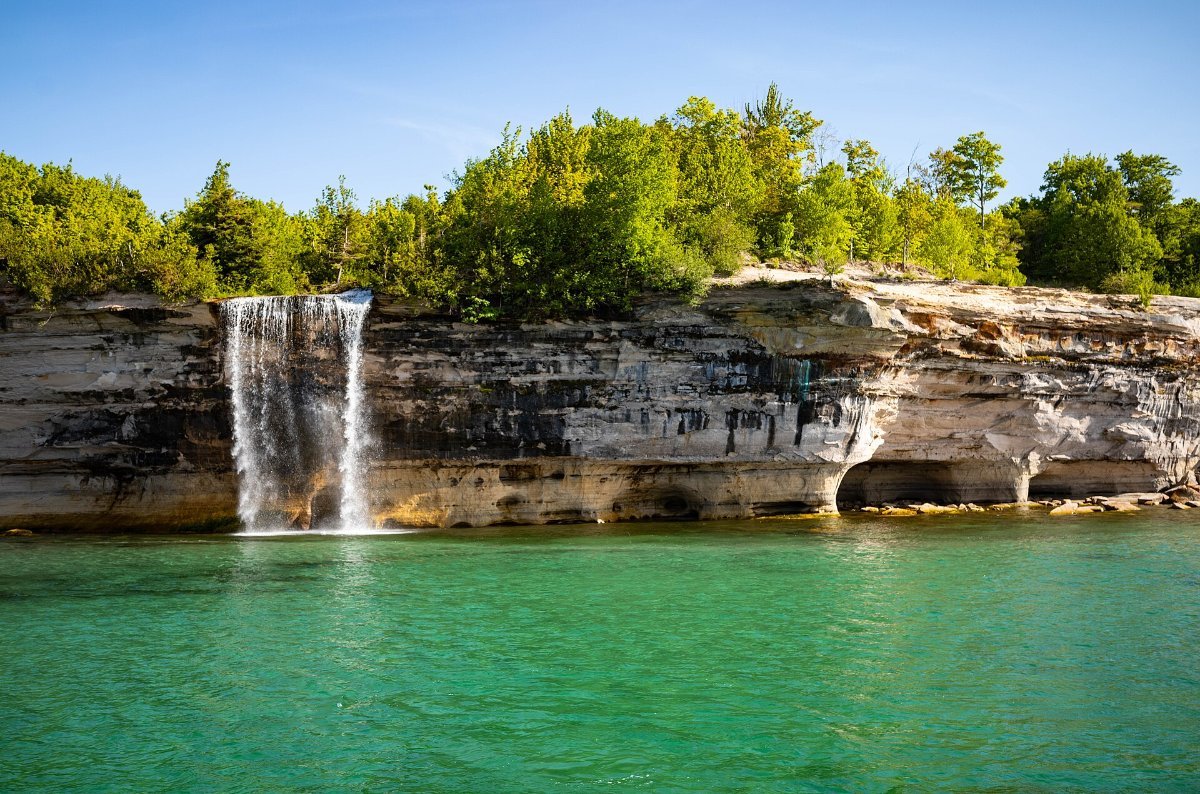
Pictured Rocks National Lakeshore is the highlight — 24km of sandstone cliffs on Lake Superior, streaked mineral-red and green, best seen from a boat tour out of Munising. Around $50 and worth it; the cliffs don’t work from land.
Tahquamenon Falls — one of the largest waterfalls east of the Mississippi, stained amber by tannins from the cedar swamps upstream.
Kitch-iti-kipi — a spring where 40,000 litres a minute rise through the sand and the water is so clear you can see the bottom nine metres down. There’s a self-operated raft.
▶ Watch This Before You Go
Traverse City and the wine you didn’t expect
Michigan’s Leelanau and Old Mission peninsulas sit on the 45th parallel, the same latitude as Bordeaux and Piedmont, and the lake moderates the climate enough to grow serious cool-climate wine.
Rieslings here are genuinely good and almost nobody outside the Midwest drinks them. There are around 40 wineries between the two peninsulas.
Traverse City is also the cherry capital — Michigan grows most of America’s tart cherries — and the National Cherry Festival runs in early July.
A week that works
- Days 1–2 — Traverse City, the wine peninsulas, Sleeping Bear Dunes.
- Day 3 — drive north to Mackinaw City, ferry to Mackinac Island.
- Day 4 — Mackinac Island full day, or cross the bridge into the UP.
- Days 5–6 — Pictured Rocks and Tahquamenon Falls.
- Day 7 — back south, or on to Marquette.
Timing
July and August — the only reliably warm months, and when the lake is swimmable, which is a generous word for water that rarely clears 21°C.
September and early October — the best time. Autumn colour in the UP peaks late September to mid October and is genuinely spectacular. Crowds gone, everything still open.
Winter — snowmobiling, ice caves and serious lake-effect snow. The UP gets over 500cm a year in places. Mackinac Island largely shuts.
Spring — muddy and cold, and many seasonal businesses stay closed until May.
Practical bits
You need a car for everything except the island itself.
Distances are big. Traverse City to Munising is about four hours. Detroit to Mackinaw City is about four and a half.
Book Mackinac Island accommodation months ahead for summer. It’s small and it fills.
Bring layers year-round. Lake Superior generates its own weather and a warm afternoon can turn cold fast.
FAQ
Can you visit Mackinac Island as a day trip? Yes, and most people do. Staying overnight is much better — the day-trippers leave on the last ferry and the town goes quiet.
Is the water warm enough to swim? Lake Michigan reaches about 20 to 22°C in August in shallow bays. Lake Superior essentially never gets warm.
Which airport? Traverse City for the north, Detroit for the biggest choice of flights, Marquette for the UP.
Is it expensive? No, apart from Mackinac Island accommodation and the Grand Hotel. Michigan is good value generally.
Best single thing? The Pictured Rocks boat tour on a calm evening, with Sleeping Bear a close second.