
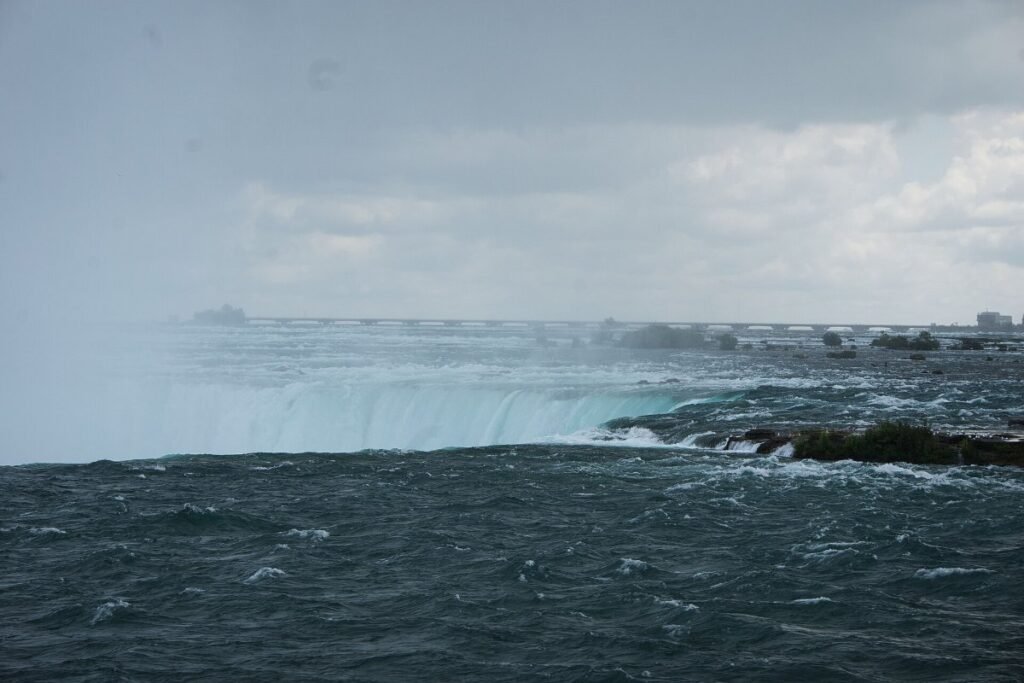
Short version: the Canadian side has the better view, the American side has the better experience, and if you can do both, do both.
Longer version follows, because the difference matters more than people expect and the border crossing is a real consideration.
Why the Canadian side wins on views
There are three falls: the American Falls, the small Bridal Veil Falls, and Horseshoe Falls, which is the enormous curved one carrying about 90% of the water.
Horseshoe Falls straddles the border but curves away from the American shore. From the US you’re standing at the edge of the American Falls looking sideways. From Canada you’re standing directly opposite Horseshoe, face on, seeing the whole thing.
That’s the entire argument and it’s a strong one. Every photograph you’ve seen of Niagara from the front was taken from Canada.
For scale, roughly 2,800 cubic metres of water go over Horseshoe Falls every second in summer. That figure is deliberately managed: a treaty between the US and Canada sets how much can be diverted for hydroelectric power, and more is diverted overnight and in winter than during peak daytime hours in tourist season. So the falls you see at two in the afternoon in July are, quite literally, turned up.
Why the American side is the better park
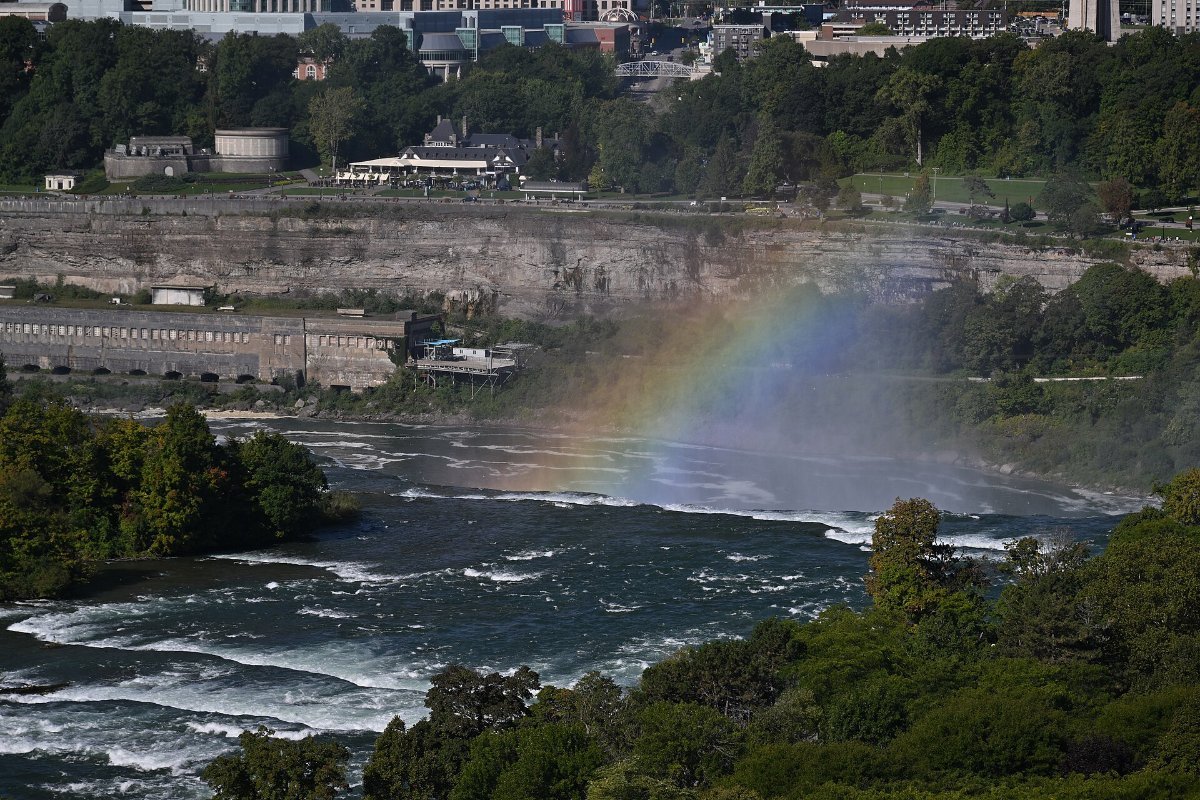
Niagara Falls State Park is the oldest state park in the US, laid out by Frederick Law Olmsted, who also did Central Park. It’s actual parkland — trees, paths, islands.
Goat Island sits between the falls, and Luna Island puts you right at the lip of the American Falls with water rushing past a few metres away.
The Cave of the Winds is the American side’s best attraction: wooden walkways take you to the Hurricane Deck, about six metres from the base of Bridal Veil Falls. You will be soaked. They give you a poncho and sandals and the poncho is decorative.
Three Sisters Islands let you stand in the upper rapids above the falls, which is genuinely alarming and almost empty of people.
The Canadian side, by contrast, is a wall of hotels, casinos and a street of wax museums. The view is better; the surroundings are considerably worse.
The boat is the one thing to do either way
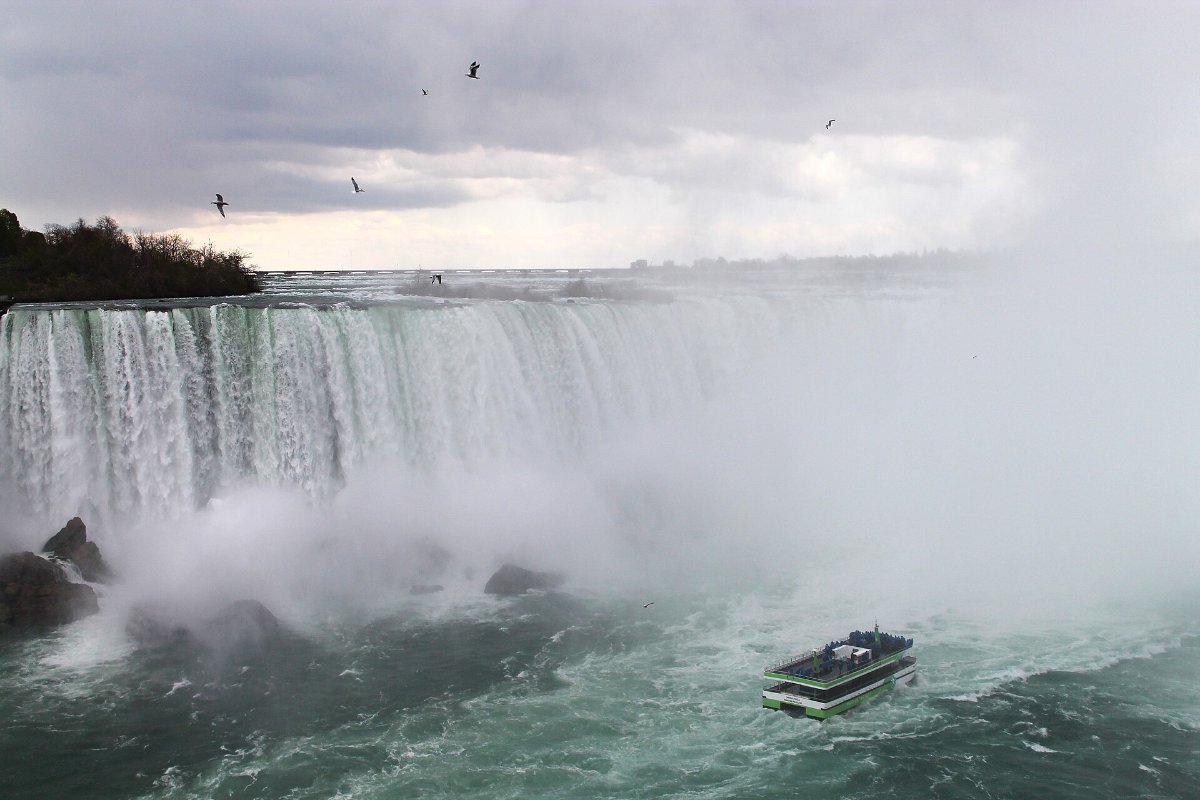
It’s the same trip from both sides, run by different operators: Maid of the Mist from the US, Niagara City Cruises from Canada. Both take you into the basin below Horseshoe Falls.
Around $30 US or $40 CAD. Roughly 20 minutes. You get a poncho, you get drenched anyway, and it’s the closest most people come to understanding the scale of the thing.
Runs roughly April to November depending on ice.
If you do one paid attraction at Niagara, this is it.
▶ Watch This Before You Go
What else is on each side
American side: Cave of the Winds, Observation Tower, the Niagara Gorge trails downstream (genuinely good hiking that almost nobody does), and Whirlpool State Park.
Canadian side: Journey Behind the Falls (tunnels to a platform behind the water curtain), the Skylon Tower, the WEGO bus along the parkway, Clifton Hill’s arcades and haunted houses, and Niagara-on-the-Lake, a genuinely lovely 19th-century town 20 minutes north with a serious wine region around it.
That last one is the underrated part. The Niagara Peninsula produces excellent ice wine and the town is charming in a way the falls area is not.
Crossing the border
The Rainbow Bridge connects the two sides and you can walk it in about ten minutes. The toll is small, around $1.
What you need: a passport, and for many nationalities an ESTA for the US or an eTA for Canada. These are separate authorisations and you need the right one for each direction.
Important: if you’re on a US visa waiver, leaving to Canada and returning is usually fine, but check your specific situation before you rely on it. Queues at the bridge can run 30 to 90 minutes at peak times in both directions.
If you only have a US visa and no Canadian eTA, you’re staying on the American side. Plan accordingly.
When to go
June to August — everything open, warm, and extremely crowded.
September and October — the sweet spot. Boats still running, fewer people, autumn colour in the gorge.
Winter — the falls partially freeze into ice formations and it’s genuinely spectacular. The boats stop and Cave of the Winds is reduced, but the Winter Festival of Lights runs November to January and the crowds vanish.
Spring — highest water volume from snowmelt, so the falls are at their most powerful.
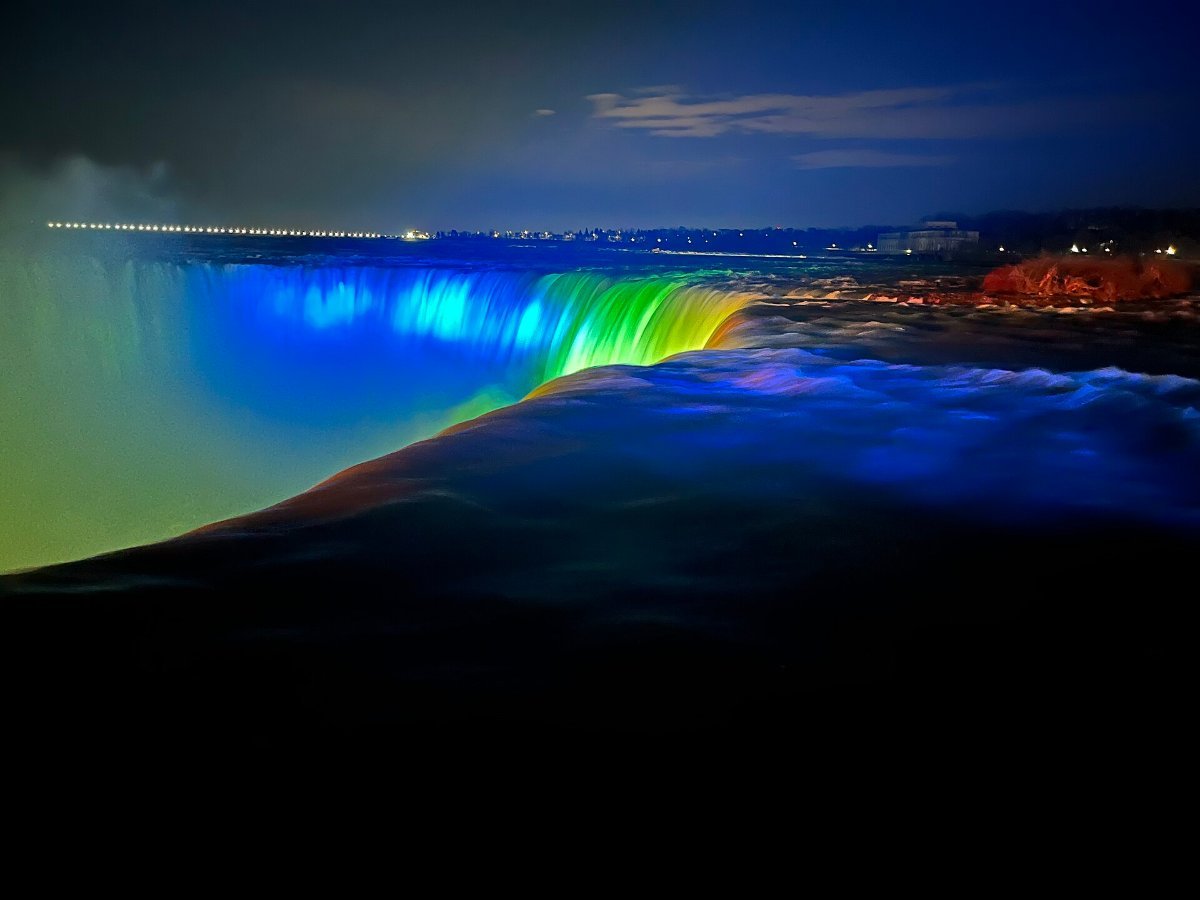
The illumination runs nightly year-round, and there are fireworks on summer evenings.
How long, and where to sleep
One full day covers it. Two if you’re doing both sides properly and adding Niagara-on-the-Lake.
Canadian side hotels have falls-view rooms, which is the main reason to stay there. Expensive in summer.
American side is cheaper and quieter, and there’s a Sheraton and a few decent options near the park.
Niagara-on-the-Lake or Buffalo (30 minutes) are better value and more pleasant to spend an evening in.
Getting there: Buffalo Niagara airport is 30 minutes. Toronto is 90 minutes from the Canadian side. Amtrak runs from New York City in about 9 hours.
FAQ
If I can only do one side? Canada, for the view. Unless the border is a problem, in which case the American side is far from a consolation prize.
Is it worth it at all? Yes, despite the tackiness around it. The volume of water is genuinely staggering in person and photographs don’t convey it.
How much should I budget? $60 to $100 per person for a day with the boat and one or two other attractions.
Are the passes worth it? The Niagara Falls USA Discovery Pass and the Canadian Adventure Pass both work out cheaper than three separate attractions. Do the maths on what you’ll actually use.
Can I do it as a day trip from Toronto? Easily. Buses and tours run constantly, about 90 minutes each way.
Is it good with kids? Very. The boat, the ponchos and the sheer noise are a hit. Clifton Hill on the Canadian side is designed for them.