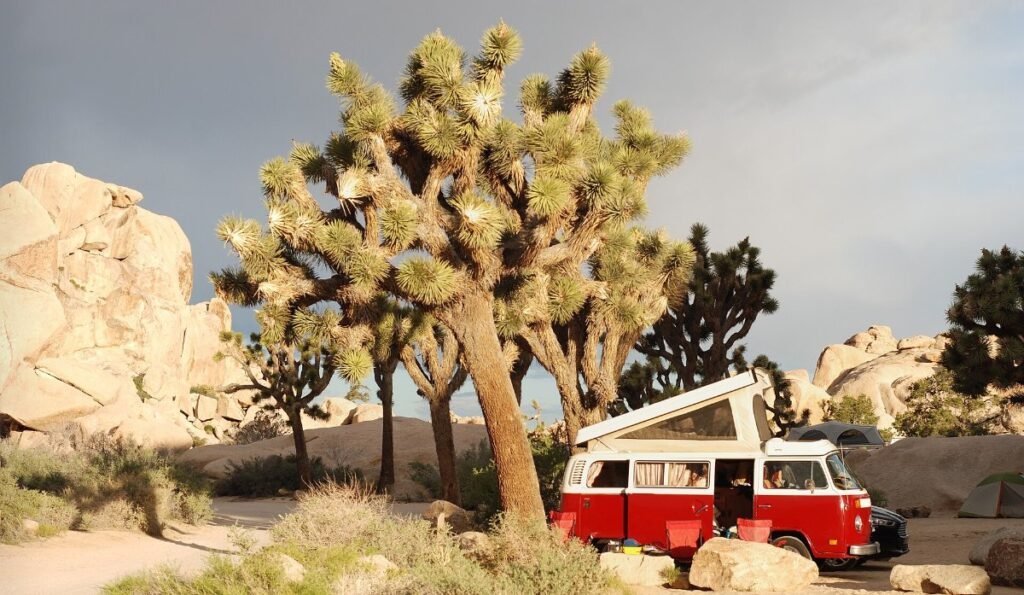
Joshua Tree is where two deserts meet, which is why it looks like nowhere else. The higher, cooler Mojave in the west grows the Joshua trees; the lower, hotter Colorado desert in the east grows creosote and cholla. You drive across the boundary and the vegetation visibly changes.
It’s also two and a half hours from Los Angeles, which makes it one of the easiest genuinely wild places to reach in America.
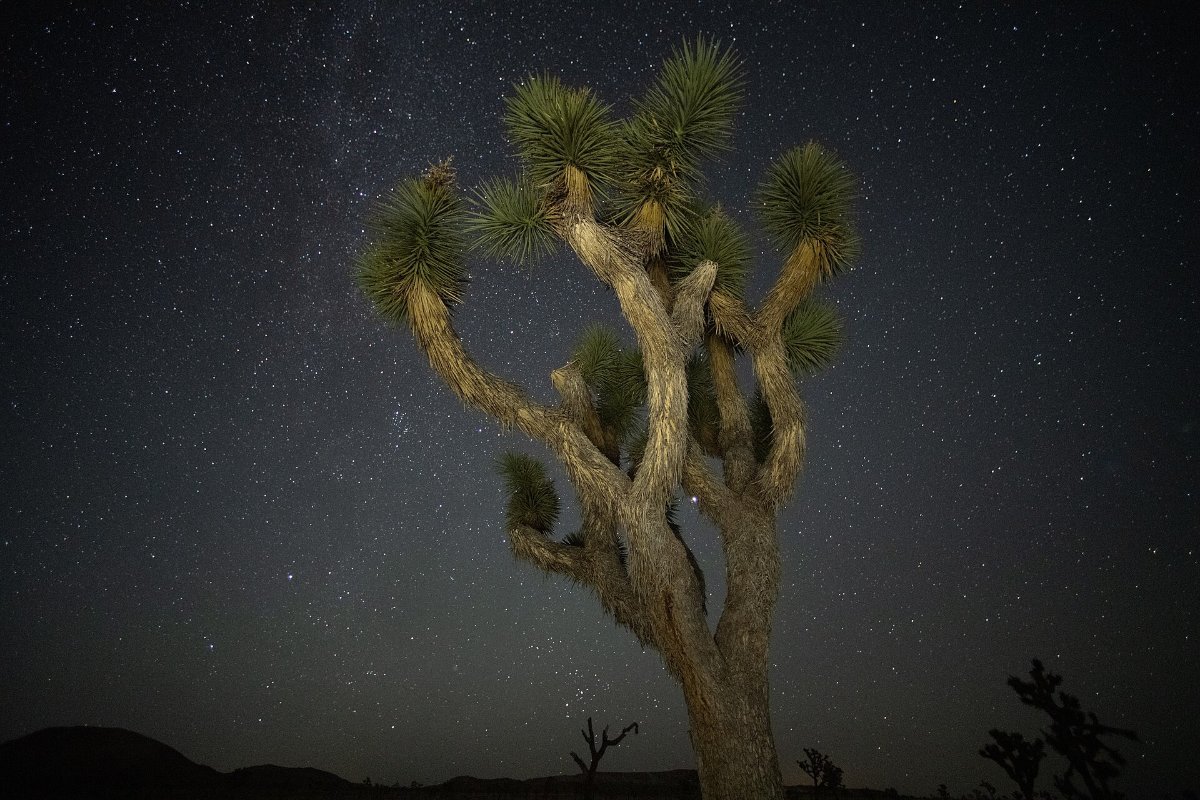
The trees aren’t trees
They’re Yucca brevifolia, a species of yucca, and they’re only found in the Mojave. The name supposedly comes from Mormon settlers who thought the branches looked like Joshua raising his arms in prayer.
They grow very slowly — a few centimetres a year — and the big ones are several hundred years old. They also only reproduce well in specific conditions, and warming is pushing their viable range up in elevation, which is why there’s real concern about how much of the park will still have them in a century.
Worth knowing while you’re standing next to one.
What to actually do
Hidden Valley — a 1.6km loop through a rock-enclosed basin that cattle rustlers reportedly used to hide stolen herds. The best short walk in the park and a good introduction to the boulders.
Barker Dam — 2km loop past a small reservoir built by ranchers, with petroglyphs near the end. Best in spring when there’s actually water.
Keys View — drive up to 1,581 metres for a view over the Coachella Valley, the San Andreas Fault and, on a clear day, Signal Mountain in Mexico. Sunset is the time.
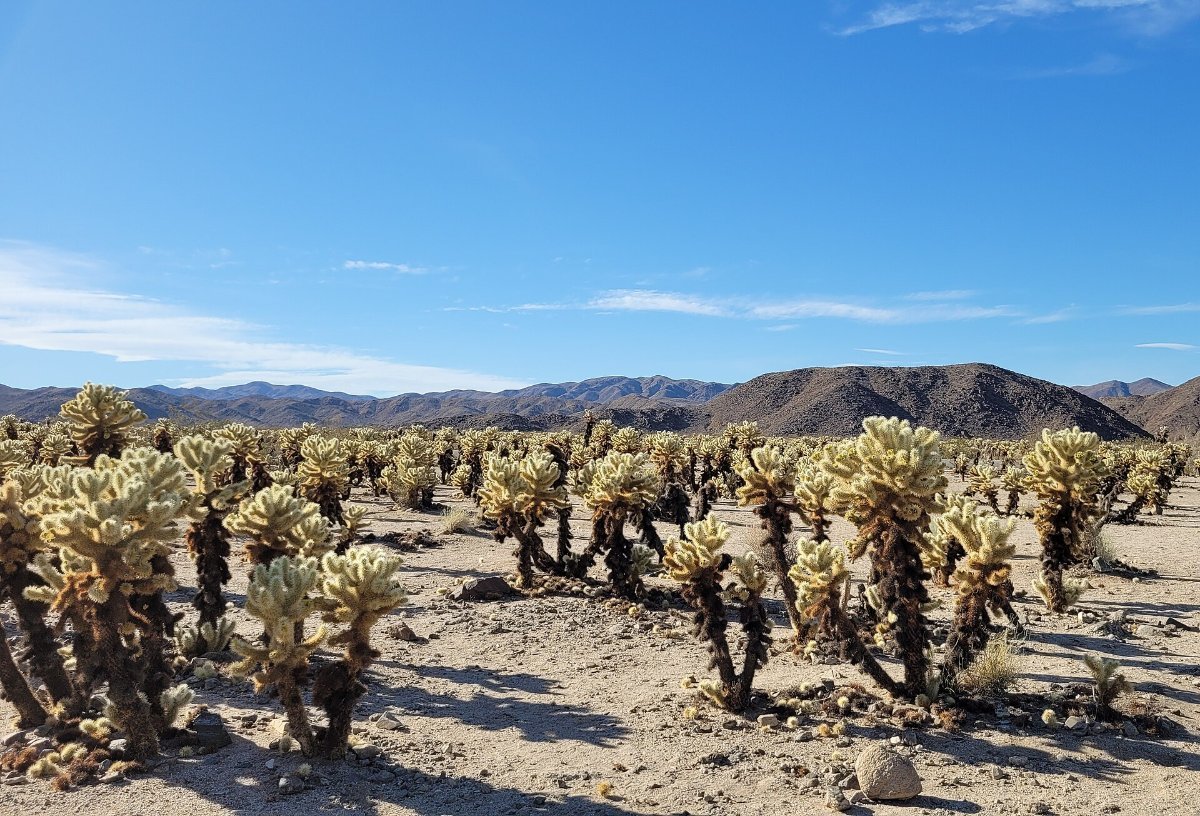
Cholla Cactus Garden — a dense stand of teddy bear cholla on the boundary between the two deserts. Golden at sunrise and sunset. Do not touch them; the spines detach on contact and they are genuinely awful to remove.
Skull Rock — right on the road, exactly what it sounds like, five minutes.
Ryan Mountain — 4.8km return, 300 metres up, the best summit view in the park. About two hours.
The rock climbing is world class
Joshua Tree has more than 8,000 established routes and is one of the most important climbing areas in the world, particularly for traditional crack climbing.
The rock is quartz monzonite — coarse, grippy and unforgiving on skin. Winter is the season, when Yosemite is under snow and this is 20°C.
If you’ve never climbed, several local guiding companies run half-day beginner sessions for around $150 to $200. It’s a good introduction because the routes are short and the landings are sandy.
Bouldering is everywhere and needs almost no gear beyond a pad and shoes.
The climbing history here is worth a footnote too. Through the 1970s and 80s Joshua Tree was the winter base for a generation of Yosemite climbers, and a lot of the routes still carry the deliberately absurd names they gave them. Ask at any of the gear shops in Joshua Tree town and someone will happily talk about it for twenty minutes, which is a good way to spend a morning if the wind has picked up and you’ve decided not to hike.
▶ Watch This Before You Go
The night sky is the other half of the park
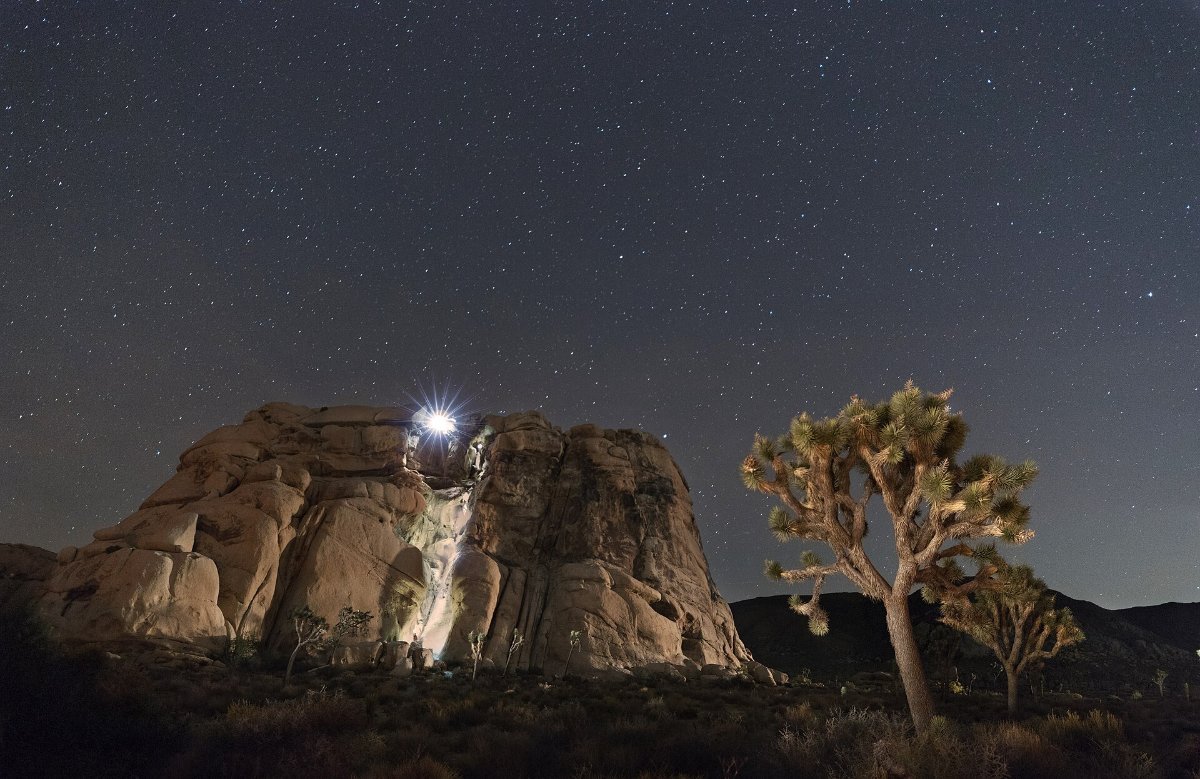
Joshua Tree is an International Dark Sky Park and it’s the closest properly dark sky to Los Angeles and San Diego.
The Milky Way is visible to the naked eye from about March to October. There’s light glow on the western horizon from the Coachella Valley, so head to the eastern half of the park — Cottonwood or the area around Cholla Garden — for the darkest skies.
New moon, obviously. Bring a red torch and warm clothes; the desert drops 15 to 20°C after dark.
Timing matters enormously
October to April is the season. Days of 15 to 25°C, cold nights, and this is when everyone climbs and camps.
March and April add wildflowers if there’s been winter rain, and the Joshua trees themselves bloom in spring.
May to September regularly exceeds 38°C and can hit 45°C. There’s no shade and no water in the park. Hike at dawn only, or don’t hike.
Note that the Coachella and Stagecoach festivals in April fill every hotel room for 60km. Check the dates.
Where to stay
Camping inside the park is the best option and the reason many people come. Jumbo Rocks and Hidden Valley put you among the boulders. Most sites now take reservations and go fast; a few are still first-come. There’s no water at most campgrounds — bring your own.
Joshua Tree town and Twentynine Palms have motels and a growing collection of desert Airbnbs, some of them architecturally ridiculous in a good way.
Palm Springs is 45 minutes and a completely different vibe — mid-century modern, pools, cocktails. Good as a contrast.
Practical bits
Entry is $30 per vehicle for seven days.
Bring water. There is essentially none in the park — a few fill points at entrances and visitor centres, nothing inside. Four litres per person per day, more in warm weather. This is the single most important thing here.
No petrol inside the park. Fill up in Joshua Tree town or Twentynine Palms.
Almost no mobile signal. Download maps before you enter.
There are three entrances: West (Joshua Tree town, busiest), North (Twentynine Palms, by the main visitor centre), and South (Cottonwood, off the I-10, much quieter).
FAQ
How long do I need? One full day covers the highlights. Two days lets you camp and see the night sky, which is the better trip.
Is it a good day trip from LA? Doable at 2.5 hours each way, but you’d miss sunset and stars. One night makes it twice the trip.
Do I need a 4×4? No. All the main roads are paved. Only a few backcountry roads need clearance.
Is it good with kids? Excellent. The boulders are a natural playground and Hidden Valley and Barker Dam are short and easy.
Any dangerous wildlife? Rattlesnakes, mostly dormant in winter. Watch where you put your hands on rocks. Desert tortoises are protected — look, don’t touch.
What’s the single best thing? Sunset at Keys View, then driving back through the park in the dark and stopping to look up.