Matera is a city of caves in the arch of Italy’s boot, and in 1952 the Italian government forcibly evacuated it because conditions were considered a national disgrace. Infant mortality was around 50%. Families lived in rock chambers with their animals.
Sixty years later it was a UNESCO World Heritage Site. In 2019 it was European Capital of Culture. That turnaround is the most interesting thing about the place, and almost nobody who visits knows about it.
What you’re actually looking at
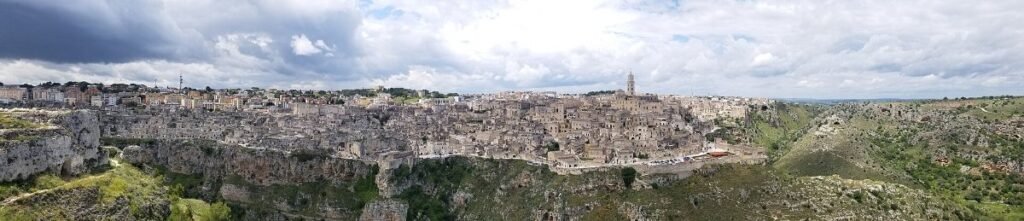
The Sassi — literally “the stones” — are two districts of dwellings carved directly into a limestone ravine. Sasso Caveoso and Sasso Barisano. People have lived in these caves more or less continuously for around 9,000 years, which makes Matera one of the oldest continuously inhabited settlements on Earth.
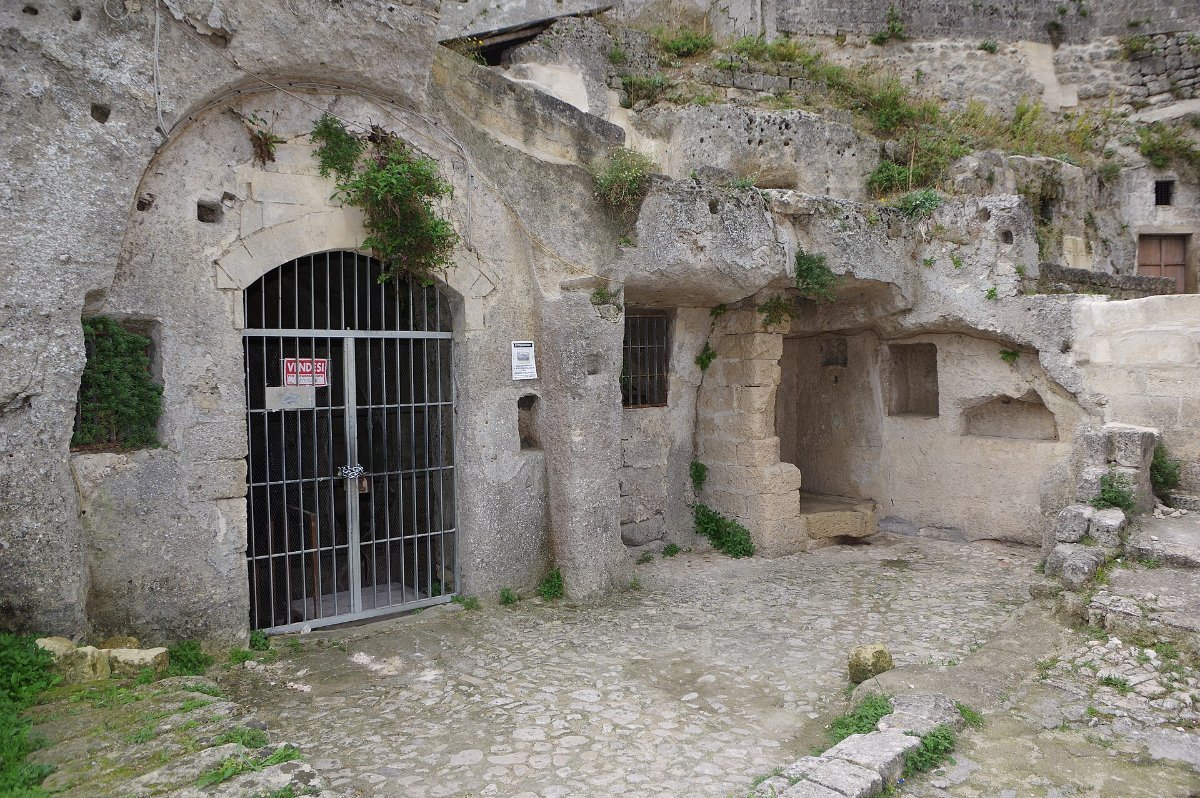
What looks like a hillside of stacked houses is mostly facades built onto cave mouths. Walk into almost any building and the back of it is bare rock.
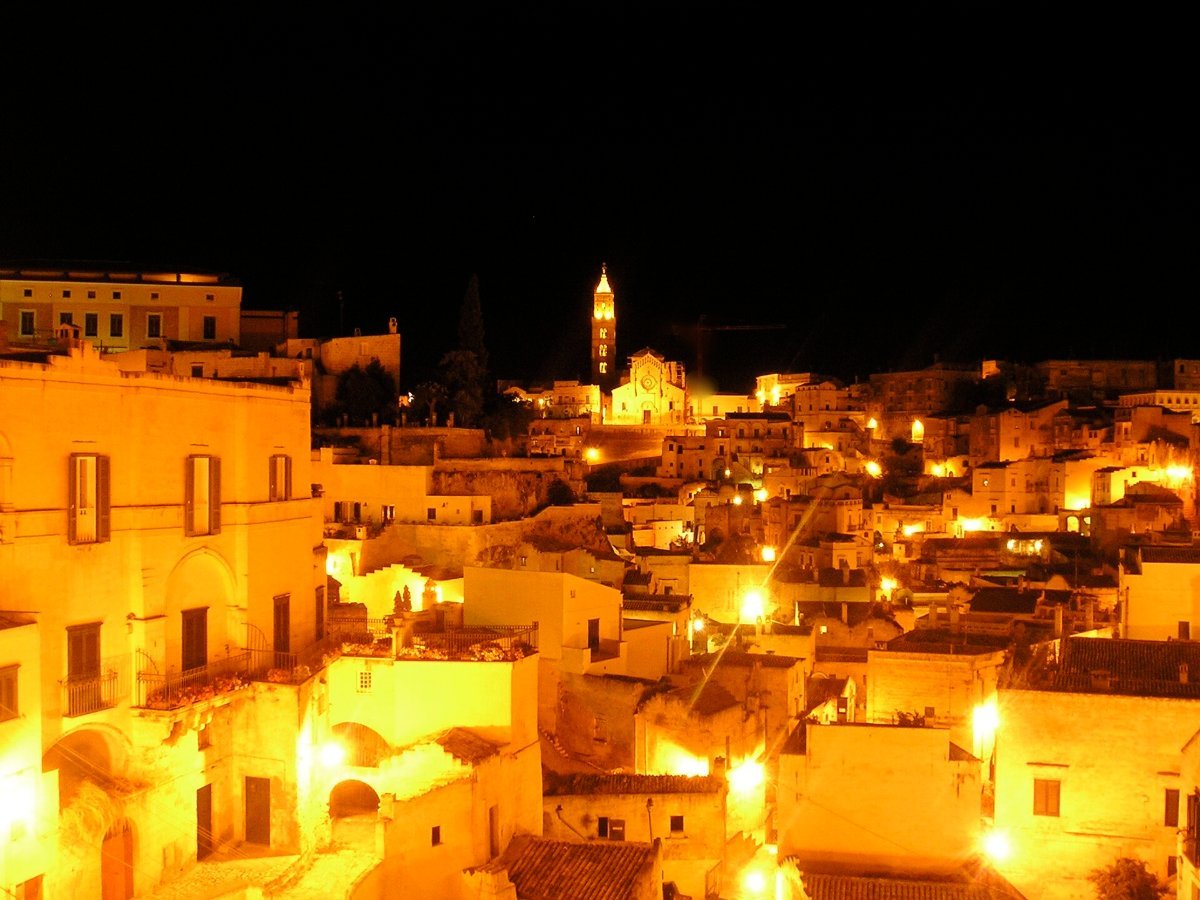
The whole thing glows honey-coloured at sunset and looks, from the opposite side of the ravine, genuinely unlike anywhere else in Europe.
The history you should know before you walk around
By the 1940s the Sassi housed around 15,000 people in conditions of extreme poverty. Carlo Levi’s book Christ Stopped at Eboli brought national attention to it, and the government’s response was to empty the caves entirely and move everyone to new housing.
The Sassi sat abandoned for decades. Restoration began properly in the 1980s, UNESCO listed it in 1993, and now the caves are boutique hotels and restaurants and about 3,000 people live there again.
You’ll see a lot of Instagram content about how romantic it is. It’s worth holding both things at once — it’s beautiful now and it was a place of real suffering within living memory. The Casa Grotta di Vico Solitario is a preserved cave dwelling set up as it was, and it takes 15 minutes and puts everything else in context. Go there first.
The rock churches are the other half of it
There are over 150 chiese rupestri — churches hewn into the rock, many with Byzantine frescoes from the 8th to 13th centuries.
The best ones: Santa Maria de Idris, built into a rock spur with fantastic views; San Pietro Barisano, the largest, with an unsettling crypt; and Santa Lucia alle Malve, with the best surviving frescoes.
A combined ticket covers several and costs around €8 to €10. Worth it.
Where to stand for the view
The classic panorama is from the Belvedere di Murgia Timone, across the ravine on the Murgia plateau. You’re looking back at the entire Sassi laid out in front of you. It’s a 30-minute drive around or a steep 45-minute walk down and up through the gorge.
Closer in, Piazza Duomo and the terrace by the cathedral give you the Sasso Barisano from above.
Go at either sunrise or the hour before sunset. Midday flattens the stone and you lose all the texture.
▶ Watch This Before You Go
Eat the bread and the peppers
Matera has IGP-protected bread, made with local durum wheat, in enormous loaves that keep for a week. It was designed for that — farm workers took a loaf out for days at a time.
Peperoni cruschi are the local thing you should try: sweet peppers dried in the sun then flash-fried so they shatter like crisps. They turn up on pasta, on everything.
Also cialledda (a bread and tomato salad), orecchiette with turnip tops, and the local Aglianico del Vulture wine, which is excellent and much cheaper than a Tuscan equivalent.
Prices here are Southern Italian, meaning a proper dinner with wine is €25 to €35.
Sleeping in a cave
This is the reason a lot of people come. Cave hotels in the Sassi range from simple guesthouses at €70 a night to Sextantio Le Grotte della Civita, a genuinely remarkable place at €300+ where rooms are minimally converted caves lit by candles.
Practical note: caves are cool and can be humid. Lovely in July, less charming in January. Check heating if you’re going in winter.
Getting there is the hard part
Matera has no functioning mainline railway station connected to the national network, which is a large part of why it stayed obscure for so long.
Options: fly to Bari (about 65km away) and take a bus or the regional Ferrovie Appulo Lucane train, roughly 90 minutes. Or fly to Naples and take a direct coach, about 4 hours.
Driving is straightforward, but the Sassi are pedestrianised and there’s a ZTL. Park in the upper town and walk down.
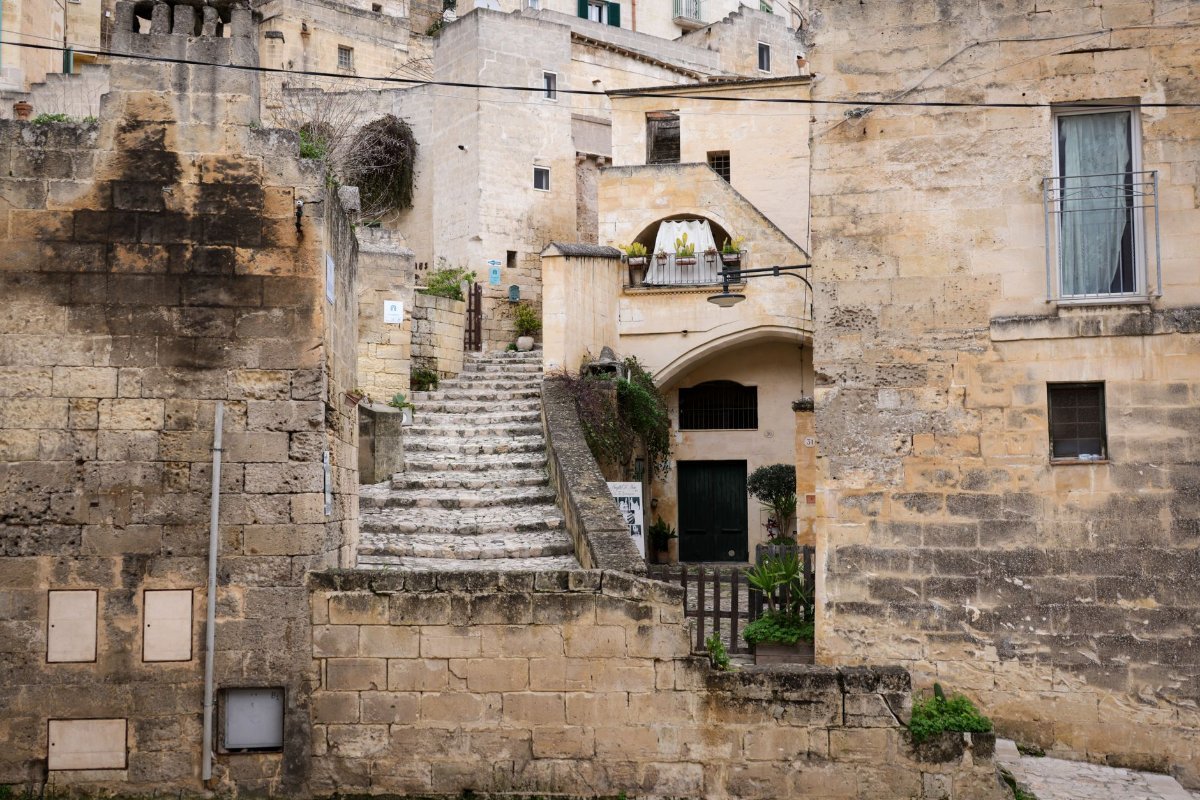
Speaking of which: everything is stairs. Hundreds of them, uneven and worn. This is not a city for wheeled luggage or for anyone with mobility difficulties.
How long to stay
Two nights is right. One full day covers the Sassi, the rock churches and the cave dwelling museum. A second day lets you walk the Murgia plateau, see it at both sunrise and sunset, and take a day trip to Altamura or Gravina.
Day-tripping from Bari works but you’ll miss the evening, which is when Matera is at its best.
FAQ
Best time to visit? April to June and September to October. July and August are very hot in a stone city with little shade. Winter is atmospheric and quiet, and some things close.
Is it touristy now? Considerably more than a decade ago, but nothing like Florence or Venice. Mornings and evenings still feel local.
Is it expensive? No. Accommodation has risen but food, drink and entries are cheap by Italian standards.
Do people speak English? In hotels and the main restaurants, yes. Less so elsewhere. A few words of Italian go a long way here.
What was filmed there? The Passion of the Christ, Ben-Hur, and the opening of No Time to Die. It doubles for ancient Jerusalem constantly.
Can I combine it with the Amalfi Coast? They’re about 3.5 hours apart by car. Doable as part of a southern Italy loop, but they’re very different trips.