Pompeii is 66 hectares. That’s about 90 football pitches of Roman city, and it’s the single most common mistake people make here — they arrive at 11am with no plan, wander for two hours in 35°C heat, see a lot of walls, and leave slightly underwhelmed.
Done properly it’s one of the most extraordinary places in Europe. Done badly it’s a very hot walk. The difference is entirely preparation.
Go early. This is the whole trick.
Gates open at 9am. Be there at 9am. There is almost no shade in Pompeii, the stones radiate heat, and by 1pm in July it is genuinely punishing.
Early also means the big houses are empty for the first hour. The House of the Faun with 40 people in it and the House of the Faun with four people in it are different experiences.
Bring more water than you think. There are drinking fountains inside — the ancient ones still run in places, fed by the same system — but they’re scattered.
What to actually see, in order
You cannot see all of it. Trying is how people burn out. This route covers the best in about three to four hours:
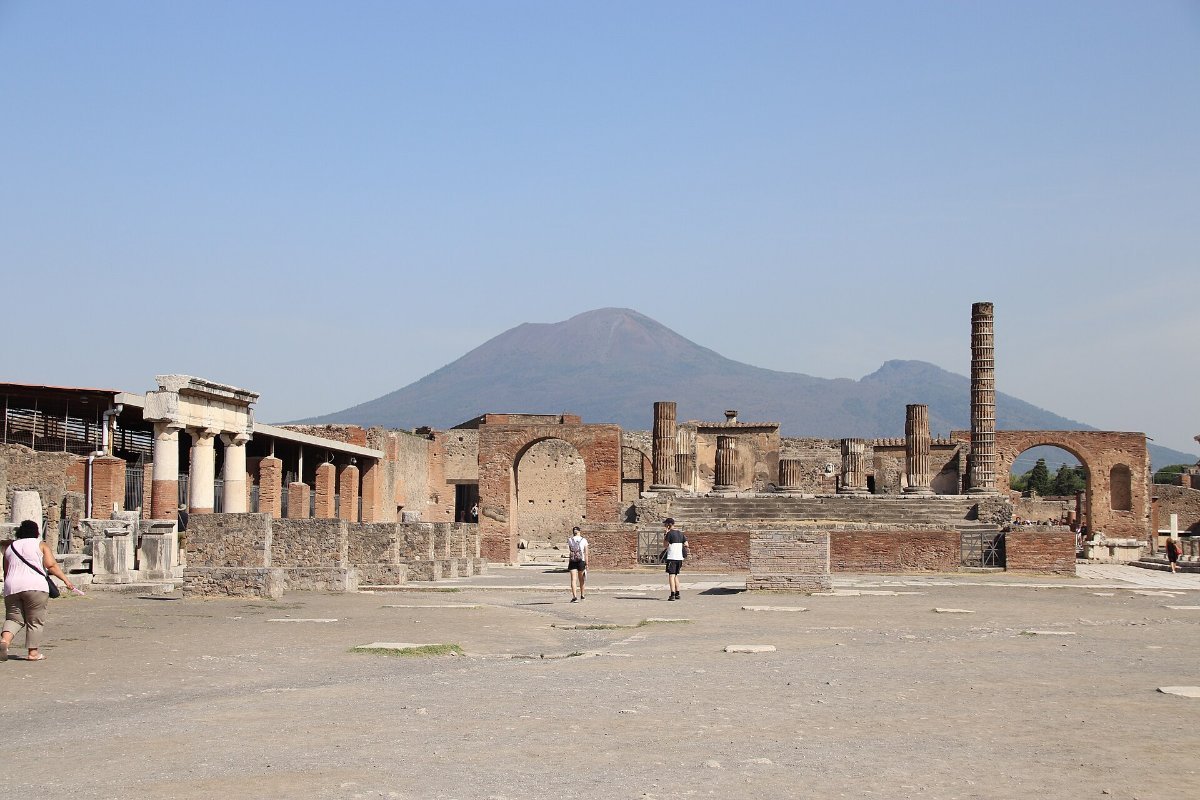
- The Forum — enter at Porta Marina and this is the first big space, with Vesuvius framed at the end of it. The photo everyone takes, and rightly.
- The Forum Granary — where many of the plaster casts of bodies are kept. Sobering and the thing most people remember.
- House of the Faun — the largest house in the city, with the Alexander Mosaic (a copy; the original is in Naples).
- The Lupanar — the brothel, with its explicit frescoes. Small, and there’s always a queue.
- The Stabian Baths — the best-preserved bath complex and a genuinely good sense of how Romans actually lived.
- The Amphitheatre — the oldest surviving Roman amphitheatre anywhere, at the far east end. Long walk, worth it.
- Villa of the Mysteries — outside the main walls, with the best frescoes on site. Most people skip it because it’s a 10-minute walk. Don’t.
Get the audio guide or a real guide
This is the one thing I’d insist on. Pompeii without context is a lot of stone. With context it’s a city where you know which shop sold what and who lived where.
The official app is free and decent. A licensed guide runs €12 to €15 per person in a group and is better. Avoid the freelancers at the gate quoting €60 — book through the official site or a reputable operator.
Tickets are around €18 and should be booked online for a timed slot. Turning up without one in summer means an hour in a queue in the sun.
▶ Watch This Before You Go
Vesuvius in the afternoon
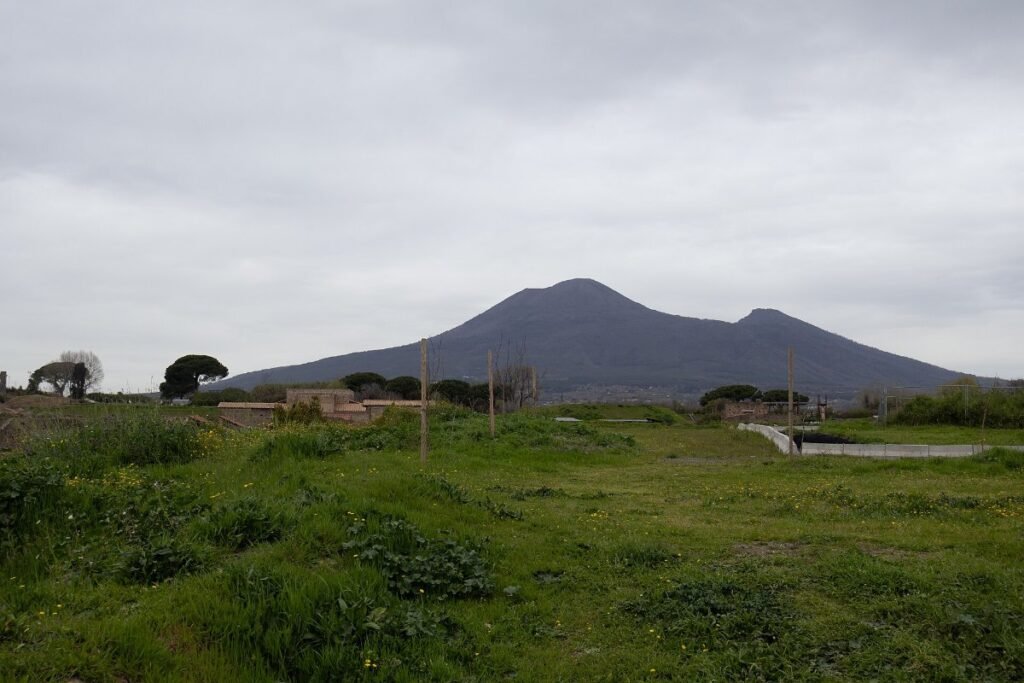
Here’s why the pairing works. Pompeii in the morning while it’s cool, Vesuvius in the afternoon when the haze has usually lifted and the view over the Bay of Naples is at its best.
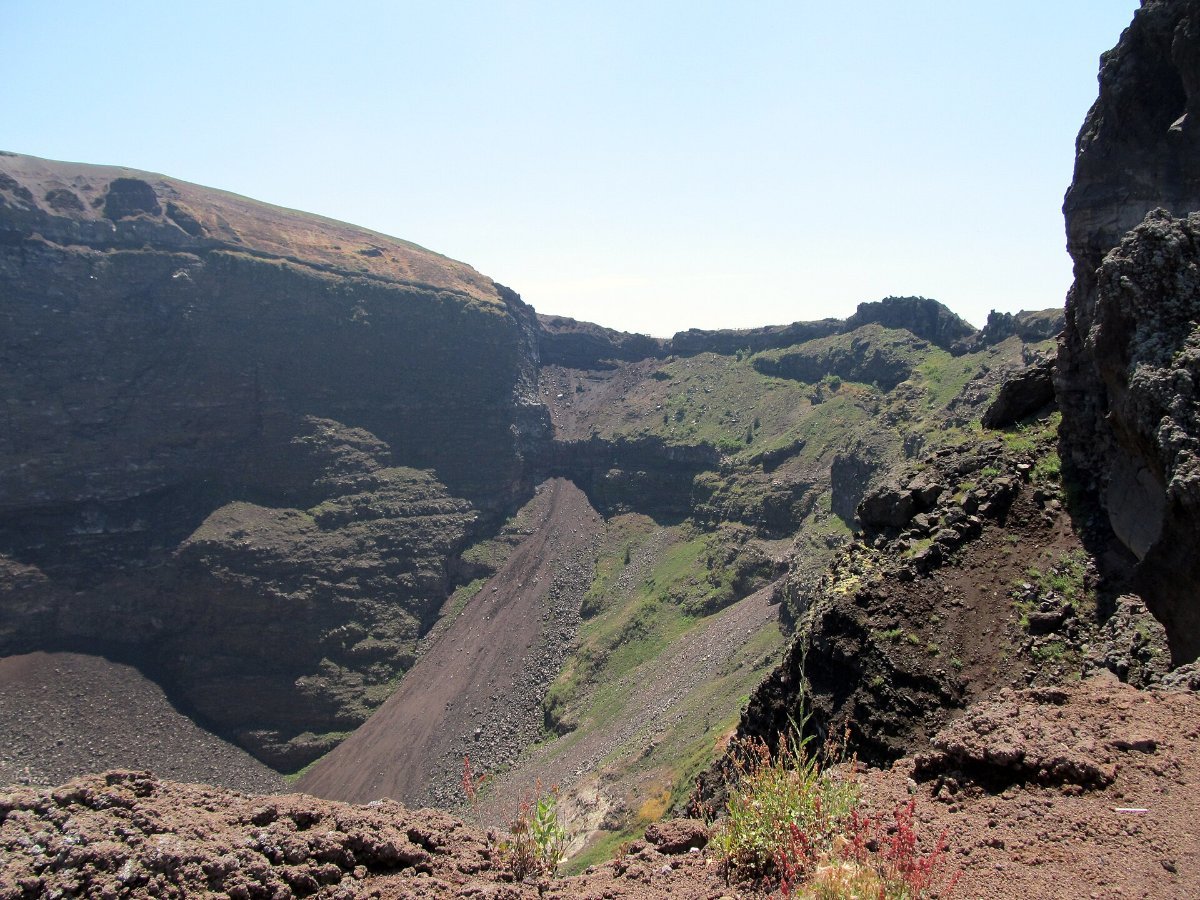
You drive or bus to a car park at 1,000 metres, then walk a gravel path about 860 metres up to the crater rim at 1,170 metres. It takes 25 to 40 minutes and it’s steep and loose underfoot but not technical.
Entry is around €10 and requires advance booking with a timed slot. Walking shoes, not sandals — the path is volcanic gravel and it moves.
At the top you’re looking into a crater 300 metres deep with steam still venting from the sides. It’s an active volcano with roughly 3 million people living in its danger zone, which is a fact that lands differently when you’re standing on it.
Getting to both from Naples or Sorrento
The Circumvesuviana train runs from Naples Garibaldi and from Sorrento, stopping at Pompei Scavi–Villa dei Misteri, which is 100 metres from the entrance. About 35 minutes from Naples, 30 from Sorrento, and roughly €3.
Fair warning: it’s old, crowded, hot and pickpockets work it. Keep bags in front of you. It’s fine, just be alert.
For Vesuvius, the EAV bus runs from Pompeii Scavi station up to the car park, about 50 minutes and €3 each way. There are also shuttle services from Ercolano.
Driving is possible but parking near Pompeii is a hassle and the Vesuvius road is narrow with switchbacks.
Herculaneum, the alternative nobody considers
If Pompeii sounds overwhelming, Herculaneum is 20 minutes away, a quarter of the size, far better preserved, and gets a fraction of the visitors.
It was buried under pyroclastic flow rather than ash, so wooden beams, doors, furniture and even food survived. Buildings still have upper floors and original roofs.
Two hours does it comfortably. Some people prefer it to Pompeii entirely, and I understand why.
Practical things
Wear proper shoes. The streets are original Roman paving — uneven, with deep cart ruts and high stepping stones. Ankles get turned here regularly.
Hat, sunscreen, water. Repeated because it’s the main thing that goes wrong.
Food inside is limited to one cafeteria and it’s mediocre. Eat before or bring something.
Toilets exist but are sparse. Use the ones near the entrance before you set off across the site.
FAQ
How long do I need at Pompeii? Three hours minimum, four to five to do it properly. A full day if you’re an enthusiast.
Can I really do both in one day? Yes, comfortably, if you start at 9am. Pompeii until 1pm, lunch, Vesuvius mid-afternoon.
Is it wheelchair accessible? Partially. There’s a designated accessible route of about 3.5km covering the main areas. Vesuvius is not accessible.
Where are the famous artefacts? Most mosaics, bronzes and the best frescoes are in the National Archaeological Museum in Naples. Worth a half day on its own.
Best time of year? April to May, or October. Summer is brutally hot and busy. Winter is quiet and cool but with shorter opening hours.
Is Vesuvius dangerous? It’s monitored more closely than almost any volcano on Earth. The walk is safe; the paths are managed and close in bad weather.