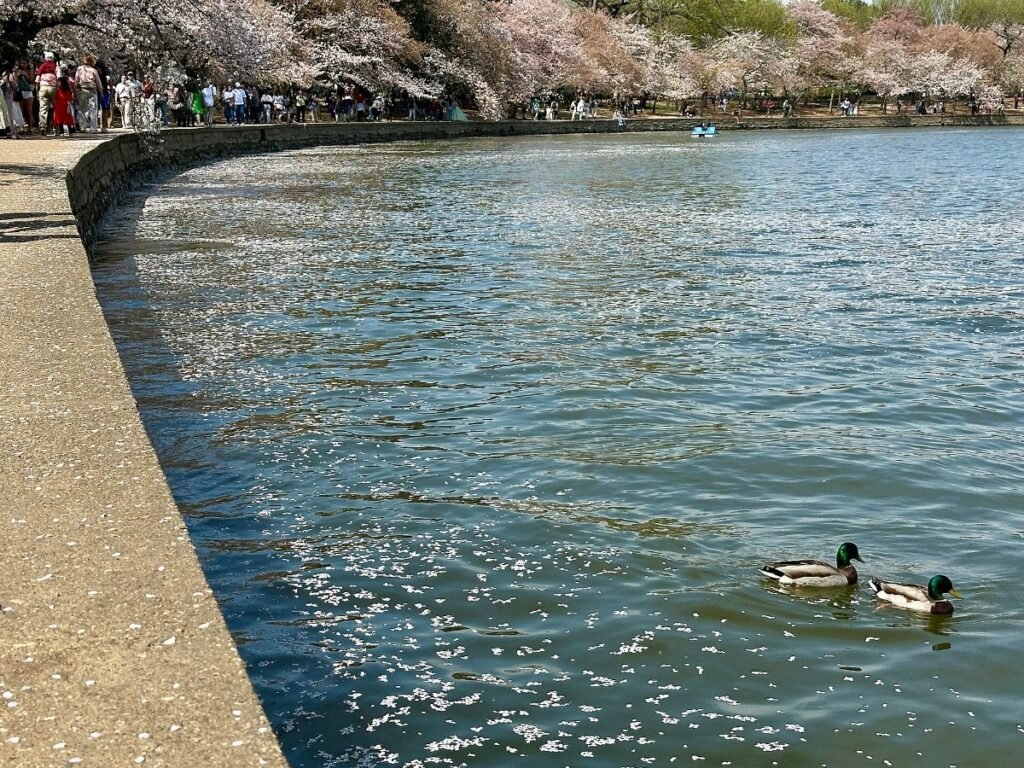
Here’s the thing about the DC cherry blossoms that nobody tells you until you’re standing there in a crowd of 40,000 people at 7am: peak bloom lasts about four days, the date moves every year, and you have to book flights months before anyone knows when it is.
It’s a gamble. It’s also genuinely one of the best things in America when it works. Here’s how to load the dice.
Peak bloom is a moving target
The National Park Service defines peak bloom as the day 70% of the Yoshino cherries around the Tidal Basin are open. Historically it lands between March 20 and April 15, with April 3 or 4 being the long-term average.
But it’s been drifting earlier — the average peak has moved forward by about a week since the 1920s, and several recent years have peaked in the third week of March.
The NPS issues a forecast in late February or early March, roughly three to four weeks out. That’s the first genuinely reliable signal you’ll get. Book flexible flights before then if you can.
The bloom lasts longer than “peak” suggests
Good news, because this is where people over-worry. The trees are worth seeing for roughly 10 to 14 days, not 4.
The stages run: green buds, florets visible, extension of florets, peduncle elongation, puffy white, then peak. Puffy white is the day or two before peak and honestly looks almost identical to most people. After peak, blossoms hold for about a week before wind and rain take them.
So aim for peak, and be genuinely fine landing three days either side. What you don’t want is arriving ten days early to a lot of bare branches.
Go at sunrise. This is not optional.
The Tidal Basin at 6:30am during peak bloom is quiet, the light is pink and low, and you can actually take a photograph without eleven strangers in it.
The same spot at 11am is a solid wall of people moving at shuffling pace. By afternoon on a peak weekend it’s genuinely unpleasant.
Sunrise also means parking exists, which it absolutely does not later in the day.
Where to actually stand
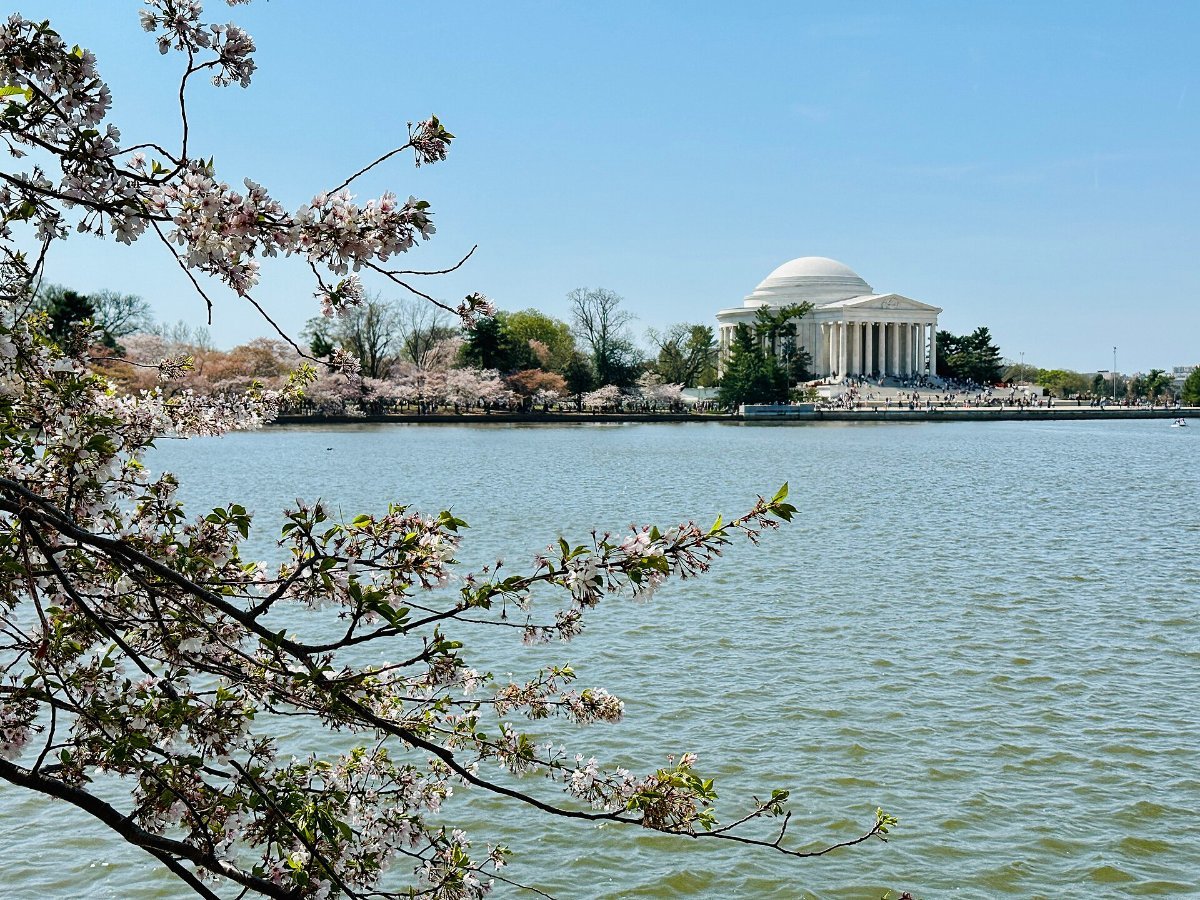
The Tidal Basin west side, near the Martin Luther King Jr Memorial, has the densest trees and the Jefferson Memorial across the water. This is the classic shot.
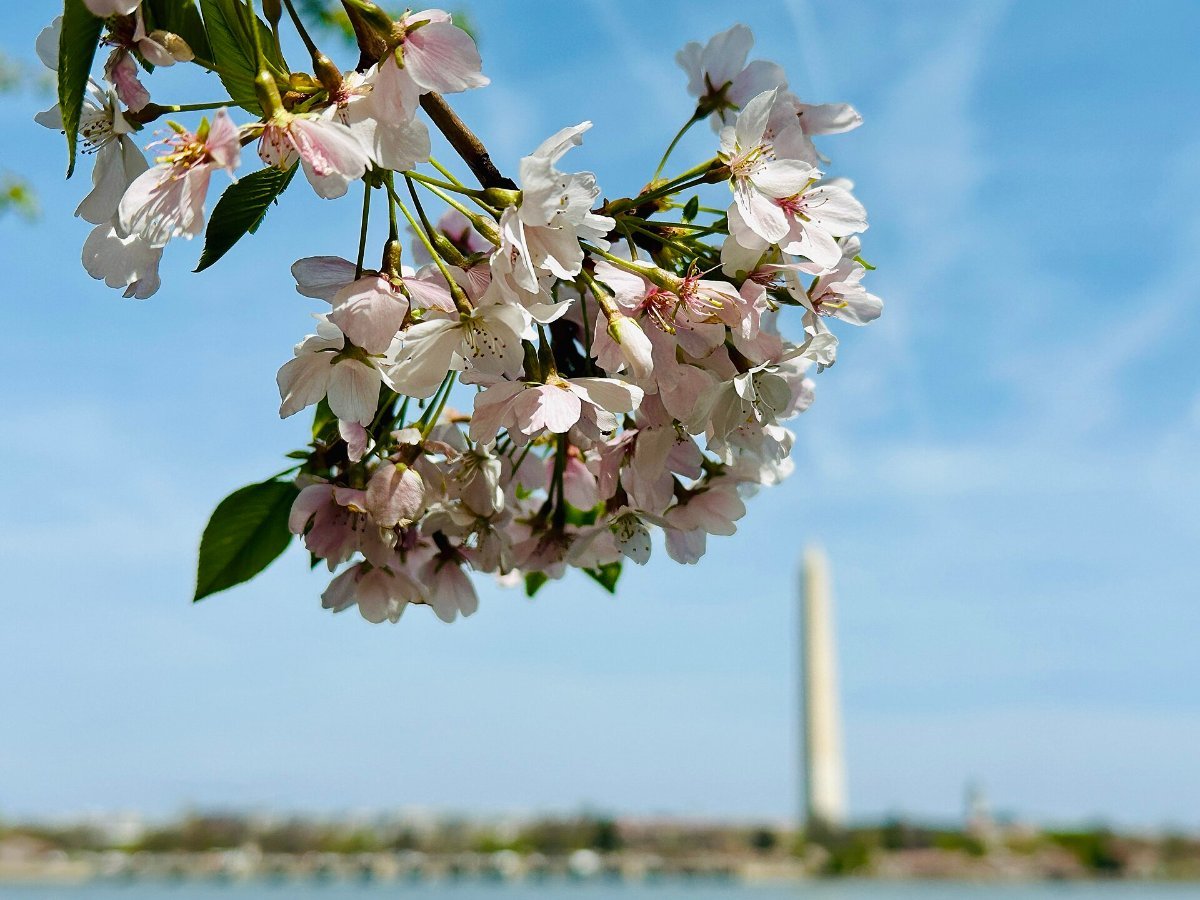
The Jefferson Memorial steps looking back gives you blossoms plus the Washington Monument.
East Potomac Park — the peninsula south of the Tidal Basin — has about 1,700 trees and roughly 5% of the crowd. It also blooms slightly later, which can save a mistimed trip. Go here if the main basin looks like a football crowd.
The Kenwood neighbourhood in Bethesda, Maryland, has streets lined with cherries and almost no tourists. Twenty-five minutes out of the city.
▶ Watch This Before You Go
Getting there without losing your mind
Take the Metro. Smithsonian station on the Blue, Orange and Silver lines is a 10-minute walk to the basin. L’Enfant Plaza also works.
Driving during the festival is a genuinely bad idea. Ohio Drive and parts of West Basin Drive close, parking is scarce, and traffic around the Mall is bad at the best of times.
Bike share is a decent middle option, though the paths around the basin get crowded enough that you’ll be walking it anyway.
The festival is more than the trees
The National Cherry Blossom Festival runs about four weeks, roughly March 20 to April 15, and it’s timed to cover the bloom window rather than match it exactly.
Worth knowing about: the Blossom Kite Festival on the Washington Monument grounds, the Parade along Constitution Avenue (ticketed for grandstand seats, free to watch from the pavement), and Petalpalooza at the Wharf with fireworks.
Most of it is free. The parade and a few ticketed events aren’t.
Where the trees came from, briefly
Japan gave the US 3,020 trees in 1912 as a gesture of friendship, planted by First Lady Helen Taft and the Japanese ambassador’s wife. An earlier shipment in 1910 arrived diseased and had to be burned, which was an awkward diplomatic moment.
A handful of the original 1912 trees are still alive near the Tidal Basin, marked with plaques. Most of what you see is younger, but the lineage is direct.
Practical stuff
Book accommodation early. Really early. Hotel rates in DC during peak bloom run 40 to 70% above normal and the good ones go months ahead.
Consider staying in Arlington or Alexandria across the river. Metro access is easy, prices are noticeably lower, and Old Town Alexandria is lovely in its own right.
Weather in late March is unpredictable — it can be 22°C or it can be 4°C with rain. Layers, and a jacket you don’t mind getting wet.
Bring water and snacks. Food options around the Tidal Basin are limited to a few carts and they know they’ve got you.
FAQ
When should I book? Flights and hotels in December or January for the following spring, targeting the first week of April with flexible dates. Wait for the forecast and you’ll pay double.
What if I miss peak bloom? The Kwanzan cherries in East Potomac Park bloom about two weeks after the Yoshinos and are pinker and fuller. It’s a genuine backup.
Is it free? Yes. The Tidal Basin, the memorials and most festival events cost nothing.
How crowded is it really? Roughly 1.5 million people visit across the festival. On a sunny peak weekend the basin path is shoulder to shoulder. Weekday mornings are a completely different experience.
Can I picnic under the trees? Yes, but don’t climb them, pick blossoms or hang anything from branches — it damages them and there are fines.
Is it worth it with kids? Yes, especially the Kite Festival. But go at sunrise or pick East Potomac Park; the main basin crowd is hard going with a pushchair.