Philadelphia sits between New York and Washington and gets treated as a stop rather than a destination, which is a mistake that works in your favour.
It’s the birthplace of the country, it has the best food market in America, an art museum in the top rank, and prices roughly half what you’d pay ninety minutes north.
Two days does it well. Here’s what to prioritise.
The Historic Core, in One Morning
Everything foundational happened within about four blocks, which makes this the most efficient history walk in the country.
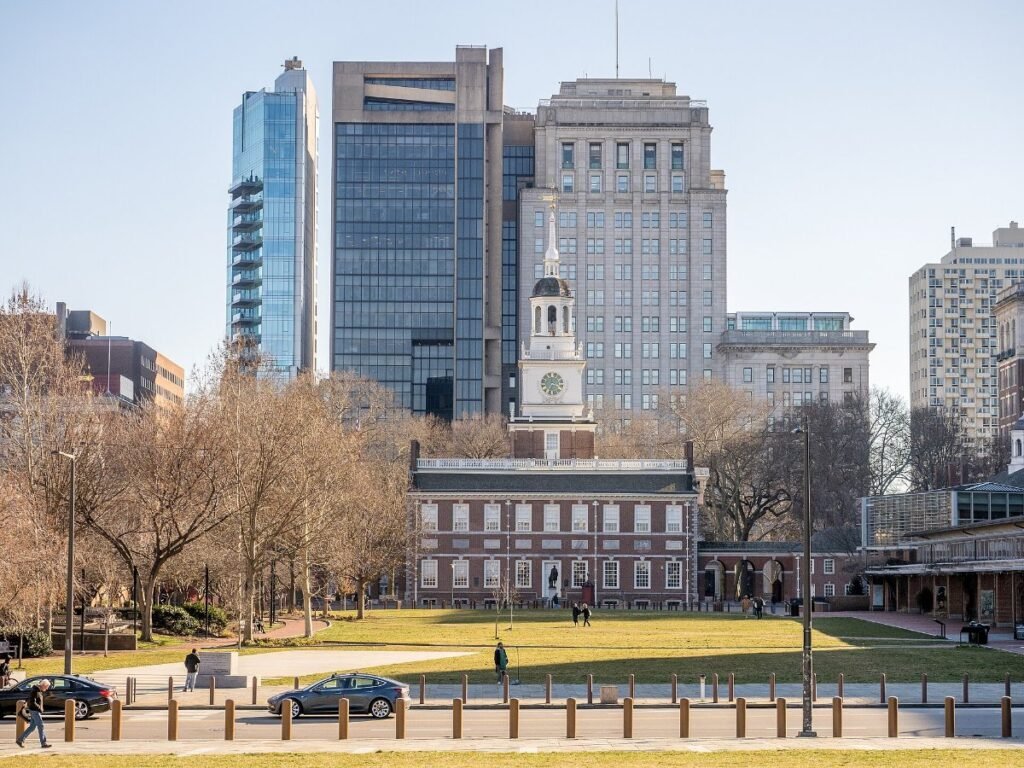
Independence Hall is where both the Declaration of Independence and the Constitution were signed. Entry is free but needs a timed ticket, which you should reserve online rather than queueing for the same-day ones.
The Liberty Bell is across the street, free, no ticket, and the queue moves. It’s smaller than people expect and the crack is the whole story.
The Museum of the American Revolution nearby is the paid one and it’s genuinely good, particularly Washington’s actual field tent.
Congress Hall next to Independence Hall is free, quick, and where the first Congress actually sat. Almost nobody goes in.
City Hall, Which You Can Climb
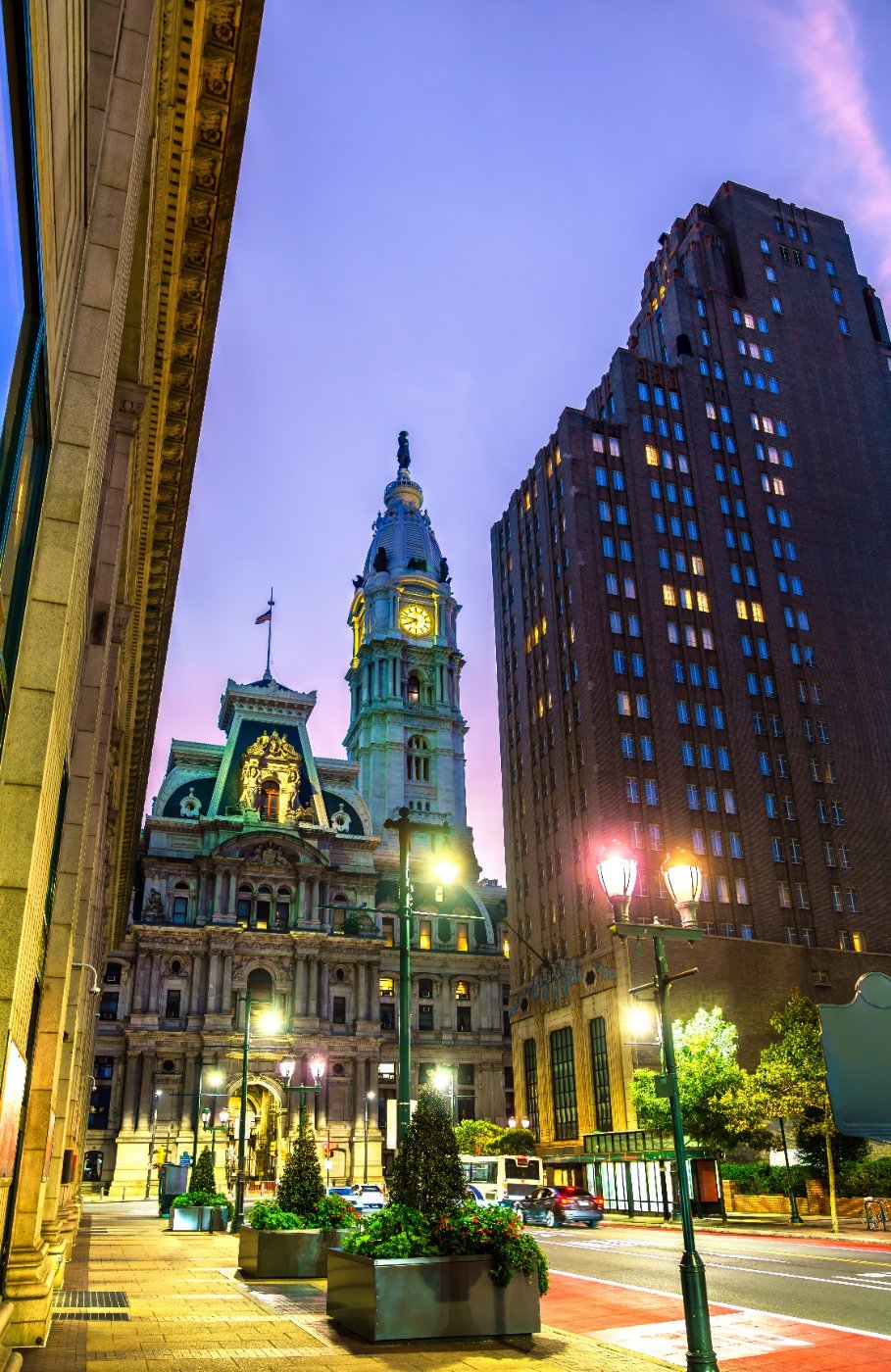
The largest municipal building in the United States, finished in 1901 after thirty years of construction, with 700 rooms and a statue of William Penn on top.
Until 1987 there was a gentleman’s agreement that no building would rise above Penn’s hat. That’s why the skyline behind it is all newer.
You can go up the tower to an observation deck just below the statue. Small lift, small deck, timed tickets, and it puts you right in the middle of the city grid at 500 feet.
The courtyard underneath is free to walk through and most people never realise you can.
▶ Watch This Before You Go
Elfreth’s Alley
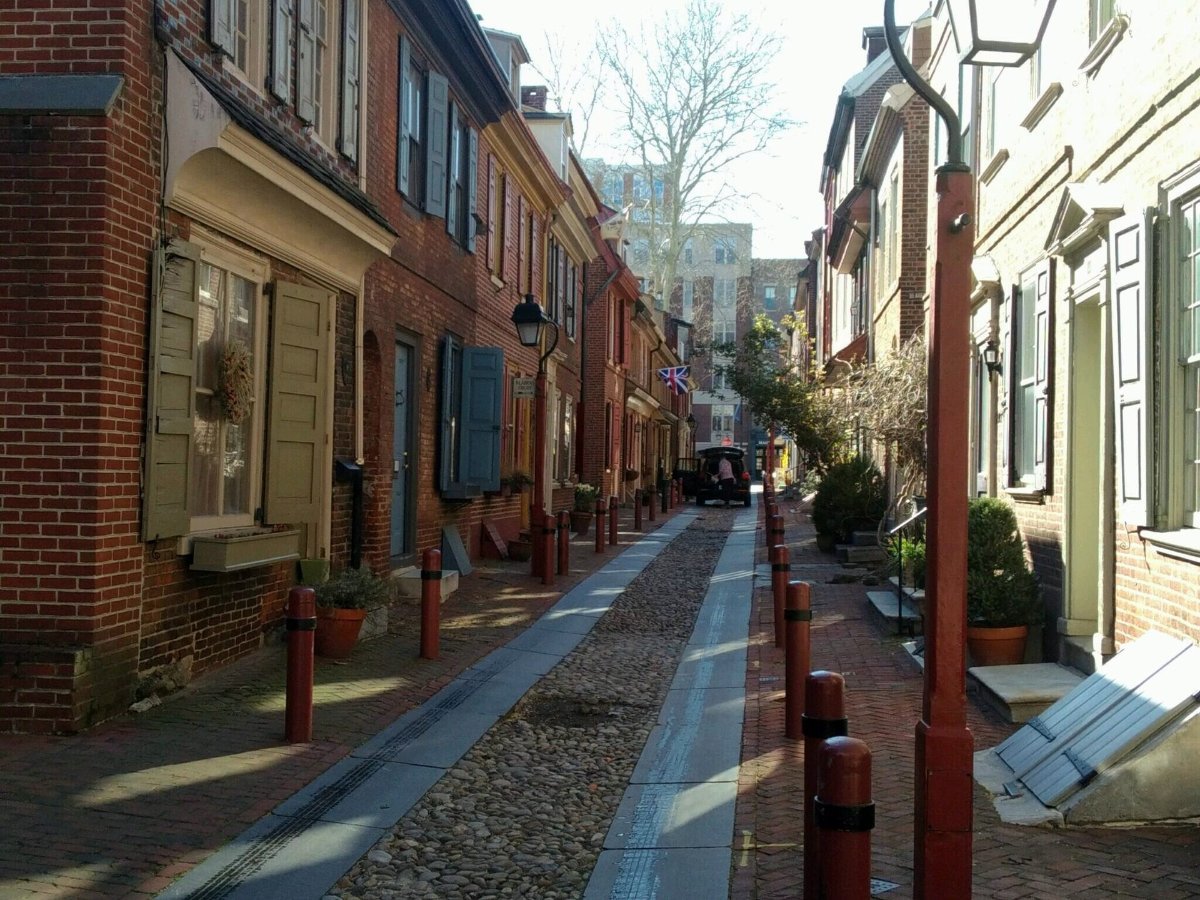
A cobbled lane of 32 houses built between 1720 and 1830, and the oldest continuously inhabited residential street in America.
People live in these houses. It takes five minutes to walk, it’s free, and it’s the most photogenic spot in the city.
Keep the noise down and don’t photograph through windows. There are signs asking, which tells you how often it happens.
The surrounding Old City neighbourhood is worth an hour: galleries, small bars, brick everywhere.
Reading Terminal Market
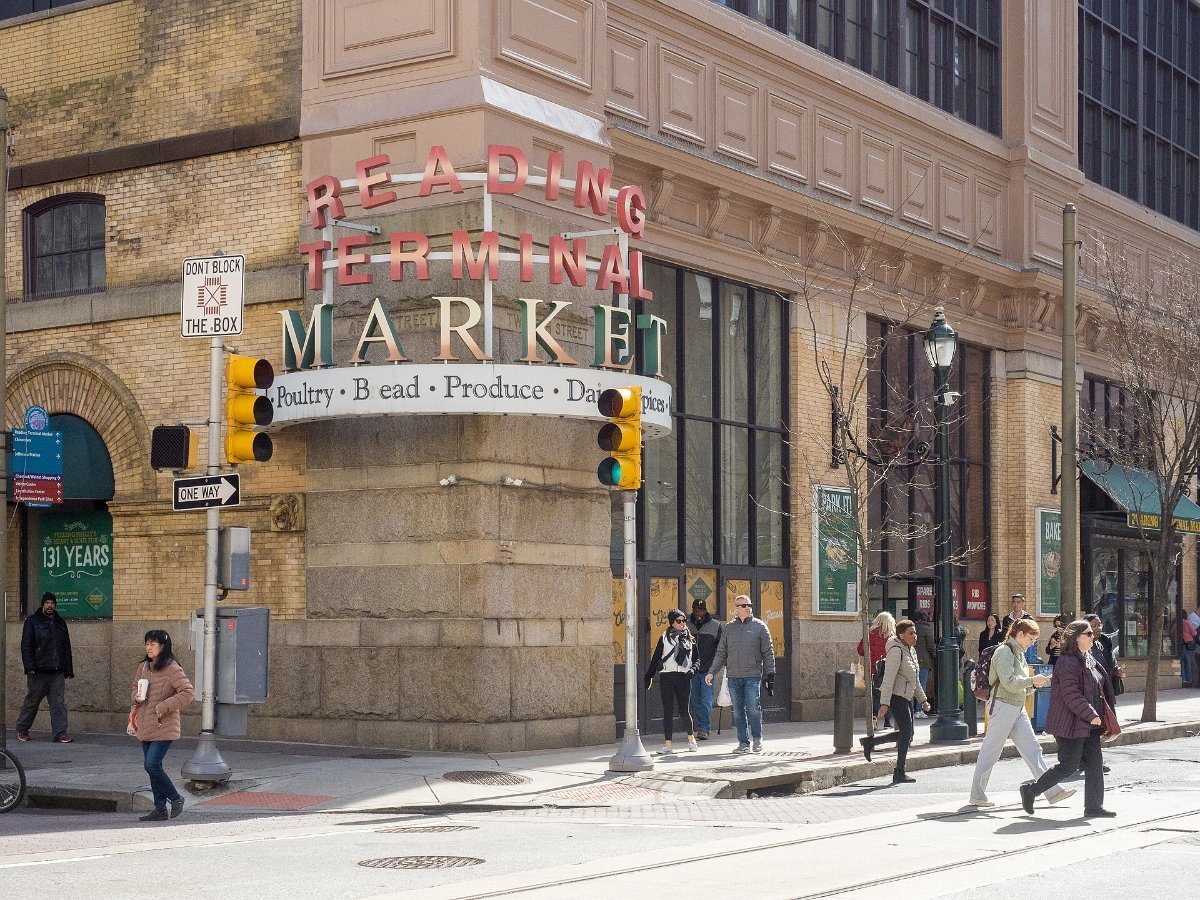
Open since 1893, under an old train shed, and one of the great food halls anywhere.
Around 80 vendors. Pennsylvania Dutch stalls run by Amish families, open Wednesday to Saturday only. Roast pork sandwiches. Cheesesteaks that locals rate above the famous tourist places. Doughnuts, oysters, produce.
Go for lunch and go hungry. Cash is useful at some of the older stalls.
It’s busy and it’s supposed to be. This is where the whole city eats.
The Cheesesteak Question
You have to have one, and you should not have it where the tourists have it.
Pat’s and Geno’s face each other on the same corner in South Philly, floodlit, open all night, and locals will tell you they’re both mediocre. They’re an experience rather than a meal.
Better options are all over: John’s Roast Pork, Angelo’s, Dalessandro’s, and the market. Ask anyone under 40 who lives here and you’ll get a passionate answer.
Ordering shorthand: “whiz wit” means cheese whiz with onions. Provolone is the respectable choice. Say the cheese first, then the onions.
Also: the roast pork sandwich with broccoli rabe and sharp provolone is, in the honest opinion of most Philadelphians, the better sandwich 🙂
The Art Museum and the Parkway
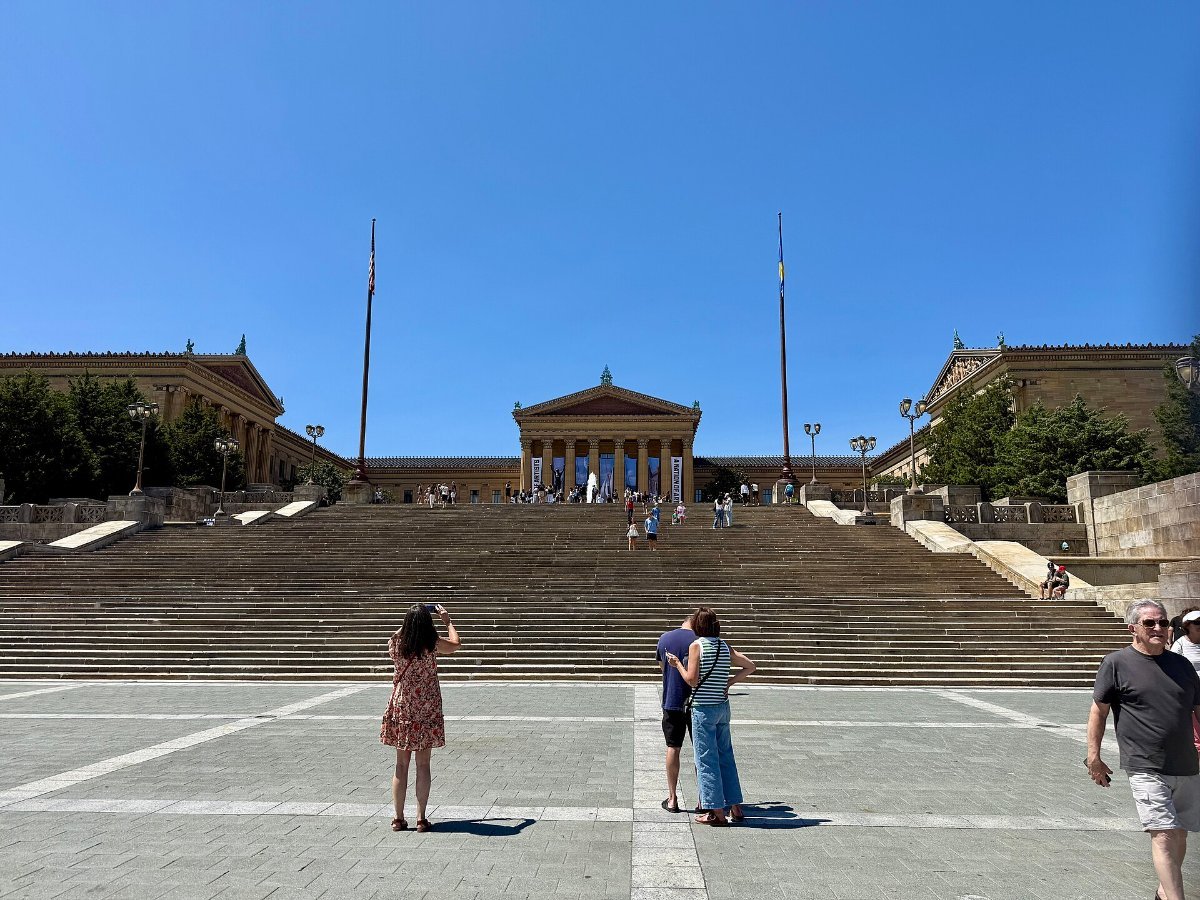
Benjamin Franklin Parkway runs diagonally from City Hall to the art museum and is lined with flags and institutions.
The Philadelphia Museum of Art is one of the largest in the country and holds a genuinely first-rate collection. The steps out front are the ones Rocky ran up, and there’s a bronze statue at the bottom.
People do run the steps. Everyone does. Do it and get it out of your system.
The Barnes Foundation on the same street is the one to prioritise if you only do one. An extraordinary private collection of Renoir, Cezanne and Matisse, hung in a very particular arrangement the founder insisted could never be changed.
The Rodin Museum next door has the largest collection outside Paris and takes forty minutes.
Neighbourhoods Worth an Evening
South Philly for Italian Market, the oldest continuously operating outdoor market in the country, and the food that comes with it.
Fishtown and Northern Liberties for the bars, music venues and the crowd that’s moved there over the past fifteen years.
Rittenhouse Square for the smart version: a lovely park with restaurants around it, good for a drink outside.
Philadelphia has a strong BYOB culture, since liquor licences are expensive. A lot of very good small restaurants let you bring your own wine, which makes dinner much cheaper than it looks.
What to Skip
The Betsy Ross House, unless you’re travelling with children. The flag story is almost certainly a family legend rather than history.
Pat’s and Geno’s at midday. If you must, go at 1am when it makes more sense.
The hop-on hop-off bus. The historic core is four walkable blocks and the rest is a short subway or rideshare hop.
Practical Things
Philadelphia is flat and gridded and very walkable. The SEPTA subway has two main lines that cover what you need.
It’s roughly 90 minutes from New York and two hours from Washington by train, which makes it an easy add-on to either.
Spring and autumn are best. Summer is hot and humid, winter is grey and cold.
Many museums are free or pay-what-you-wish on certain evenings, and the art museum does this on the first Sunday of the month and Friday evenings.
Common Questions
How many days do you need in Philadelphia? Two. One for the historic core and market, one for the museums and a neighbourhood.
Do I need tickets for Independence Hall? Yes, timed and free, and worth reserving online in advance rather than relying on same-day.
Where should I get a cheesesteak? Not Pat’s or Geno’s. Reading Terminal, John’s Roast Pork or any neighbourhood shop will be better.
Is Philadelphia walkable? Very. The centre is flat, gridded and compact, and the historic sights are clustered together.
Is it worth a stop between New York and DC? Genuinely yes, and it’s much cheaper than either for food and hotels.