Here’s a fact that makes the Oregon coast different from California’s: every inch of the beach is public. All 363 miles of it, by law, since 1967.
No private beaches, no gated resorts, no paying to see the sea. That single decision shaped the whole coastline and it’s why this drive feels less developed than almost any other in America.
Highway 101 runs the length of it, Astoria in the north to Brookings near the California line. Four days is right. Here’s the route.
Start in Astoria
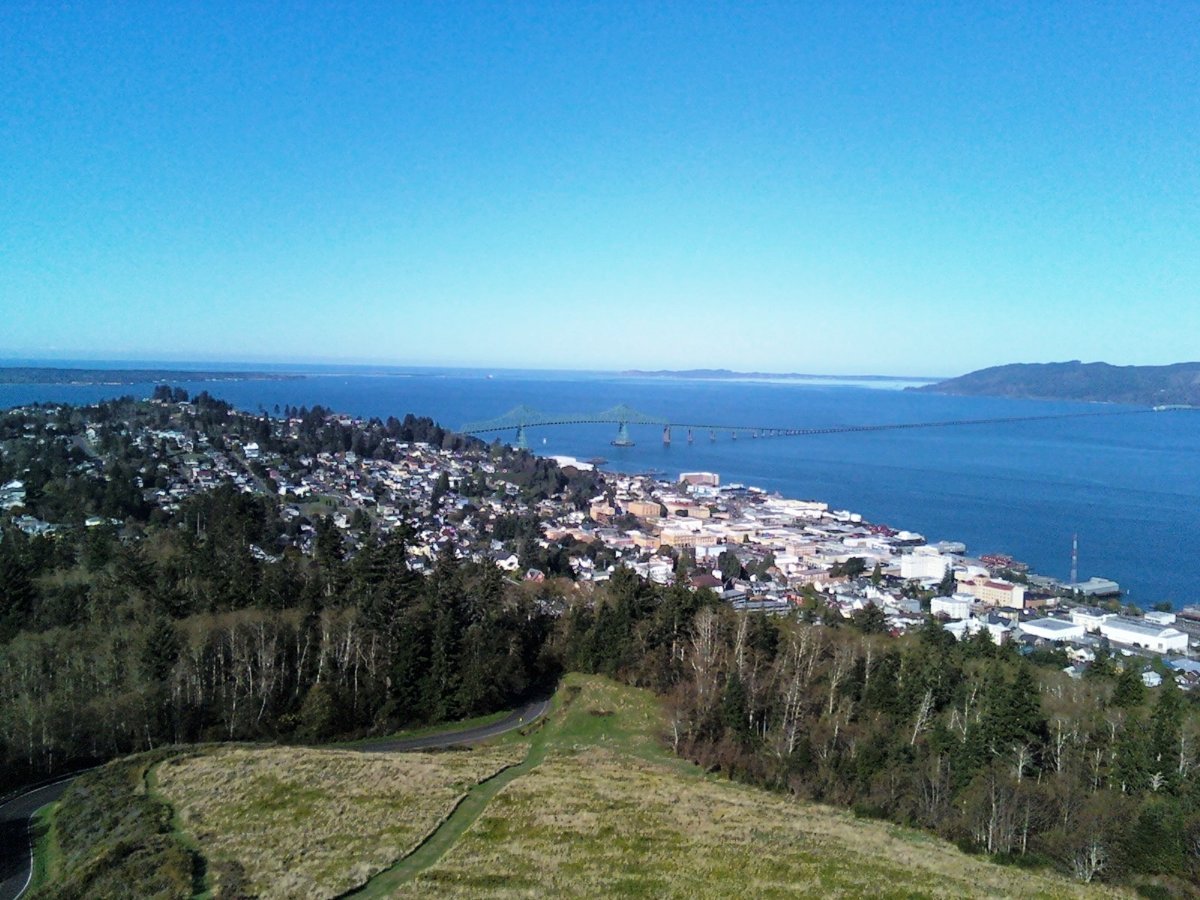
The oldest American settlement west of the Rockies, sitting where the Columbia River meets the Pacific, and looking a bit like a Victorian town that got lost.
Climb the Astoria Column, 164 steps up a 1926 monument painted with a spiral mural, for a view over the river, the four-mile bridge to Washington and the ocean.
The Columbia River Maritime Museum is genuinely excellent, mostly about the Columbia Bar, the stretch of water at the river mouth known as the Graveyard of the Pacific where 2,000 ships have gone down.
The Goonies was filmed here and the town leans into it, mildly.
Cannon Beach
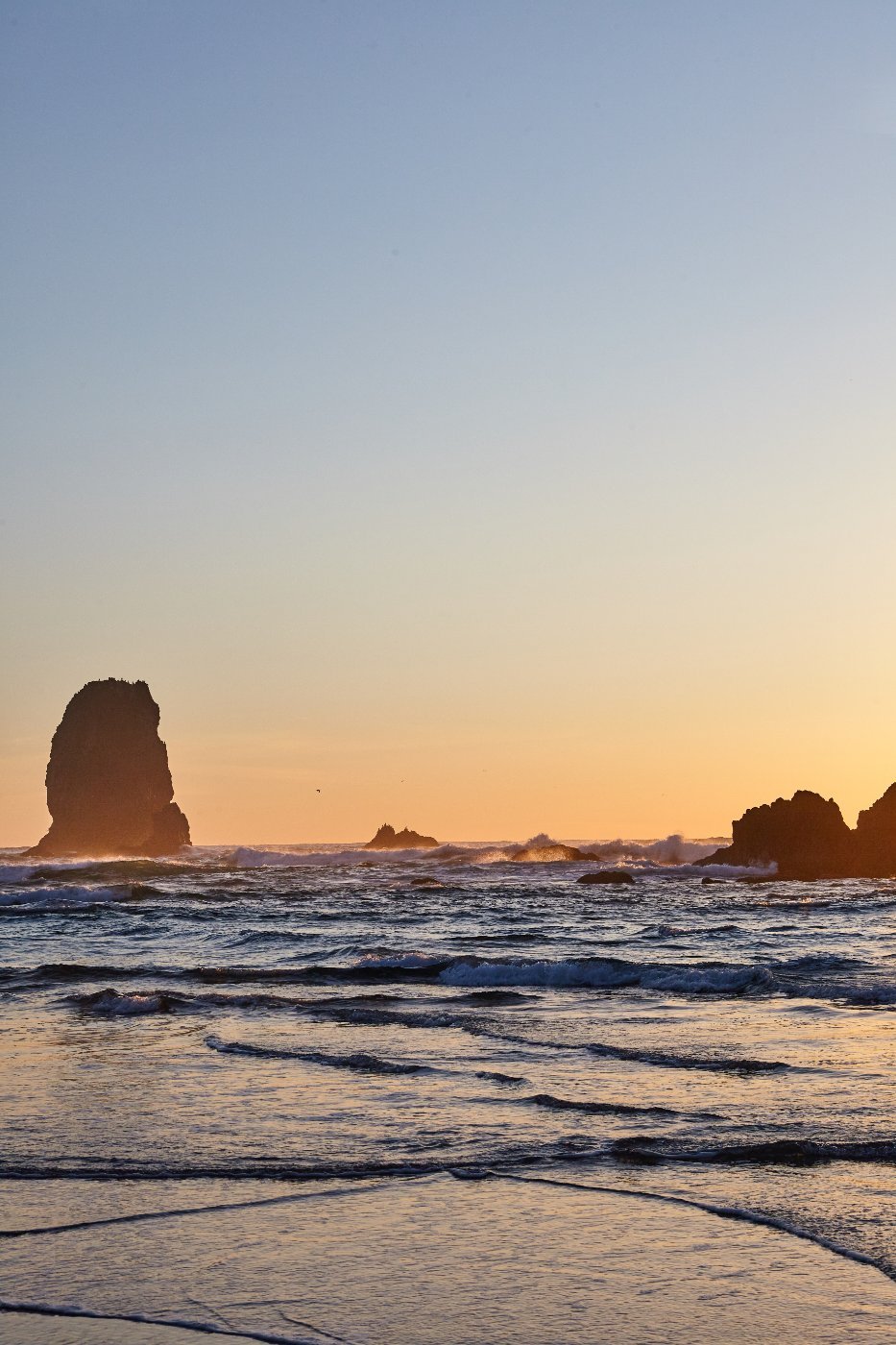
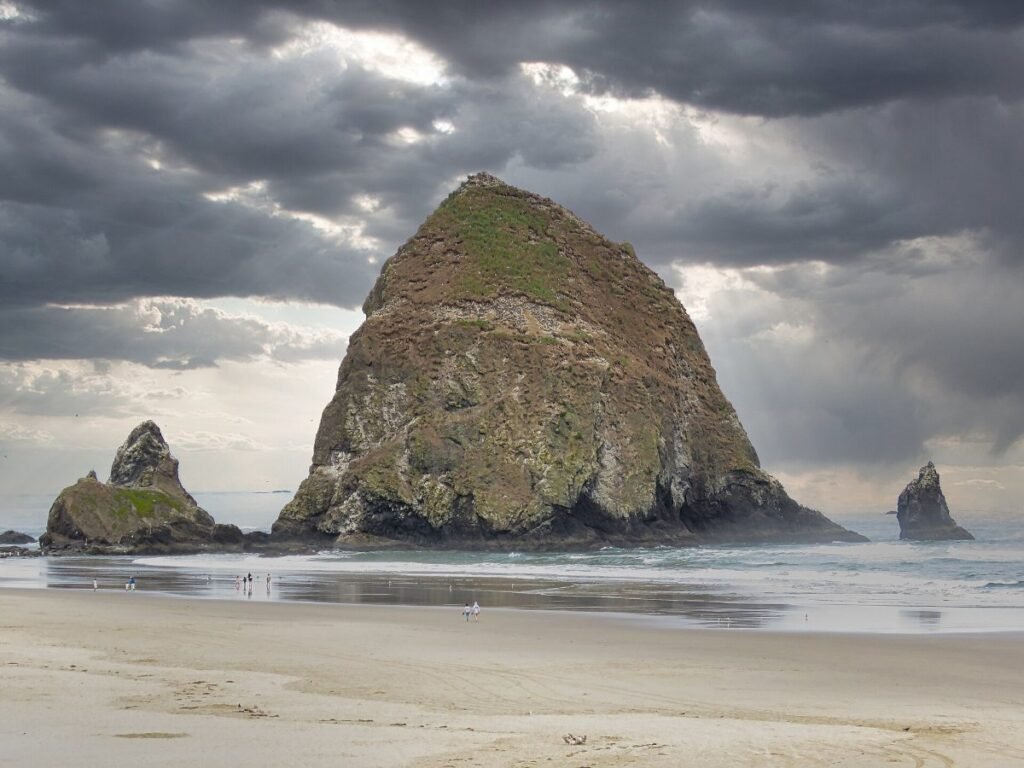
Twenty minutes south and this is the photo everyone has seen. Haystack Rock is a 235 foot sea stack sitting just off a wide flat beach, and at low tide you can walk right up to it.
Go at low tide, genuinely. The tide pools at the base have anemones, sea stars and hermit crabs, and there are volunteers there in summer explaining what you’re looking at.
Puffins nest on the rock from spring to mid summer. Bring binoculars and you’ll see them.
The town itself is small, tidy and pricier than the rest of the coast. Ecola State Park just north gives you the classic view down over the beach.
▶ Watch This Before You Go
Tillamook and the Three Capes
Tillamook is inland cheese country and the creamery does a free self-guided tour with a lot of samples at the end. It’s aimed at families and it’s fine.
The better move is the Three Capes Scenic Loop just west: Cape Meares with its short lighthouse and octopus tree, Cape Lookout with a two mile trail out along a headland, and Cape Kiwanda with a dune you can climb.
It adds an hour to the drive and it’s worth it. Most people stay on 101 and miss all three.
Newport and the Middle Coast
Newport is a working fishing port with sea lions barking under the docks, which is either charming or extremely loud depending on your hotel.
The Oregon Coast Aquarium is one of the best in the country. Yaquina Head has a lighthouse and a tide pool area built into an old quarry.
Depoe Bay just north claims the world’s smallest navigable harbour and is one of the better whale watching spots. Grey whales pass in December to January and March to June, and a resident group stays through summer.
Cape Perpetua
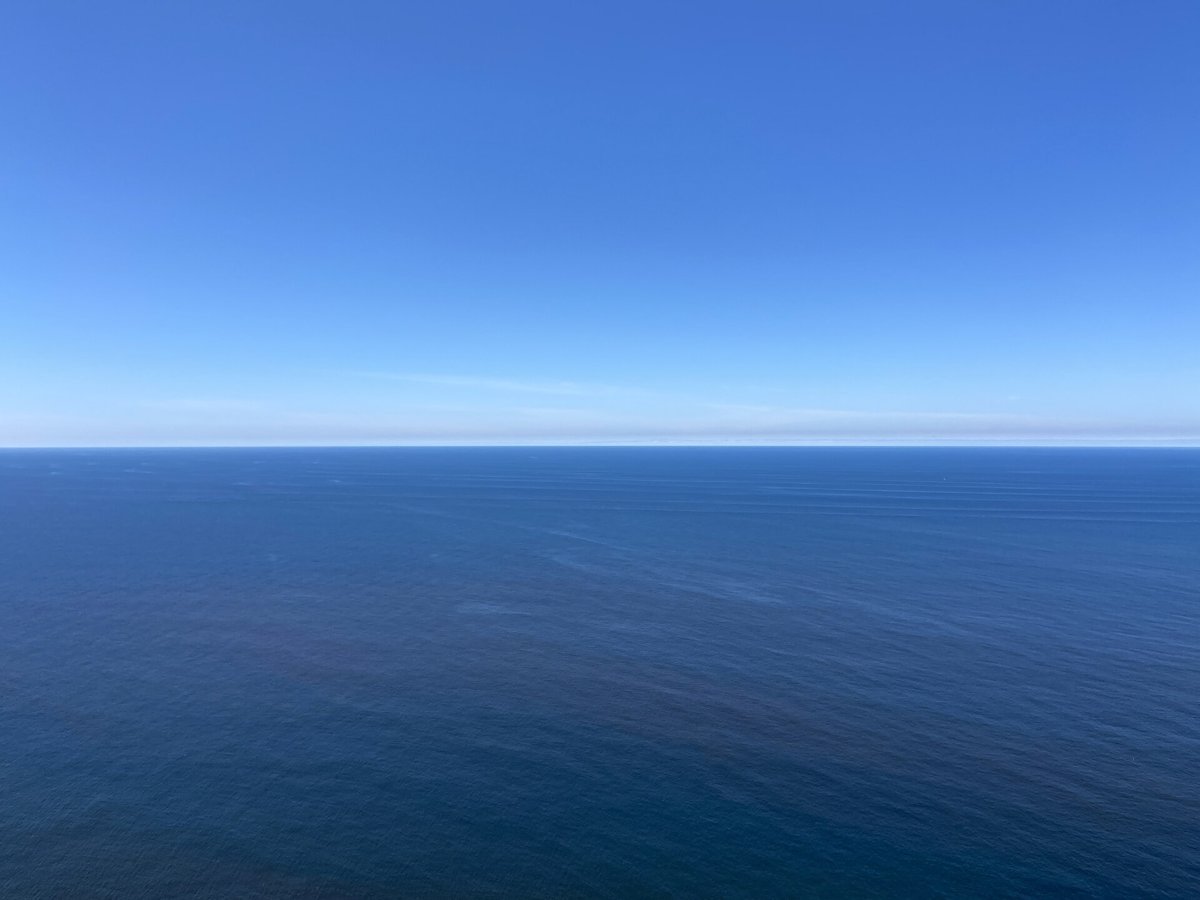
This is my favourite stop on the whole coast and it’s routinely skipped.
The headland rises 800 feet straight out of the sea and there’s a road to the top with a view running 40 miles of coastline on a clear day.
Below it, Thor’s Well is a hole in the basalt shelf that appears to swallow the ocean. Spouting Horn and Devil’s Churn nearby do similarly dramatic things with waves.
Time it for high tide with some swell. At low tide on a calm day, Thor’s Well is a puddle and everyone leaves confused.
Heceta Head and Florence
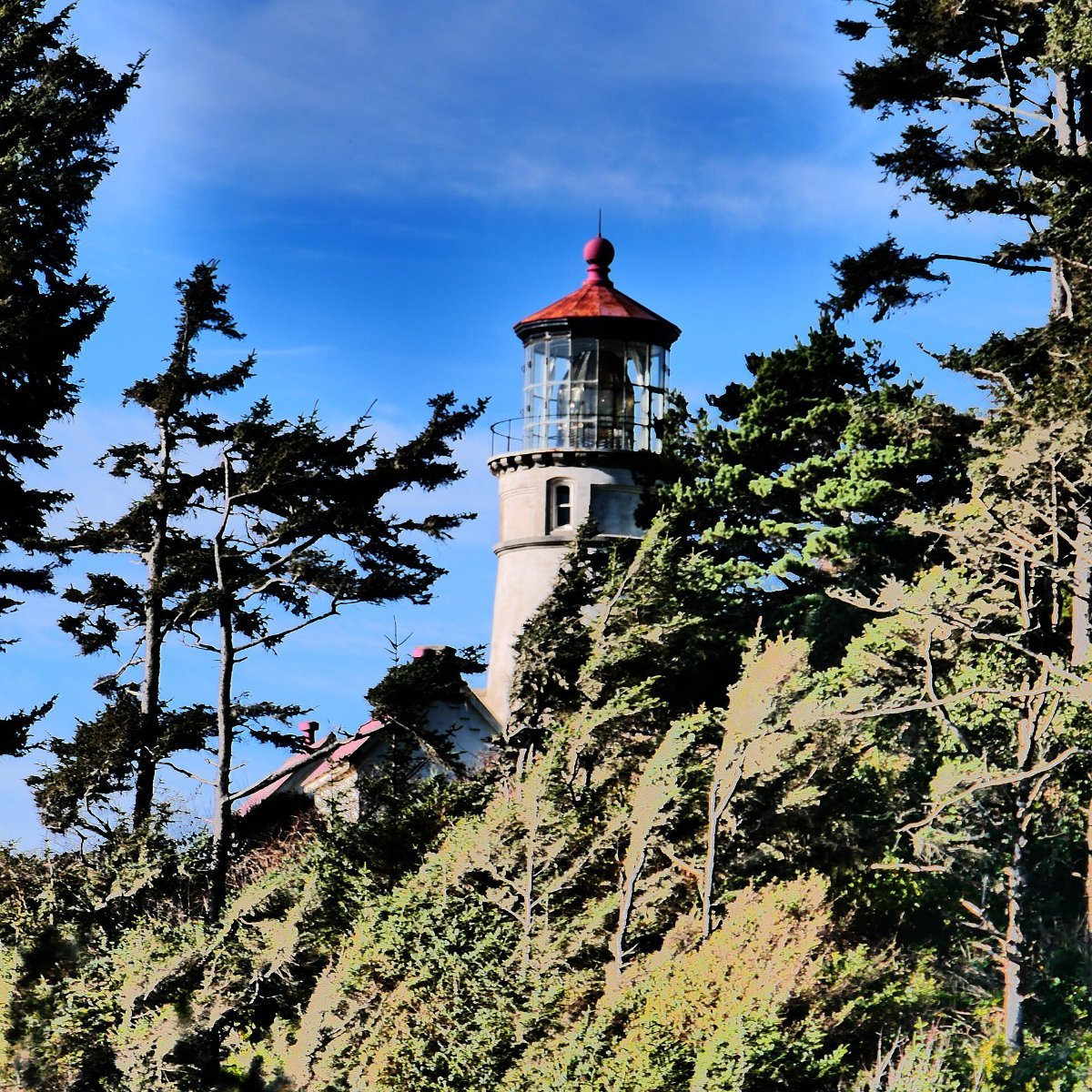
Heceta Head Lighthouse is the most photographed lighthouse in Oregon and you’ll see why coming round the bend. It sits on a headland with the bridge and cove in front of it.
The keeper’s house is now a bed and breakfast, and it’s reputedly haunted, which they mention approximately every four minutes.
Sea Lion Caves nearby is a private attraction and America’s largest sea cave. Mixed reviews, and the lift down is the interesting part.
Florence has a nice old town on the river and is the gateway to the dunes.
The Oregon Dunes
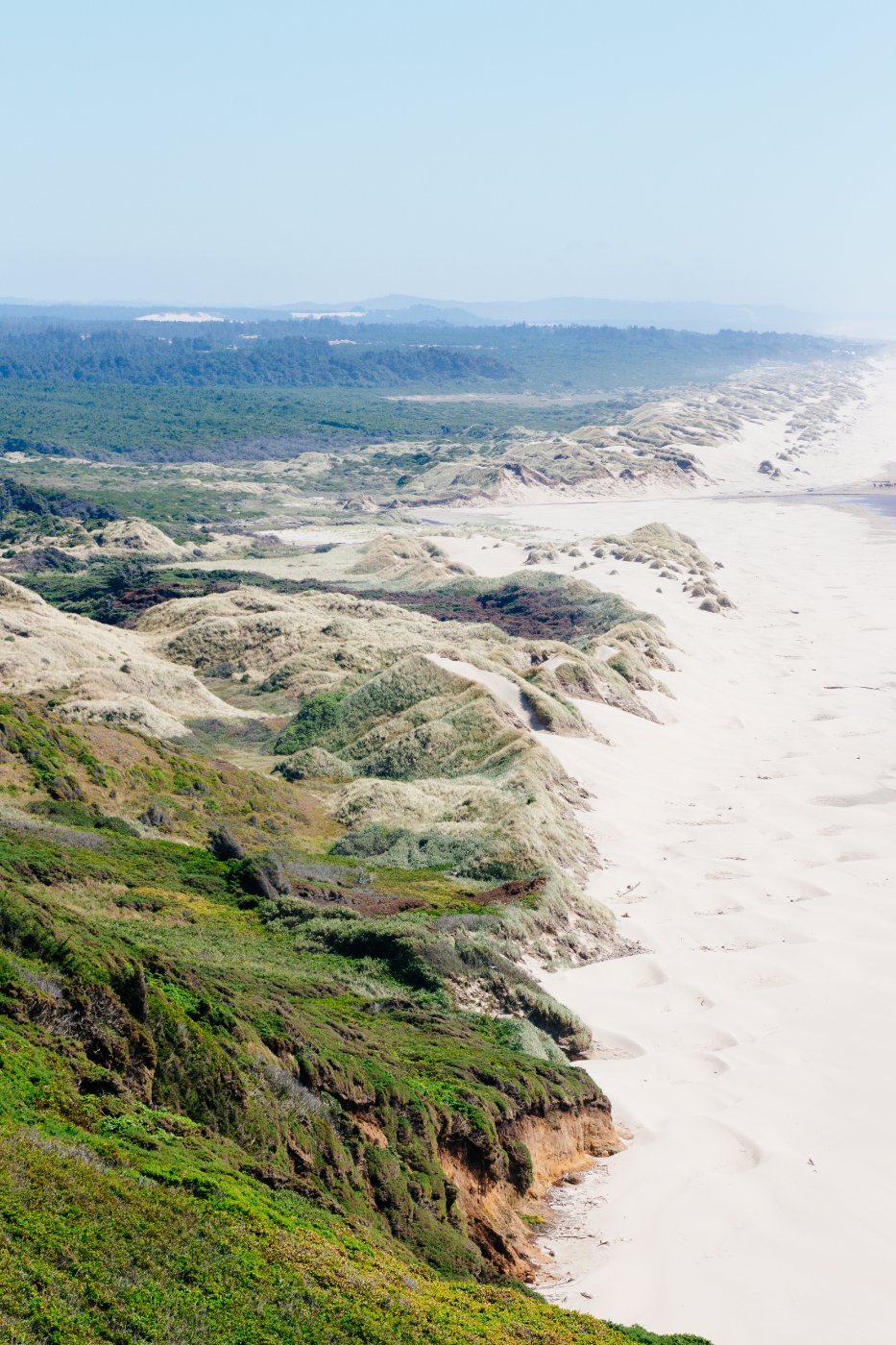
Forty miles of sand dunes up to 500 feet high, running between the forest and the sea. It looks nothing like the rest of the coast and it’s genuinely strange to drive into.
You can hire a dune buggy or take a guided ride, which is the main draw. Or walk in from one of the trailheads and be alone within ten minutes.
Frank Herbert lived in Florence and the dunes inspired Dune, which is the sort of fact that makes the stop worthwhile on its own.
The Southern Coast, Which Nobody Reaches
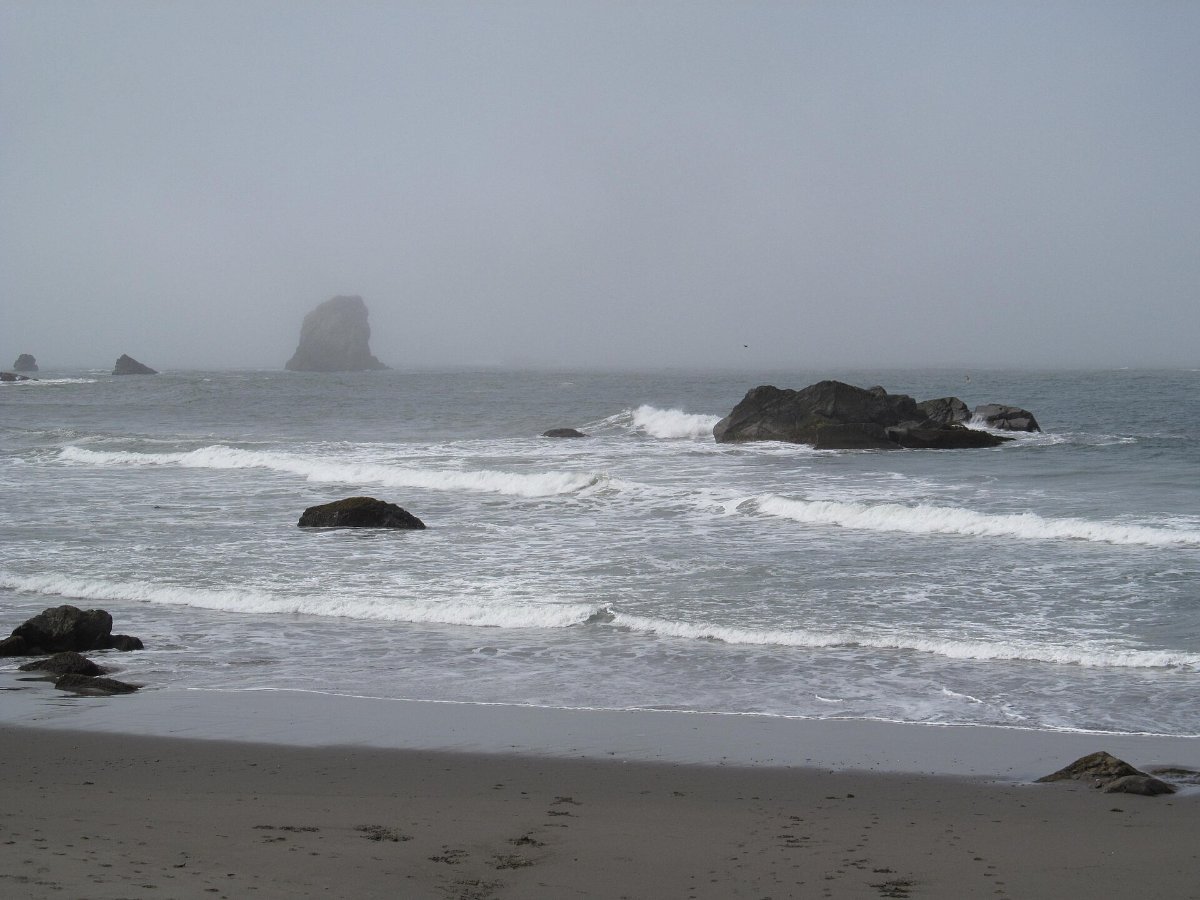
Most road trips turn around at Florence. The stretch from Bandon to Brookings is the best of the lot and it’s nearly empty.
Bandon has sea stacks scattered across a wide beach and Face Rock, which looks like exactly that. Port Orford is the westernmost incorporated town in the lower 48.
The Samuel Boardman Scenic Corridor is twelve miles of viewpoints, arches, secret beaches and Natural Bridges, and it’s the single most spectacular stretch of the entire Oregon coast.
Brookings at the bottom sits in a banana belt and is regularly the warmest place in the state, which after a week of grey drizzle is a joke you’ll appreciate 🙂
Practical Things
Drive north to south. You’ll be on the ocean side of the road, so pull-offs are a right turn rather than a left across traffic. It matters more than it sounds.
The coast is cool and grey a lot of the year. Even in August, expect fog in the morning and something like 18 degrees. Bring layers regardless of what Portland is doing.
September is the best month. Warmest water, clearest skies, fewer people. July and August are busy and foggier than you’d expect.
Book ahead in summer. There aren’t many rooms and the coastal towns are small.
Common Questions
How long does the Oregon coast drive take? Around eight hours without stopping. Four days is the right pace, three at a push, five if you want to walk.
Are Oregon beaches really all public? Yes. The 1967 Beach Bill made the entire coastline public, which is why there are no private beach resorts.
Which end should I start at? North in Astoria and drive south, so you’re on the ocean side of the road for pull-offs.
Can you swim? You can. The water is around 10 to 13 degrees Celsius year round, so most people wear a wetsuit or just paddle.
What’s the best single stop? Cannon Beach for the icon, Cape Perpetua for drama, and the Samuel Boardman corridor if you make it that far south.