For about 150 years Ravenna, not Rome, was the capital of the Western Roman Empire. Then it was the capital of Ostrogothic Italy, then the Byzantine capital in the west. Nobody remembers this, and the city has spent the last thousand years being quietly overlooked.
What survived is eight UNESCO-listed buildings containing the best-preserved Byzantine mosaics anywhere on Earth, including Istanbul.
Why the mosaics matter
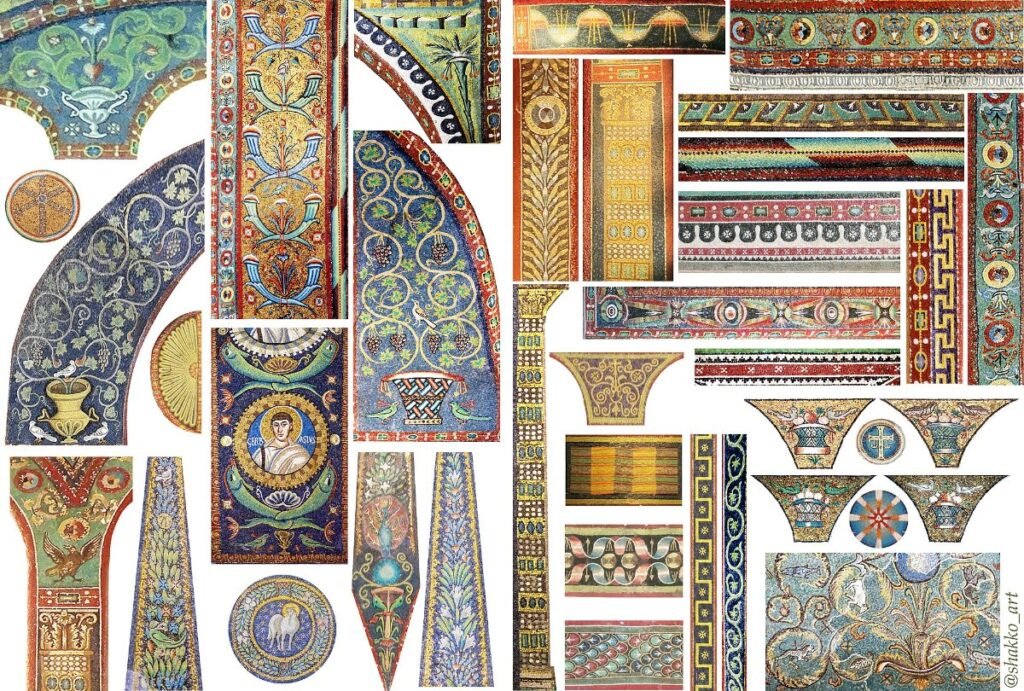
Mosaic isn’t paint. The images are built from tesserae — small cubes of glass, stone and mother-of-pearl — and the gold ones have actual gold leaf sandwiched between layers of glass.
The craftsmen set them at slightly different angles deliberately, so the surface catches light unevenly and appears to shimmer as you move. In candlelight, which is what they were made for, the whole ceiling moves.
They’re roughly 1,500 years old and the colours have barely faded, because glass doesn’t fade the way pigment does. That’s the thing photographs cannot convey and why it’s worth the trip.
The eight sites, and the four that matter most
A combined ticket covers five of the main monuments for around €12 to €15. Buy it at any of them.
Basilica di San Vitale — the big one. An octagonal church from 547 with the famous panels of Emperor Justinian and Empress Theodora facing each other across the apse. Theodora had been an actress and possibly a courtesan before becoming empress, and she’s depicted here as close to divine.
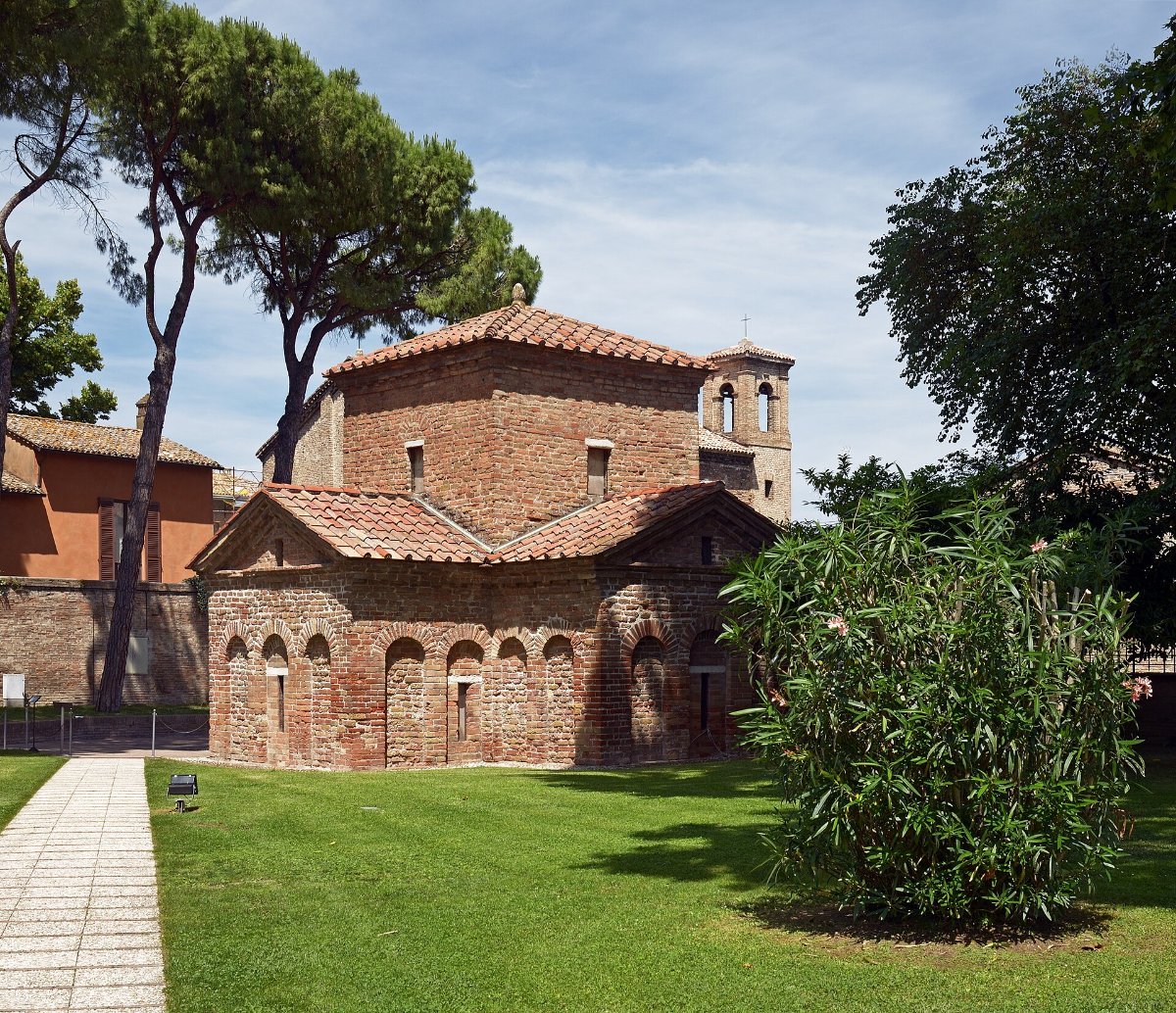
Mausoleum of Galla Placidia — small, dark, and the best thing in the city. A deep blue starry vault above you in a room barely big enough for a dozen people. Entry is timed to a few minutes each in high season because of the crowding. Worth every second.
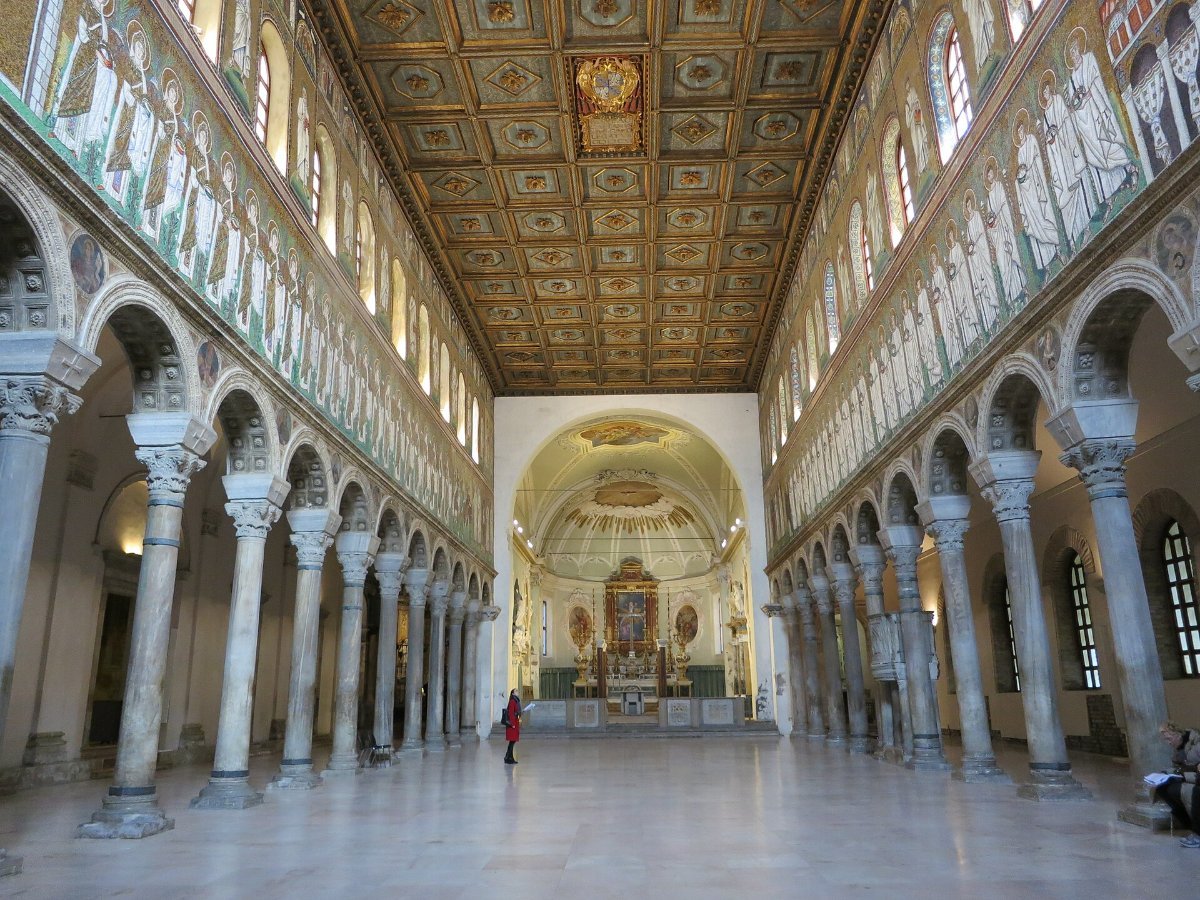
Basilica di Sant’Apollinare Nuovo — two long processions of saints and martyrs down the nave walls, above arcades. Look closely at the palace scene on the left; you can still see hands on the columns where Arian figures were removed after the Byzantines took over. Sixth-century censorship, still visible.
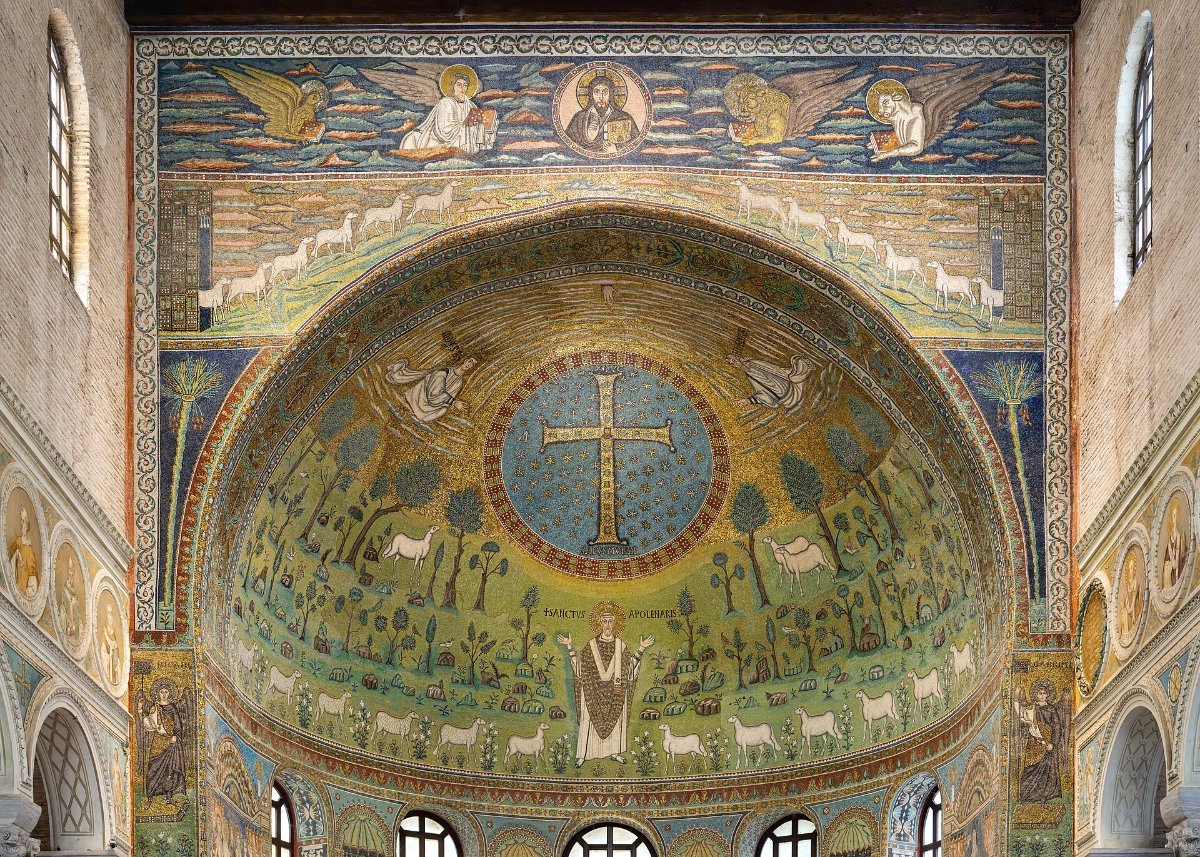
Basilica di Sant’Apollinare in Classe — 8km outside town, and the apse mosaic of a green paradise with sheep and a starry cross is arguably the most beautiful single image in Ravenna. Bus or a short drive. Most day-trippers skip it. Don’t.
Also worth it: the Neonian Baptistery, the Arian Baptistery, and the Archiepiscopal Chapel.
Dante is buried here
Exiled from Florence on pain of death, Dante spent his last years in Ravenna and finished the Divine Comedy here. He died in 1321 and was buried beside the Basilica di San Francesco.
Florence has been asking for the bones back ever since and Ravenna has refused for seven hundred years. Florence still sends oil for the lamp at the tomb every year as a penance.
The tomb is free to visit and takes five minutes. The surrounding “zone of silence” is signposted and observed.
Odd detail: the crypt of the adjacent basilica is permanently flooded with groundwater, and there are goldfish swimming over the 10th-century mosaic floor. You look at it through a grille and drop a coin in.
▶ Watch This Before You Go
How long you actually need
One full day covers the five main monuments comfortably. Two days lets you add Classe, the Dante tomb, the mosaic museum and a proper dinner without rushing.
It’s an easy day trip from Bologna (about 1 hour 15 by train) or Florence (about 2 hours). But the town empties in the evening and it’s genuinely lovely then, so one night is the better call.
Everything in the centre is walkable and flat. Ravenna is also unusually bicycle-friendly by Italian standards, and hire is cheap.
Where it fits in a trip
Ravenna sits in Emilia-Romagna, which is the best eating region in Italy and the one most travellers drive through on the way somewhere else.
Bologna — 1 hour 15. Ragù, tortellini, porticoes.
Ferrara — 1 hour. A Renaissance walled city, almost no tourists.
Comacchio — 40 minutes. Canals, eels, and a proper lagoon landscape.
The Adriatic beaches — Ravenna has 9 lidos on its own coastline, and Rimini is 50 minutes south if you want the full Italian seaside experience.
Eating in Ravenna
You’re in Romagna, so the local bread is piadina — a thin flatbread cooked on a griddle, folded around squacquerone cheese, rocket and prosciutto. Sold from kiosks for a few euros and it’s the correct lunch.
Cappelletti in brodo — small filled pasta in broth, the regional comfort dish.
Sangiovese di Romagna for red and Albana for white, both cheap and local.
Prices are noticeably lower than Florence or Venice. A good dinner with wine runs €25 to €35.
Practical bits
Best time: April to June and September to October. July and August are hot and the coast fills with Italian holidaymakers. Winter is quiet and the mosaics are indoors, which makes it a genuinely good cold-weather destination.
Some monuments limit time inside Galla Placidia in peak season and charge a small supplement in summer. Book ahead if you’re going in August.
Bring a small pair of binoculars if you have them. The apse mosaics are high up and the detail rewards it.
If the mosaics get under your skin, Ravenna still has working mosaic studios and several of them run short courses for visitors, from a two-hour taster up to week-long workshops. You cut the tesserae yourself with a hammer and hardie, which is the same tool shape used in the sixth century, and you leave with something small and wonky. It’s the best souvenir the city sells and it gives you an unreasonable amount of respect for the ceilings.
FAQ
Is a day enough? For the five main sites, yes. Two days is better and lets you reach Classe.
Do I need to book? Generally no, except Galla Placidia in high summer.
Is it worth it if I’m not into religious art? Yes. The appeal here is craft and colour rather than devotion — these are 1,500-year-old rooms that still look extraordinary.
Can I photograph them? Yes in most, without flash. Photos will disappoint you; that’s the point.
Is it good for kids? Short visits, yes. The goldfish crypt is a reliable hit.
Nearest airport? Bologna, about 1 hour 20 away with good rail connections.