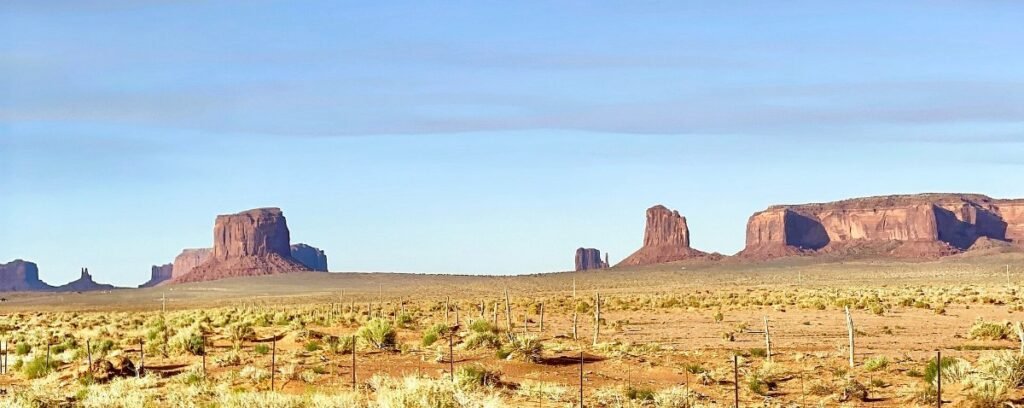
You’ve seen Monument Valley whether you know it or not. John Ford shot nine westerns here, Forrest Gump stopped running here, and roughly every car advert involving a desert has been filmed on that road.
What most people don’t realise until they arrive: it isn’t a national park. It’s Navajo Nation land, run by the Navajo Nation Parks and Recreation department, and that changes several practical things about visiting.
It’s Navajo land, and that matters
Monument Valley Navajo Tribal Park charges its own entry fee — around $8 per person — and America the Beautiful passes do not work here. Bring cash or a card and don’t turn up expecting your national parks pass to cover it.
More importantly, most of the valley is off-limits without a Navajo guide. You can drive one specific loop on your own. Everything else — the arches, the sacred sites, the classic backcountry viewpoints — requires a guided tour with a licensed Navajo operator.
That’s not an upsell. It’s how access to the land works here, and the guided tours are genuinely better anyway because your guide knows what you’re looking at.
The Valley Drive you can do yourself
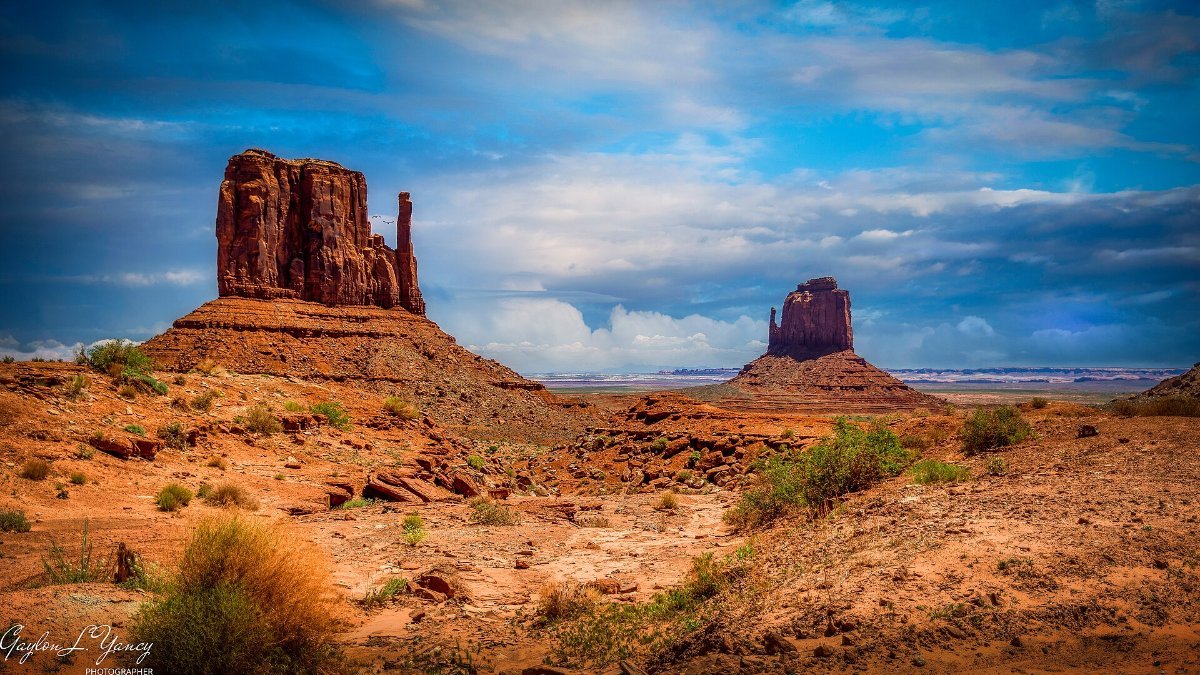
The 27km loop road starts at the visitor centre and takes about two to three hours with stops. It’s dirt, heavily rutted in places, and steep in one section near the start.
Can you do it in a normal car? Mostly yes, in dry conditions, driven slowly. High clearance is genuinely better and after rain it can be closed entirely. Rental agreements often exclude unpaved roads, so check yours.
There are 11 numbered viewpoints. John Ford’s Point is the famous one, with the horse and rider silhouette — there’s usually someone there charging a few dollars for the photo, which is fair enough and you should pay it.
Go on a guided tour anyway
The restricted-access areas are where it gets extraordinary. Big Hogan, Ear of the Wind, Sun’s Eye, Mystery Valley. These are arches and formations you simply cannot reach on the self-drive loop.
Tours run roughly $75 to $110 for two to three hours, more for sunrise, sunset or half-day options. They go in open-backed 4x4s, which is fun and also extremely dusty. Sunglasses and something over your face if it’s windy.
Book directly with a Navajo-owned operator rather than a third-party aggregator. More of the money stays local and the guides are usually better.
▶ Watch This Before You Go
Forrest Gump Point is 20 minutes away and free
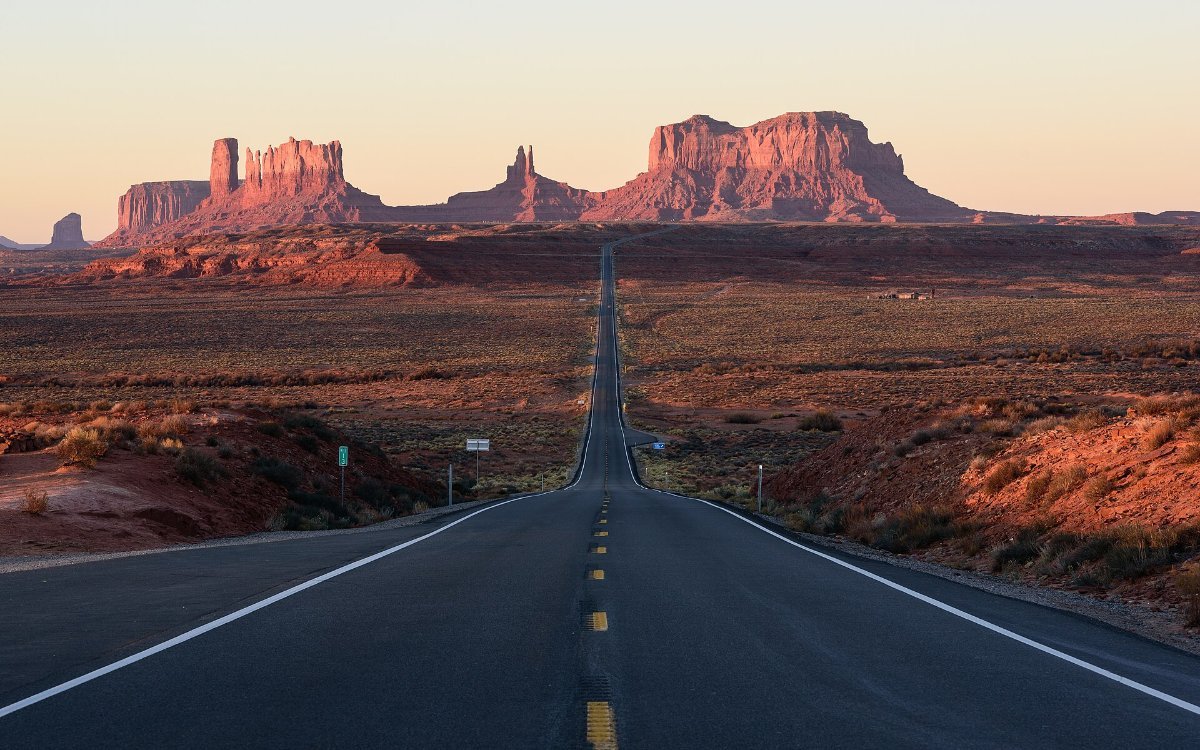
The shot everyone wants — dead straight road running towards the buttes — isn’t in the park at all. It’s on Highway 163 in Utah, about 20km north of the park entrance, near mile marker 13.
It’s free, it’s public road, and it’s spectacular. It’s also an active highway with people standing in it taking photos, which is exactly as sensible as it sounds. Pull fully off the road, watch for traffic, and don’t be the person who causes an accident for a picture.
Best light is late afternoon into sunset when the buttes are lit and the road goes gold.
Where to stay
The View Hotel is inside the park and every room faces the Mittens. It’s the reason to splurge here — waking up to that view through your own window is genuinely something. Book months ahead; it fills.
There are also cabins and a campground at The View, cheaper and with the same outlook.
Outside the park, Kayenta is 40 minutes south with standard chain motels, and Mexican Hat is 40 minutes north and much smaller. Bluff, Utah is about an hour and is the nicest of the alternatives.
Note that the Navajo Nation is dry — no alcohol is sold or permitted on tribal land, including at The View. Plan accordingly and don’t try to sneak it.
Timing your visit
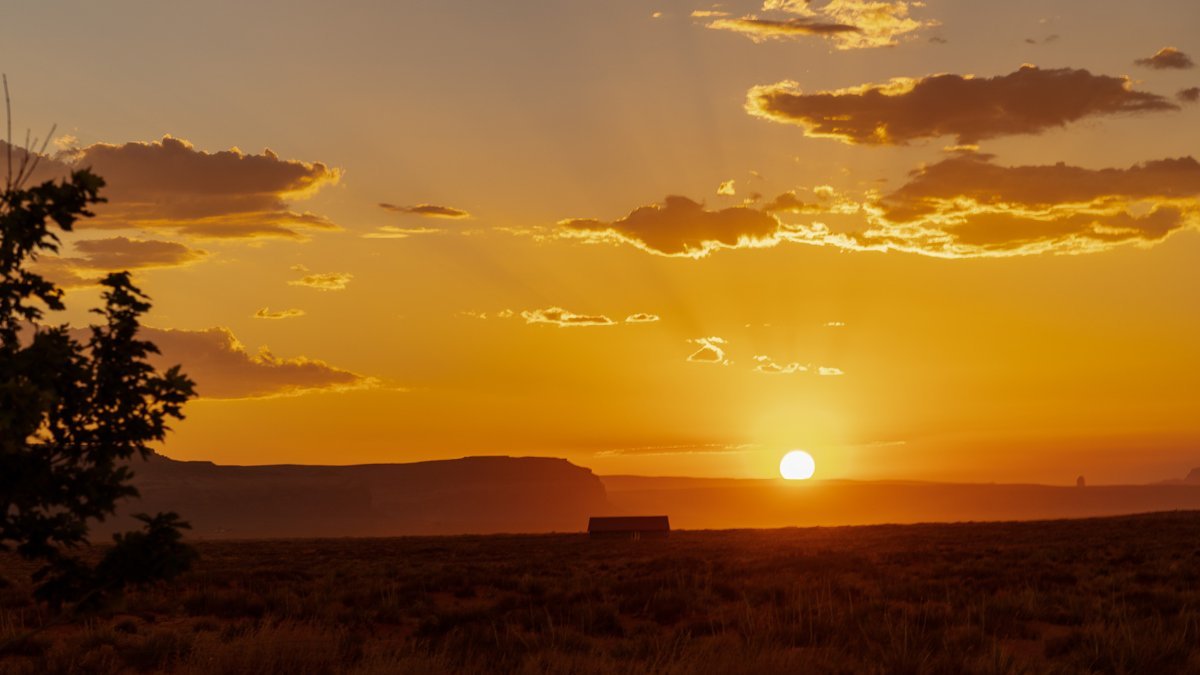
Sunrise and sunset are when this place earns its reputation. The buttes go deep red and the shadows stretch across the valley floor. Midday is flat and hot and much less impressive.
Spring and autumn are best — comfortable temperatures and good light. Summer regularly hits 38°C with little shade. Winter is cold but snow on red rock is remarkable, and it’s very quiet.
The park opens around 6am and closes at 8pm in summer, shorter hours in winter, so check before planning a sunrise.
Fitting it into a road trip
Monument Valley sits well between Page, Arizona and Moab, Utah. Common routing: Grand Canyon, Page for Antelope Canyon and Horseshoe Bend, Monument Valley, then Moab for Arches and Canyonlands.
Driving times: 2 hours 15 from Page, 2 hours 30 from Moab, 3 hours 15 from Flagstaff, 6 hours from Las Vegas.
Half a day is enough for the Valley Drive. A full day if you’re adding a guided tour and staying for sunset, which you should.
Being a good visitor
Don’t photograph people without asking. Don’t wander off marked areas — a lot of this land is sacred and some of it is people’s homes.
Drones are prohibited throughout the Navajo Nation without a permit that visitors will not have.
Buy from the roadside jewellery and craft stalls if you’re buying at all. It goes directly to local families rather than a gift shop.
FAQ
Is it worth it if I’ve seen the Grand Canyon? Yes, completely different. The Grand Canyon is a hole; this is objects standing up out of a plain. They don’t compete.
How long do I need? Three to four hours minimum. Ideally arrive for sunset, sleep nearby, drive the loop at sunrise.
Can I hike? The Wildcat Trail is the only self-guided hike — 5.6km around the West Mitten, about two hours. Everything else needs a guide.
Is there food? A restaurant at The View and a snack bar. Bring water regardless; it’s dry and hot and there’s nothing on the loop road.
Which time zone is it in? Annoyingly, the Navajo Nation observes daylight saving while the rest of Arizona doesn’t. In summer, Monument Valley is an hour ahead of Page. This trips people up constantly.