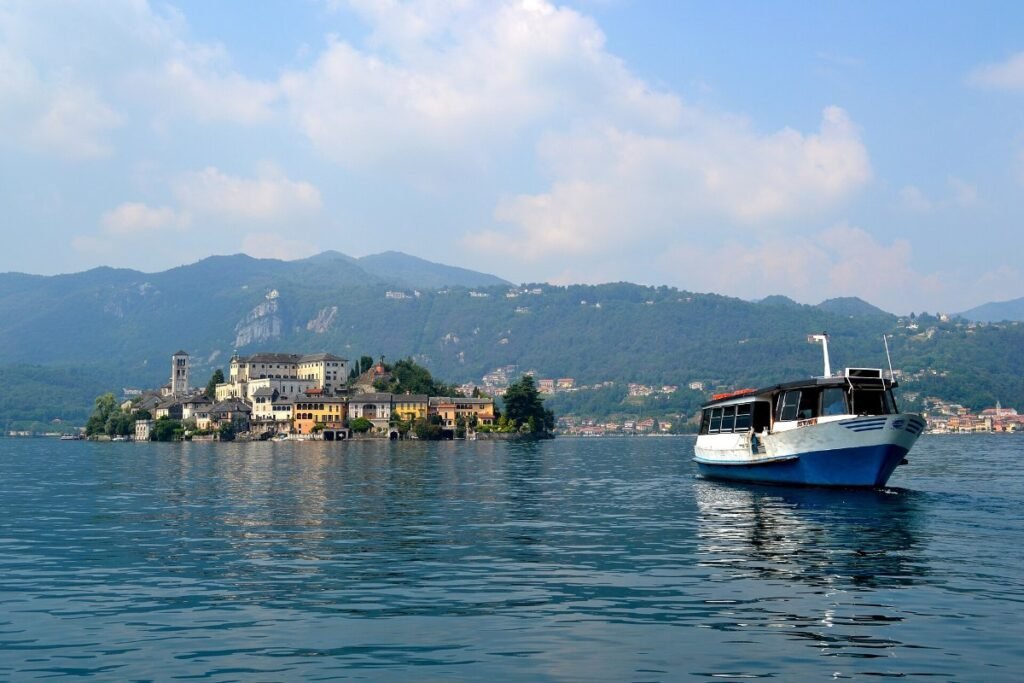
Lake Orta is the smallest of the major northern Italian lakes and the only one west of the Ticino river, which is roughly why nobody goes. It’s 40 minutes from Lake Maggiore, 90 minutes from Milan, and it has one village, one island and almost no tour coaches.
If Como has become a queue and Garda has become a resort, this is the one that still works.
Orta San Giulio
The village is a single medieval core on a small peninsula, and cars are banned in it. You park above and walk down, which is most of why it feels the way it does.
Piazza Motta is the heart of it — three sides of arcaded buildings and the fourth side open to the water, with the island sitting a few hundred metres out. There’s a 13th-century town hall on it, the Palazzotto, on stilts.
The village takes twenty minutes to walk and about three days to get bored of. Which is the point; you come here to sit down, not to tick things off.
Wednesday morning has a market in the square that’s been running since 1228.
Isola San Giulio
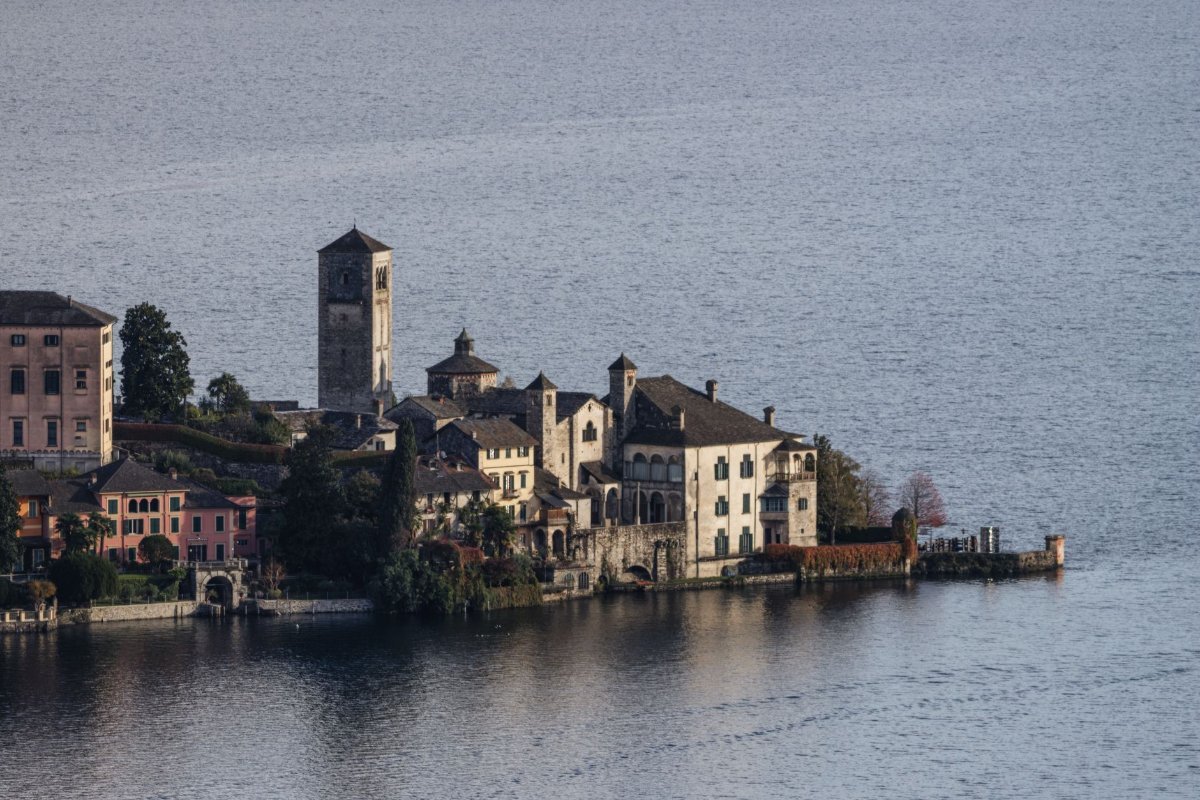
A tiny island, about 275 metres long, almost entirely occupied by a Benedictine convent and a basilica.
Boats run constantly from Piazza Motta — a few minutes, around €5 return, no need to book.
There is one path around the island, and the nuns have posted signs along it. One side is the “Way of Silence” and the other the “Way of Meditation”, each with short phrases painted on boards: “In the silence you accept everything” and so on. It’s about 15 minutes of walking and it’s either lovely or twee depending on your mood. Most people find it lovely.
The Basilica di San Giulio has an 11th-century black marble pulpit carved with beasts, and frescoes layered from several centuries.
The convent is enclosed, so you can’t go in, but you’ll hear the nuns singing if you time it right.
There’s a legend attached to the island that the locals will tell you with varying degrees of seriousness. San Giulio arrived in the fourth century to find the island infested with serpents and dragons, sailed across using his cloak as a boat and his staff as a rudder, and drove them out. A large vertebra hanging in the basilica was long displayed as a dragon bone. It is, disappointingly, whale.
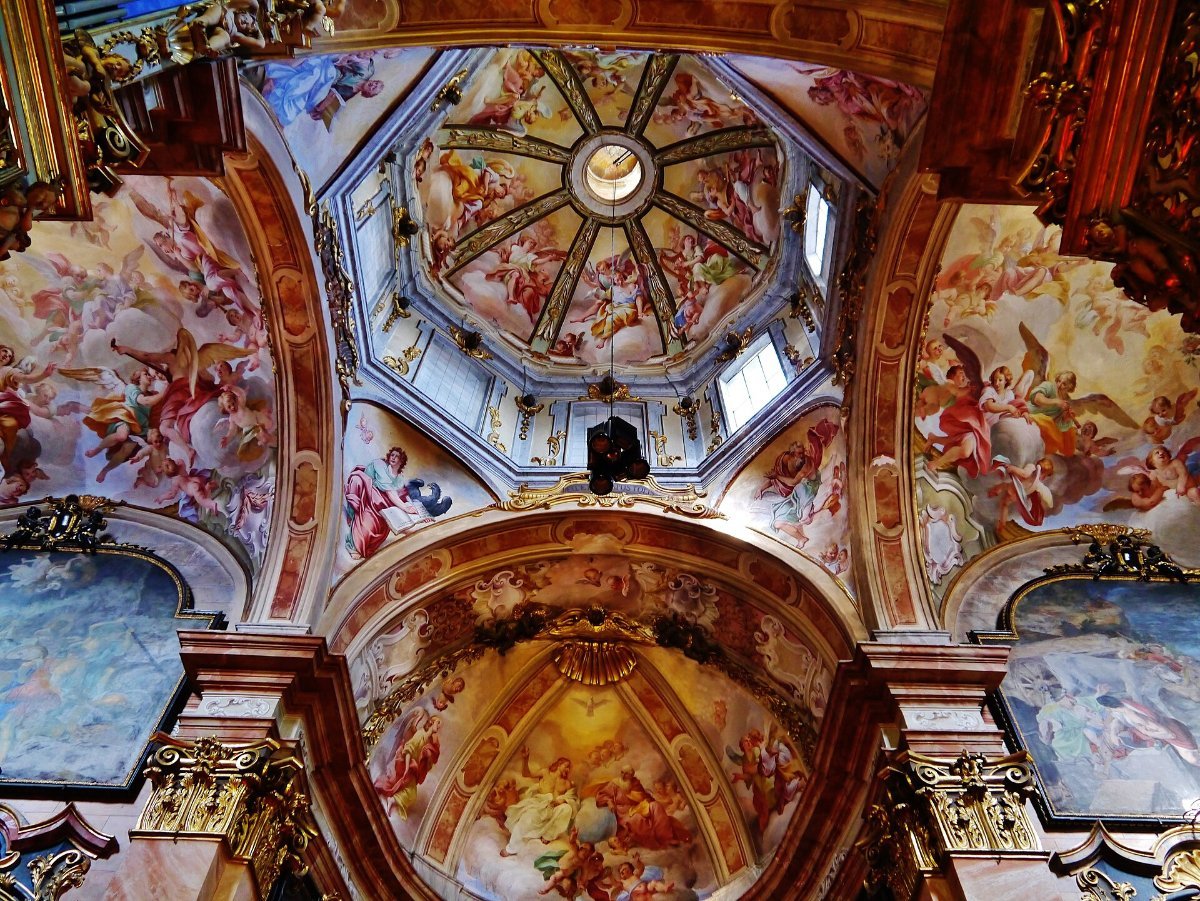
The Sacro Monte above the village
A UNESCO World Heritage Site, and one of nine Sacri Monti in Piedmont and Lombardy.
Twenty chapels wind up a wooded hill above Orta, each containing life-size painted terracotta figures depicting scenes from the life of St Francis. Built between 1590 and 1788.
The figures are startling — around 375 of them, individually modelled, with real hair and glass eyes in places. It’s somewhere between devotional art and theatre.
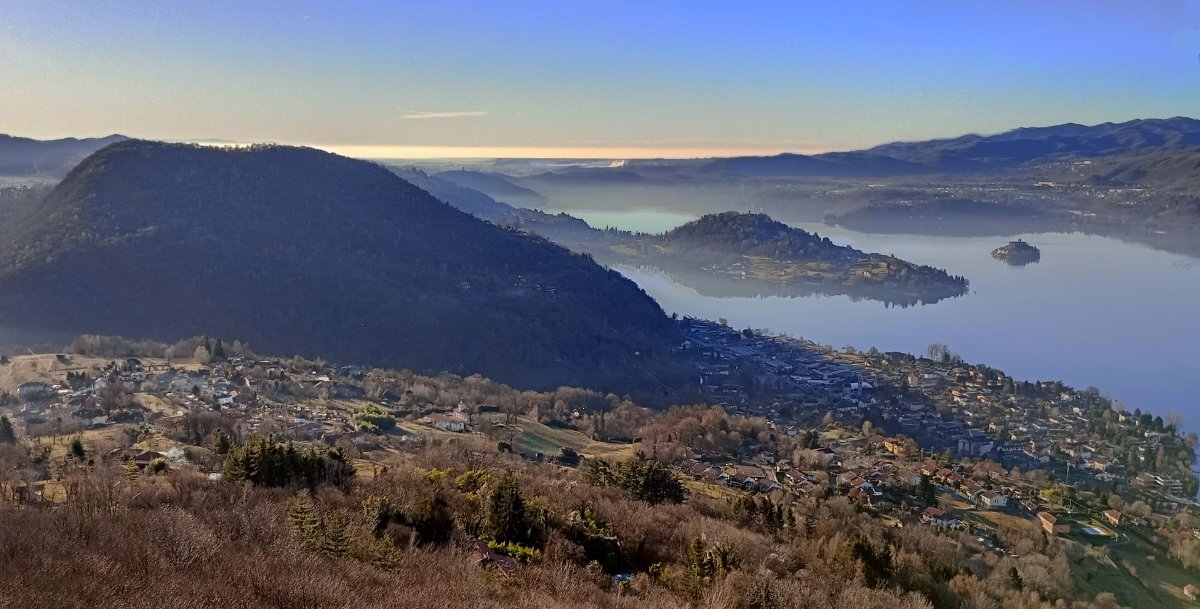
It’s free, it’s open, and the walk up takes 20 minutes from the village. The view back over the lake from the top is the best one you’ll get.
▶ Watch This Before You Go
What else there is to do, which isn’t much
That’s the honest pitch for Orta. There is no major museum, no cable car, no theme park. What there is:
Swim. The lake is clean and warm enough from June to September. There are small beaches at Miasino and Pella.
Take a boat to Pella on the opposite shore, a smaller and even quieter village.
Walk to Legro, a hamlet 20 minutes above the village whose houses are painted with murals of films shot in the area.
Climb Mottarone — the mountain between Orta and Maggiore, with a view of both lakes and, on a clear day, Monte Rosa.
Eat. Piedmontese food, so tajarin pasta, risotto, lake fish, and gorgonzola, which comes from not far away.
Do nothing on a terrace. This is the correct primary activity.
How it compares to the other lakes
- Como — grander, more dramatic, far more crowded and expensive.
- Maggiore — bigger, with the Borromean islands and gardens. Busier than Orta, quieter than Como.
- Garda — biggest and most developed, best for families and watersports.
- Iseo — the other quiet one, with Monte Isola.
- Orta — smallest, quietest, cheapest, least to do. That’s the appeal.
Orta is the one to pick if you want two or three days of doing very little somewhere beautiful. It’s the wrong choice if you want variety or nightlife.
Practical bits
Getting there: Milan Malpensa airport is about an hour by car. By train, take the line to Orta-Miasino station, which is a 20-minute walk from the village — services are infrequent, so check times carefully.
A car is useful for exploring the shore but unnecessary if you’re staying in the village.
Two nights is right. Three if you’re properly relaxing. It’s also a good pairing with Lake Maggiore, 40 minutes away, for a week in the region.
Season matters. Orta is very seasonal — many hotels and restaurants close from November to March, and the boats reduce. May, June, September and early October are ideal. August is the busiest, though busy here still means walkable.
Accommodation is limited and the good places book up. Reserve early for summer.
One quirk worth knowing if you’re a swimmer: Lake Orta was, for decades, one of the most polluted lakes in Europe. A rayon factory discharged copper and ammonium into it from the 1920s and effectively sterilised the water. In 1989 the lake was treated with thousands of tonnes of limestone to neutralise the acidity, and it recovered — it’s now considered one of the great freshwater restoration successes and the fish are back. The water you’ll swim in is clean, and it’s clean because somebody fixed it.
FAQ
Is a day trip enough? You can see it in a day from Milan or Maggiore, but the whole point is the evening after the day visitors leave. Stay the night.
Is it expensive? Noticeably cheaper than Como or Garda for both food and rooms.
Can I swim in the lake? Yes. It’s clean and quieter than the bigger lakes.
Is it good with kids? For a couple of days, yes — the boat and the island are a hit. There’s not much beyond that.
Do I need to book the island boat? No, they run on demand through the day.
What’s the single best thing? Walking up to the Sacro Monte in the late afternoon and looking back down at the island.