Trieste doesn’t feel Italian, and that’s because for most of its modern history it wasn’t. It was the Austro-Hungarian Empire’s only major seaport for five and a half centuries, and it only became permanently Italian in 1954.
So you get Viennese coffee houses, Habsburg architecture, a Slovene-speaking hinterland and a Serbian Orthodox church on the seafront, in a city that also does excellent Italian food. It’s the strangest and most interesting city in Italy and hardly anyone goes.
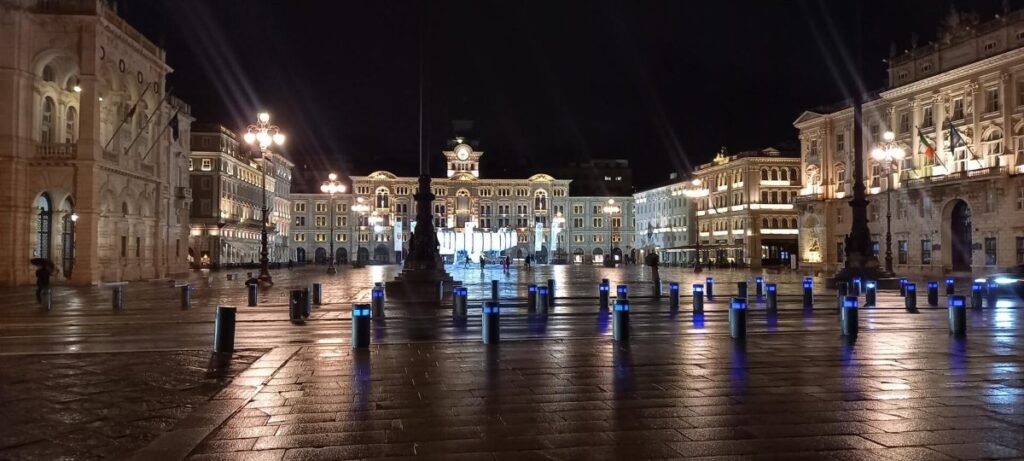
Piazza Unità d’Italia
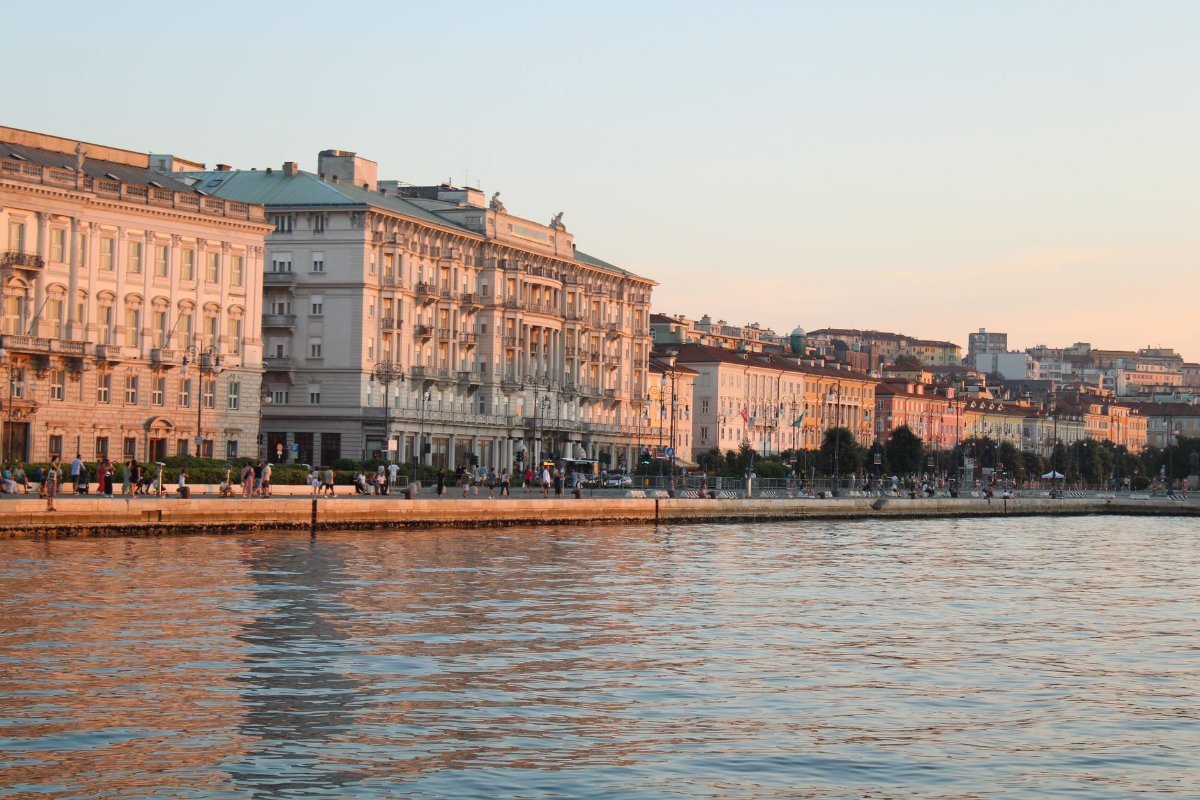
The largest sea-facing square in Europe — three sides of grand Habsburg buildings and the fourth side open to the Adriatic.
Go at dusk. The lights come on, the square opens straight onto black water, and it does something no enclosed piazza in Italy can.
The buildings around it are 19th-century imperial: the city hall, the Lloyd Triestino shipping headquarters, the Palazzo del Governo with its mosaic facade. This was a serious commercial capital and the architecture is showing off about it.
Coffee is a different thing here
Trieste is Italy’s coffee port — it’s where illy was founded and where a large share of the country’s beans still arrive. The city has the highest coffee consumption per head in Italy.
It also has its own vocabulary, and if you order in standard Italian you’ll get the wrong drink:
- Nero = an espresso.
- Capo = an espresso with a little foamed milk, in a small glass. Not a cappuccino.
- Capo in b = the same, in a glass (in bicchiere). This is the local order.
- Goccia = espresso with a drop of foam.
- Ask for a caffè and you’ll get an espresso; ask for a cappuccino and you may get a small one in a glass.
Drink it in one of the historic cafés — Caffè San Marco, Caffè degli Specchi on the main square, or Caffè Tommaseo, which opened in 1830. James Joyce wrote much of Ulysses in this city and drank in these rooms.
Miramare Castle
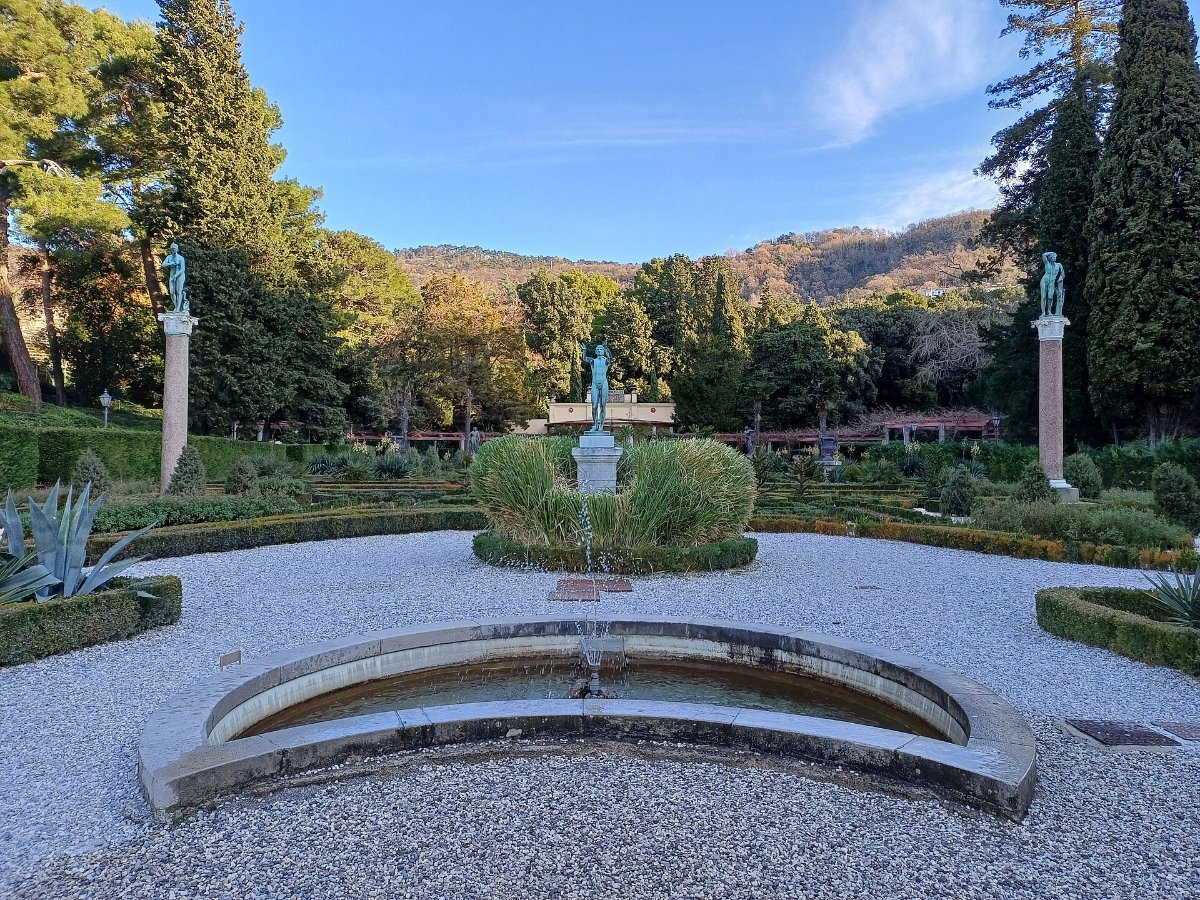
A white castle on a promontory 8km up the coast, built in the 1860s for Archduke Maximilian of Austria. He left it to become Emperor of Mexico and was executed by firing squad three years later, which gave the place a lasting reputation for bad luck.
The interiors are preserved with the original furniture, and the 22-hectare park is free to walk. There’s a marine reserve in the water below.
Bus 6 from the centre, about 20 minutes, or a pleasant seafront walk.
The layered history is the point
Roman — there’s a 1st-century theatre sitting in the middle of the city, uncovered in the 1930s.
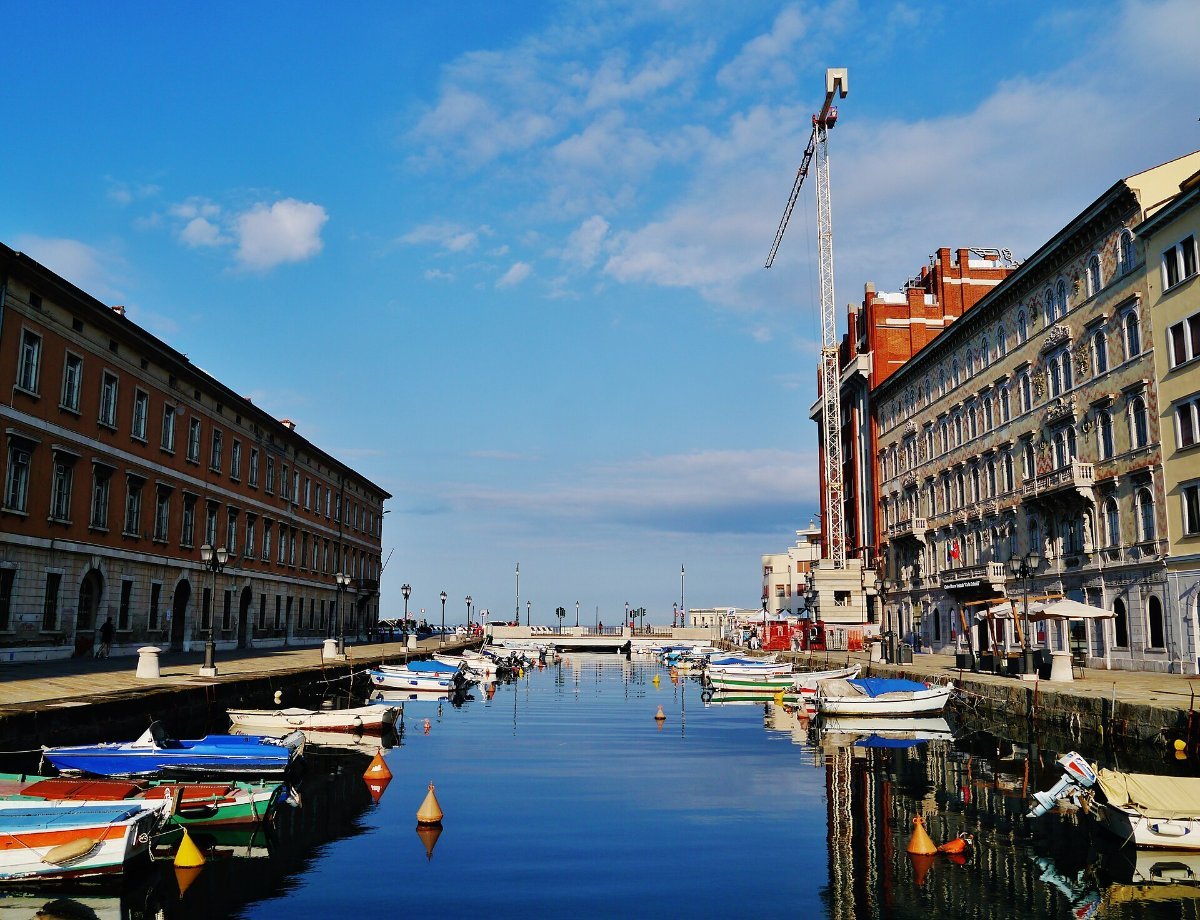
Habsburg — the Borgo Teresiano district, laid out on a grid in the 18th century with a canal running into it.
Jewish — Trieste has one of the largest synagogues in Europe, built in 1912, reflecting a community that was central to the city’s commercial life.
Second World War — the Risiera di San Sabba, a rice mill used as a Nazi detention camp, the only one on Italian soil with a crematorium. It’s now a national monument and it is a hard visit. Free entry.
Cold War — Trieste was disputed territory between Italy and Yugoslavia until 1954 and administered by the Allies. The Iron Curtain ran a few kilometres away.
▶ Watch This Before You Go
The karst plateau above the city
Trieste sits on a narrow strip between sea and a limestone plateau — the Carso, or Kras — which is Slovene-speaking, riddled with caves and covered in scrub that turns red in autumn.
Grotta Gigante — one of the largest accessible cave chambers in the world, 107 metres high. You could fit St Peter’s inside it.
Osmize — this is the local secret. Farms on the plateau are permitted to sell their own wine, ham and cheese directly for a limited number of days a year. They mark themselves with a branch or leaves hung by the road. There are apps and websites listing which are open. It’s cheap, informal, and the most Triestine thing you can do.
Duino — a castle on a cliff where Rilke wrote the Duino Elegies, with a coastal path along the cliffs.
Eating
The food reflects the same mix. Italian, Austrian and Slovene at once.
Jota — a thick soup of sauerkraut, beans and potato. Utterly un-Italian and delicious.
Buffet — a Triestine institution. Not a self-service buffet but a type of eatery serving boiled pork, sausages, mustard and horseradish. Buffet da Pepi is the famous one.
Presnitz and putizza — rolled pastries with nuts and dried fruit, straight out of the Austro-Hungarian repertoire.
Seafood from the Adriatic, and the local wines from the Carso — Terrano, Vitovska and Malvasia, all unusual and worth trying.
Practical bits
Two days does the city, three with the Carso and Miramare.
Trieste has a small airport. Venice is 2 hours by train, Ljubljana about 2.5 hours by bus, and Croatia’s Istrian coast is an hour by car. It’s an excellent stop between Italy and Slovenia or Croatia.
The city is walkable but hilly away from the waterfront.
The bora is a local wind that comes off the plateau and can exceed 150 km/h in winter. There are handrails and ropes on some streets for it. Mostly a winter phenomenon and genuinely dramatic.
Best time: May, June, September, October. Summer is hot and humid but the sea helps.
FAQ
Is it worth a special trip? For two or three days, yes, especially if you like cities with complicated histories. It also works well as a stop en route to Slovenia or Croatia.
Is it expensive? No. Noticeably cheaper than Venice or Milan.
Do people speak English? Reasonably in the centre. Italian, Slovene and German all get used.
Can I swim? Yes, there are bathing areas along the coast, and Barcola is where locals go.
What’s the single best thing? An osmiza on the Carso in the late afternoon, then Piazza Unità at dusk.
Is the Risiera suitable for children? It’s free and open, but it’s a former camp. Use your judgement.