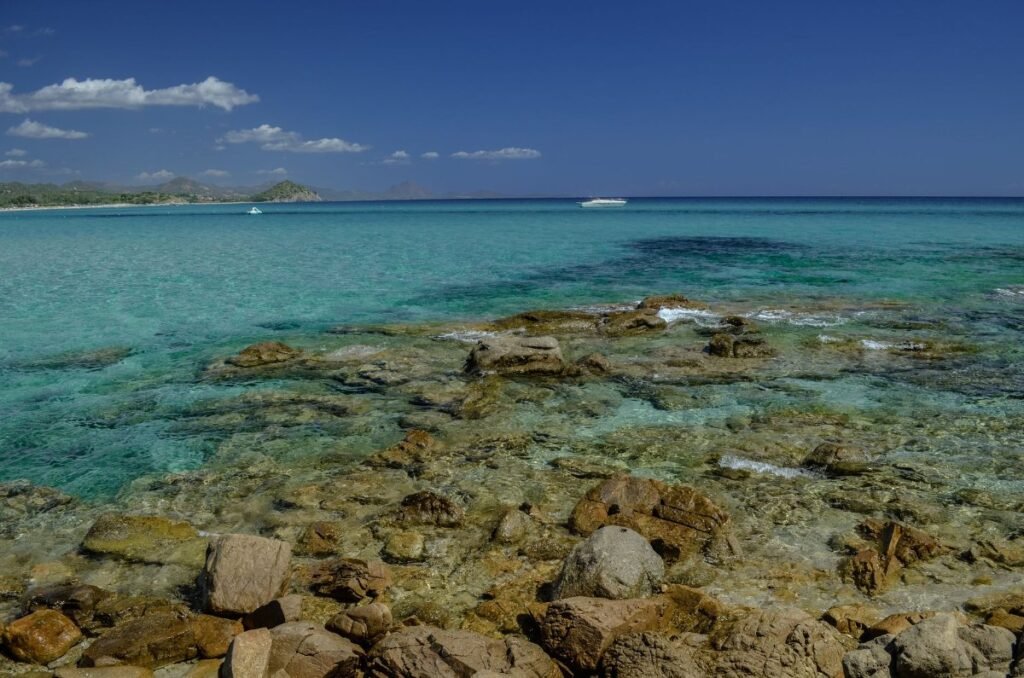
Sardinia has water the colour of a Caribbean brochure and it’s a two-hour flight from most of Europe. It also has 7,000 Bronze Age stone towers, a language that isn’t Italian, and an interior almost nobody visits.
Most people see the beaches and go home. That’s a fine holiday. It’s also about a third of the island.
The beaches genuinely are that good
Let’s start with the obvious. Sardinia’s coastline runs about 1,850km and the water clarity is exceptional because there are few rivers dumping sediment into it.
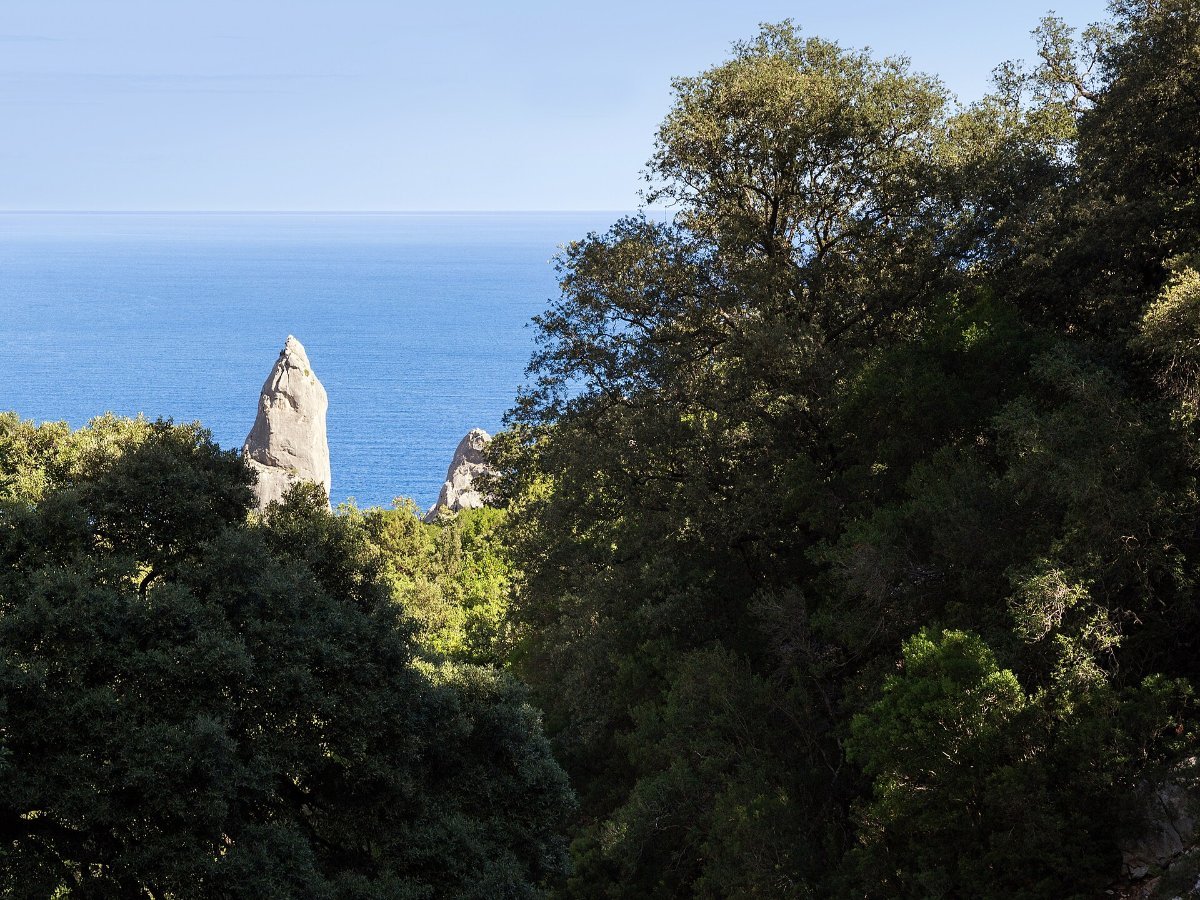
Cala Goloritzé on the east coast — a small white pebble beach under a limestone pinnacle, reachable only on foot (about 90 minutes down, longer back up) or by boat. A UNESCO natural monument, capped at a limited number of daily visitors, and worth every step.
La Pelosa, in the northwest near Stintino — shallow turquoise water with a Catalan watchtower on an islet. Now requires a paid booking in summer with a daily visitor cap, and you’re not allowed to bring a towel directly onto the sand without a mat.
Costa Smeralda, in the northeast — developed by the Aga Khan in the 1960s into a playground for yachts. Beautiful and expensive. Nearby Spiaggia del Principe is the pick.
Chia and Piscinas, in the south and southwest — dunes, less development, better value.
The nuraghi are the reason it’s not just another island
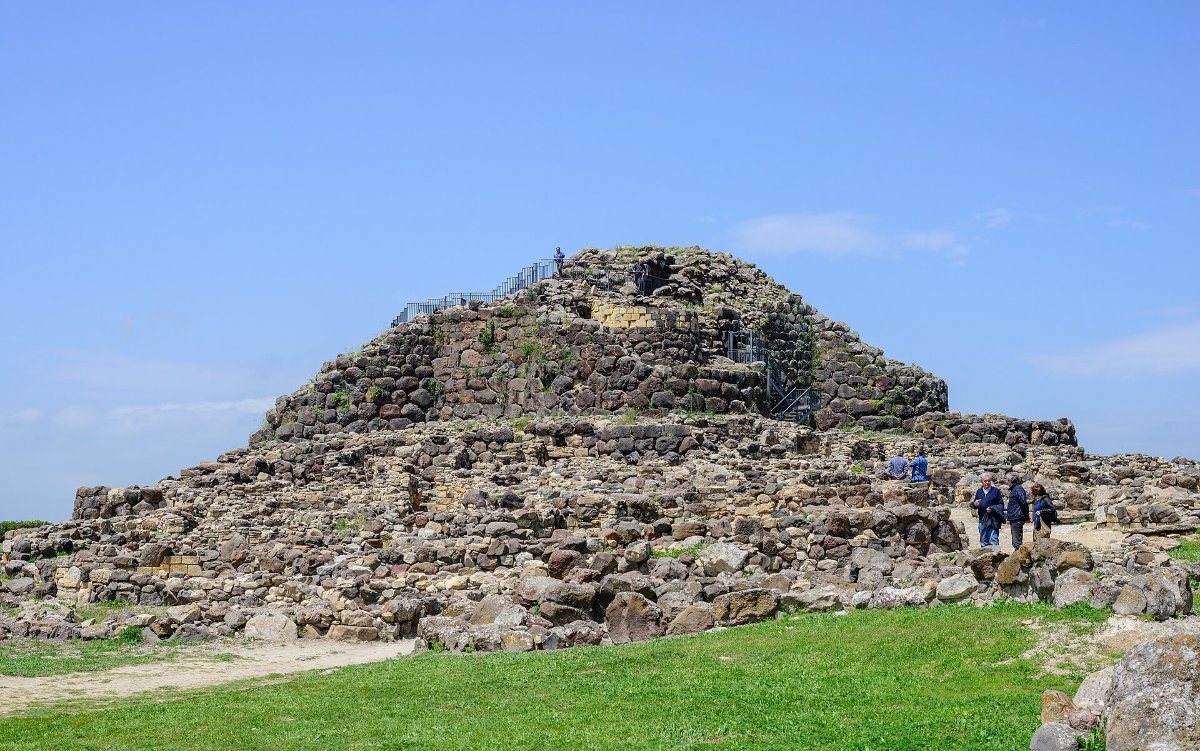
Scattered across Sardinia are around 7,000 nuraghi — conical stone towers built between roughly 1900 and 700 BC by a civilisation we know surprisingly little about. No written records survive. They’re older than the Colosseum by a wide margin and older than most of what you’d think of as ancient Italy.
Su Nuraxi di Barumini is the UNESCO-listed one and the best preserved — a central tower surrounded by a village of stone huts. Guided visits only, about €15, and it takes an hour.
You’ll also just see them in fields as you drive. Nobody makes a fuss. There are simply too many.
The language is worth a mention alongside them. Sardo is not a dialect of Italian, it’s a separate Romance language, and linguists generally consider it the closest surviving language to Latin. It’s officially recognised and still spoken by a large share of the population inland, though far less by younger people in the cities. You’ll hear it in the Barbagia villages and see it on road signs alongside Italian, and it’s part of why the interior feels like a different country from the coast.
Alghero feels like Spain because it is, sort of
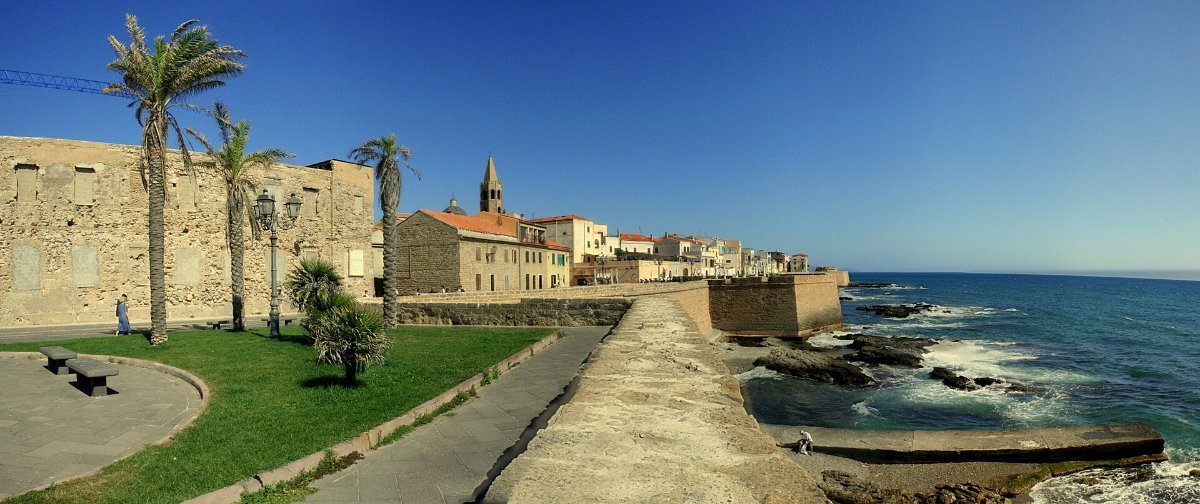
On the northwest coast, Alghero was ruled by the Catalans from the 14th century and the old town still speaks a variant of Catalan alongside Italian. Street signs are bilingual. The food leans Catalan too — lobster done the Alghero way is the local speciality.
The walled old town sits right on the sea with honey-coloured bastions you walk along at sunset. It’s the most immediately charming town on the island and a good base for the northwest.
Nearby: Neptune’s Grotto, a sea cave reached by 654 steps down a cliff or by boat, and the Capo Caccia headland.
▶ Watch This Before You Go
The interior is where the actual Sardinia is
Barbagia, the mountainous inland region, is where the island’s culture survived every wave of invaders because nobody could be bothered to go up there.
Villages like Orgosolo (famous for political murals painted on nearly every wall), Mamoiada (with its unsettling carnival masks) and Oliena feel genuinely remote.
This is also one of the world’s five recognised “Blue Zones”, areas with unusual numbers of people living past 100, and specifically one with a high male centenarian rate. The theories involve diet, walking up hills all day, wine and strong family structures. Nobody’s entirely sure.
Su Gorropu, sometimes called Europe’s deepest canyon, is here too, with walls up to 500 metres.
Eating
Sardinian food is more pastoral than Italian coastal cooking. Sheep, not seafood, historically.
Porceddu — suckling pig roasted on a spit with myrtle. The island’s signature dish.
Pane carasau — paper-thin crisp flatbread, baked so it keeps for months for shepherds. Also called carta da musica.
Culurgiones — pleated pasta parcels of potato, pecorino and mint.
Bottarga — cured grey mullet roe, grated over pasta. Intense and excellent.
Pecorino sardo, and its notorious relative casu marzu, which is deliberately infested with live cheese fly larvae. It’s illegal to sell and people still make it.
Cannonau is the local red, a Grenache, and it’s often credited in the Blue Zone discussion.
Getting around
Hire a car. The island is 270km long, the public transport is thin, and the good beaches are down unmarked roads.
Book the car early for July and August — Sardinia genuinely runs out and rates triple.
Airports: Cagliari in the south, Olbia in the northeast (closest to the Costa Smeralda), Alghero in the northwest. Ferries run from Genoa, Livorno, Civitavecchia, Naples and Barcelona.
Distances feel longer than they look because the roads wind. Cagliari to Olbia is about three and a half hours.
When to go
May, June, September — the best window. Warm sea by June, hot but not extreme, prices well below peak.
July and August — very hot, very busy, and August is when Italians holiday. Prices peak hard.
October to April — the coast largely shuts down. The interior is fine year-round and spring is beautiful inland.
FAQ
How long do I need? A week for one region. Ten days to two weeks to cross the island properly.
Which part should I pick? Northeast for beaches and glamour, northwest for Alghero and better value, south for Cagliari and quieter coast, centre for culture and hiking.
Is it expensive? The Costa Smeralda is. Everywhere else is comparable to mainland Italy or cheaper.
Do I need to book beaches? Some now, yes — La Pelosa, Cala Goloritzé and a few others cap daily numbers in summer. Check before you drive there.
Sardinia or Sicily? Sardinia for beaches and nature, Sicily for history, food and cities. Sardinia is calmer; Sicily is more intense.
Do people speak English? In the resorts, yes. Inland, much less. Some Italian helps a lot.