Bryce Canyon is the smallest of Utah’s five national parks and the easiest to do properly in one day. That’s not a consolation prize — it’s the actual reason to go. You can see the best of it before dinner, which is not something anyone says about Zion.
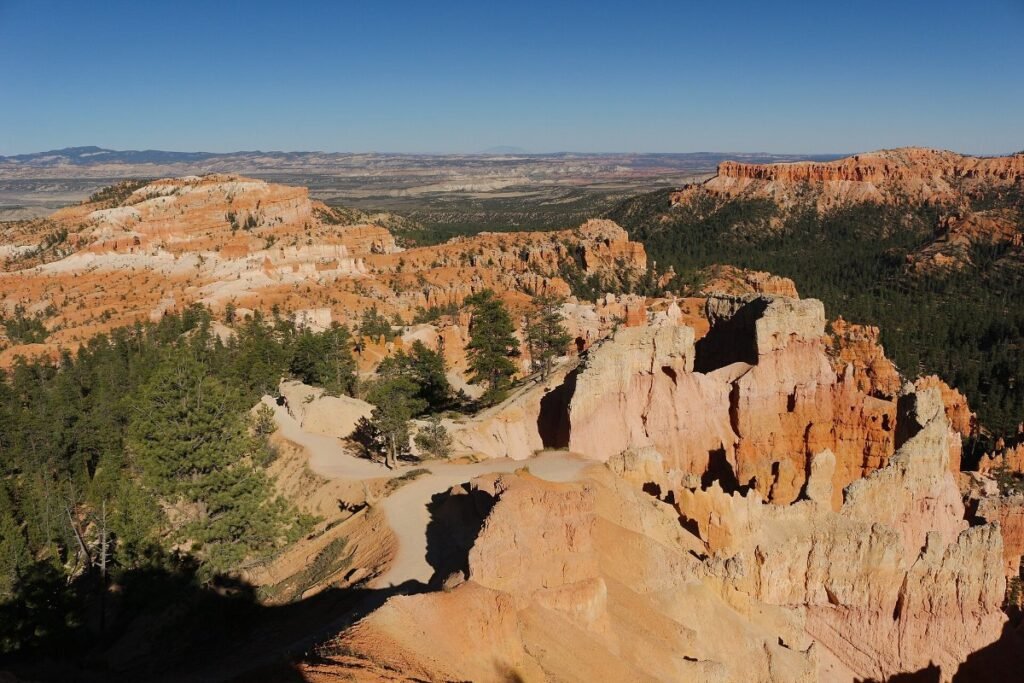
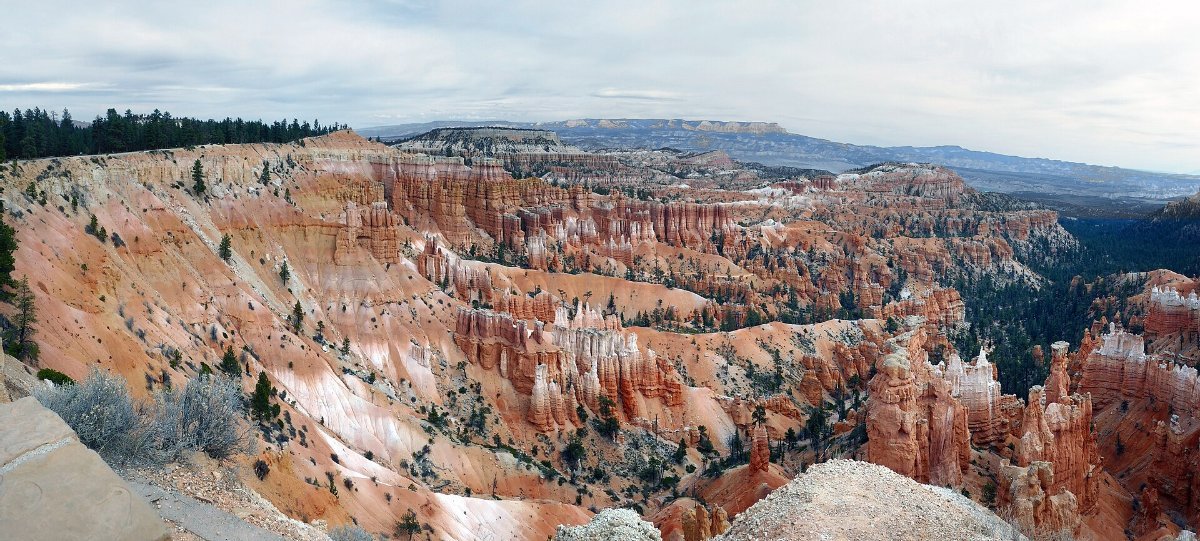
It’s also not a canyon. It’s a series of natural amphitheatres eroded into the edge of a plateau, filled with thousands of orange rock spires called hoodoos. Geology pedantry aside, it looks like nowhere else on Earth.
Start at sunrise, and I mean it
Bryce faces east. The hoodoos light up from the front at dawn and glow properly orange for about 40 minutes, and then the sun gets high and everything flattens out.
Sunrise Point is the obvious spot and it’s genuinely good. Bryce Point is better — higher, wider view over the whole amphitheatre, and slightly fewer people because it’s a further drive.
You’ll be cold. The rim sits at around 2,400 to 2,700 metres and it can be near freezing at dawn even in June. Bring more layers than feels sensible.
One more thing about timing: the light show works in reverse at the end of the day too, but it’s softer and pinker rather than that hard orange. If you can only do one, do sunrise. If you can do both, you’ll notice the hoodoos look like completely different rocks twelve hours apart, which is a strange and quite lovely thing to witness.
Do the Navajo Loop and Queen’s Garden combo
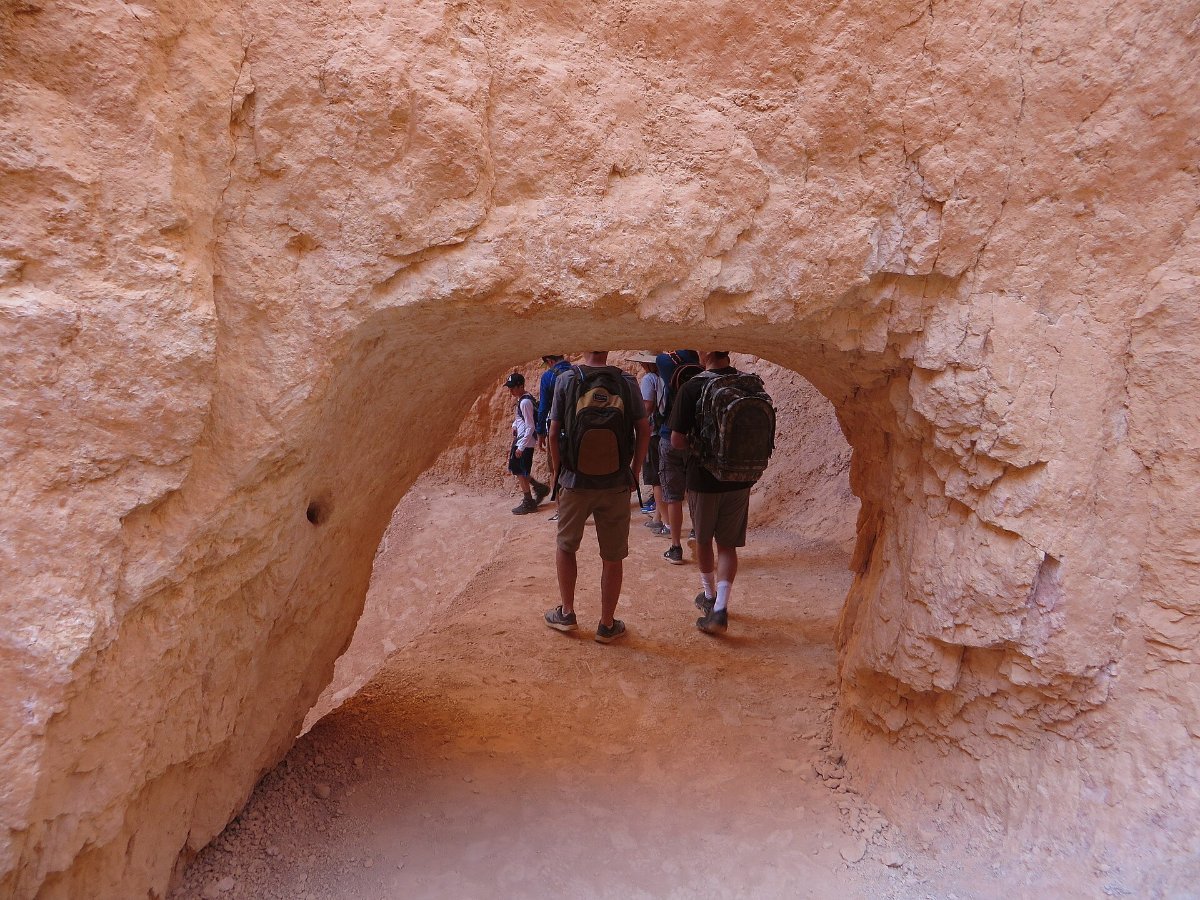
If you do one hike here, this is it. About 5km, roughly 2 to 3 hours, and it takes you down among the hoodoos rather than looking at them from above. Completely different experience from the rim.
Go anticlockwise: down the Navajo Loop from Sunset Point, along the connector, back up through Queen’s Garden to Sunrise Point. That way you descend the steep switchbacks and climb the gentler ones, which your knees will thank you for.
The Wall Street section — a slot with 30-metre Douglas firs growing out of it — is the highlight. It closes in winter and after heavy rain, so check at the visitor centre.
Then drive the scenic road
The park road runs 29km south to Rainbow Point at 2,778 metres. Drive to the far end first and work back — all the viewpoints are on the east side, so you get right turns in both directions and no crossing traffic.
Worth stopping at: Natural Bridge (an arch, technically, but nobody’s renaming it), Farview Point, and Rainbow Point at the end. The whole thing takes 90 minutes to two hours with stops.
Rainbow Point is also where the forest changes character. You’ve climbed nearly 400 metres from the main amphitheatre and the ponderosa pines give way to bristlecones, some of which are well over a thousand years old. Nobody photographs them because they’re not orange, which is a shame, because they’re the oldest living things in the park by a very wide margin.
▶ Watch This Before You Go
A realistic one-day plan
- 6:00am — Bryce Point for sunrise.
- 7:30am — breakfast, or coffee from the flask you were smart enough to fill.
- 8:30am — Navajo Loop / Queen’s Garden hike from Sunset Point.
- 11:30am — lunch at the lodge or in Bryce Canyon City.
- 1:00pm — drive to Rainbow Point, stopping on the way back.
- 3:30pm — Mossy Cave trail if you’ve got energy, or the visitor centre film if you haven’t.
- Sunset — Sunset Point, obviously.
That’s a full day without rushing. If you only have half a day, do sunrise plus the Navajo Loop and skip the scenic drive.
Stay for the stars
This is the thing people miss. Bryce is one of the darkest places in the continental US — it’s a certified Dark Sky park, and on a clear moonless night you can see somewhere around 7,500 stars with the naked eye. Most people in cities can see maybe 100.
The park runs astronomy programmes with telescopes in summer. Free, no booking needed usually, and genuinely one of the best things it offers. If you drive off after sunset you’re missing half the park.
When to go
May, September, October — the sweet spot. Trails open, comfortable temperatures, manageable crowds.
June to August — busiest, but the altitude keeps it pleasant when Zion is at 40°C. Afternoon thunderstorms are common in July and August.
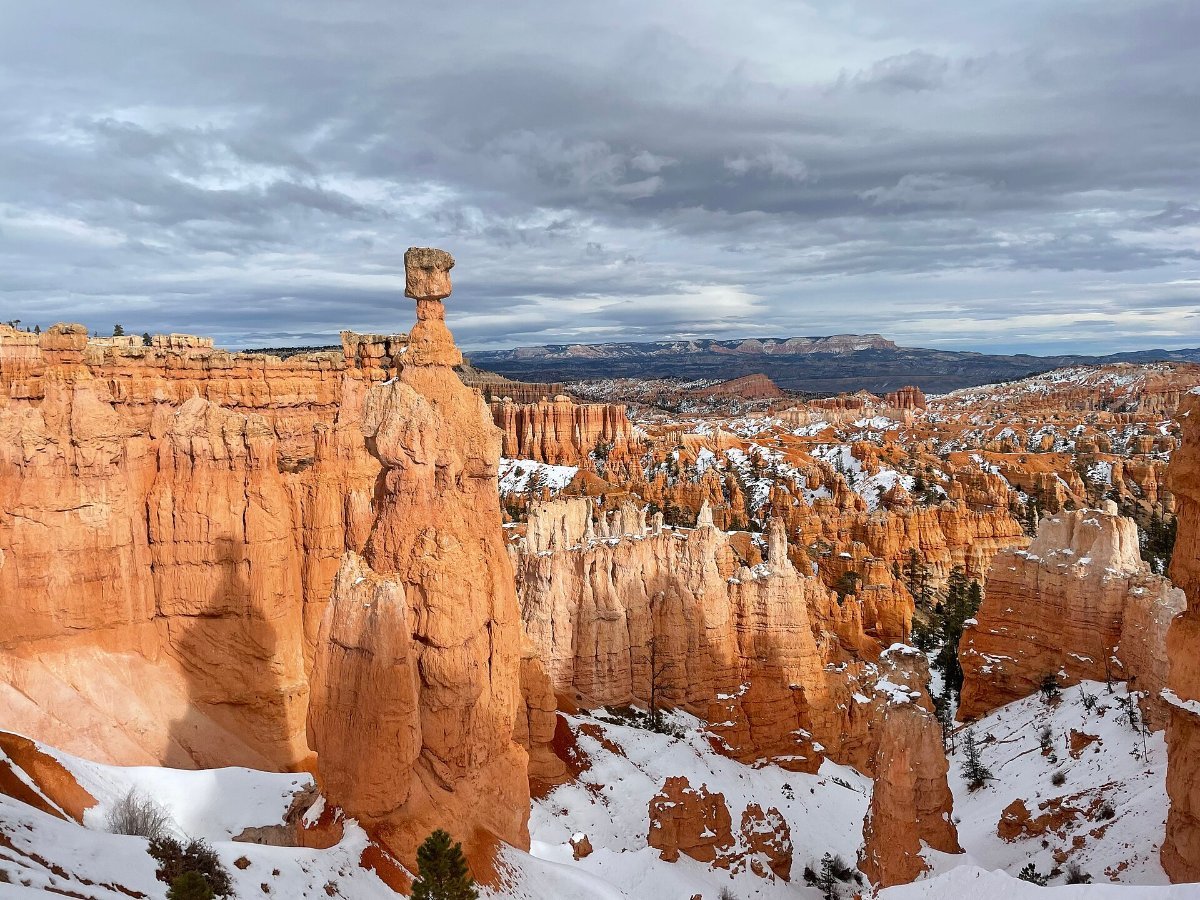
Winter — snow on orange hoodoos is spectacular and the park is nearly empty. The rim road stays open, most trails are doable with microspikes, and it’s genuinely underrated. Just be ready for -10°C at dawn.
Practical bits
Entry is $35 per vehicle for seven days, or use the $80 America the Beautiful pass.
A free shuttle runs April to October from Bryce Canyon City to the main viewpoints, which is worth using in summer when the Sunset Point car park fills by 9am.
Altitude is real. If you’ve come from sea level you’ll notice it on the climb out of Queen’s Garden. Drink much more water than you think you need, and don’t be surprised if a moderate hike feels harder than it should.
Food inside the park is limited to the lodge and it’s fine but not exciting. Bryce Canyon City just outside has more options, none of them memorable. Bring snacks.
Mobile signal inside the park is patchy to nonexistent, so download your maps and any trail information before you arrive. This catches people out constantly, usually at the exact moment they’re trying to work out which trailhead they parked at. The park map they hand you at the entrance gate is genuinely all you need, so don’t throw it in the footwell and forget about it.
FAQ
Is one day really enough? For the main amphitheatre, yes, comfortably. Two days lets you add the Fairyland Loop and the Peekaboo Loop, both excellent and much quieter.
How does it compare to Zion? Smaller, higher, colder, less crowded, and much easier to see in a short visit. Most people do both — they’re 90 minutes apart.
Are the trails hard? The Navajo Loop has a steep 150-metre climb but no exposure or scrambling. Anyone reasonably fit can do it. The rim viewpoints are all wheelchair accessible.
Where should I sleep? The Lodge at Bryce Canyon if you book months ahead. Otherwise Bryce Canyon City for convenience, or Tropic (15 minutes away) for slightly better value.
Can I see it without hiking? Yes. The rim viewpoints and the scenic drive give you most of the visual payoff with almost no walking.