Yellowstone gets around 4 million visitors a year and the overwhelming majority of them come between June and August.
The park was designed in 1872 for horses. The roads, the car parks and the boardwalks have not scaled with the crowds, and summer is where that collides.
None of this means don’t go. It means go knowing these things, because almost nobody tells you until you’re sitting in a queue.
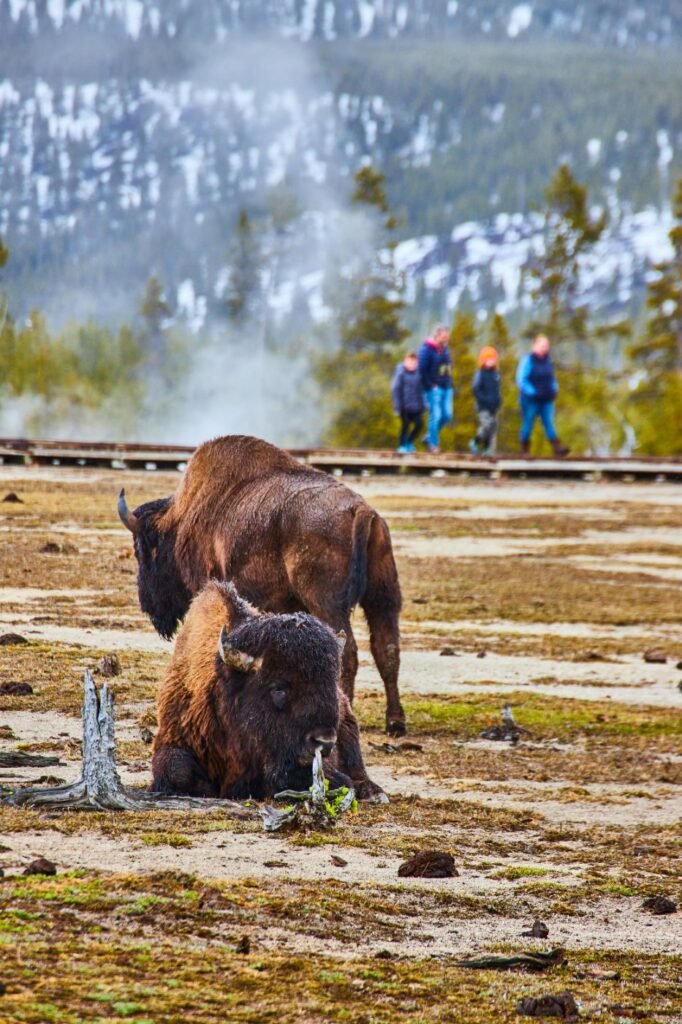
The Bison Jams Are Real and They’re Constant
A single bison walking down the road stops traffic in both directions for as long as it feels like walking down the road.
There are around 5,000 of them and they have absolute right of way. In Hayden and Lamar Valleys this happens several times a day.
A “twenty minute” drive between two points can genuinely take an hour and a half. Build slack into every single day and do not book anything with a hard start time.
The other version is the wildlife jam, where someone spots an elk and forty cars stop dead. Same effect, less justification.
Distances Are Enormous
People look at the map, see the figure-of-eight loop, and assume they’ll do the park in a day.
It’s 142 miles of Grand Loop Road. West Yellowstone to Old Faithful is 40 minutes. Old Faithful to Canyon is over an hour. Canyon to Lamar Valley is another hour and a half.
The speed limit is 45mph and frequently lower, there is no overtaking, and you will lose time to the jams above.
Three days minimum. Anyone selling you Yellowstone in a day is selling you a day in a car.
▶ Watch This Before You Go
Car Parks Fill by Nine
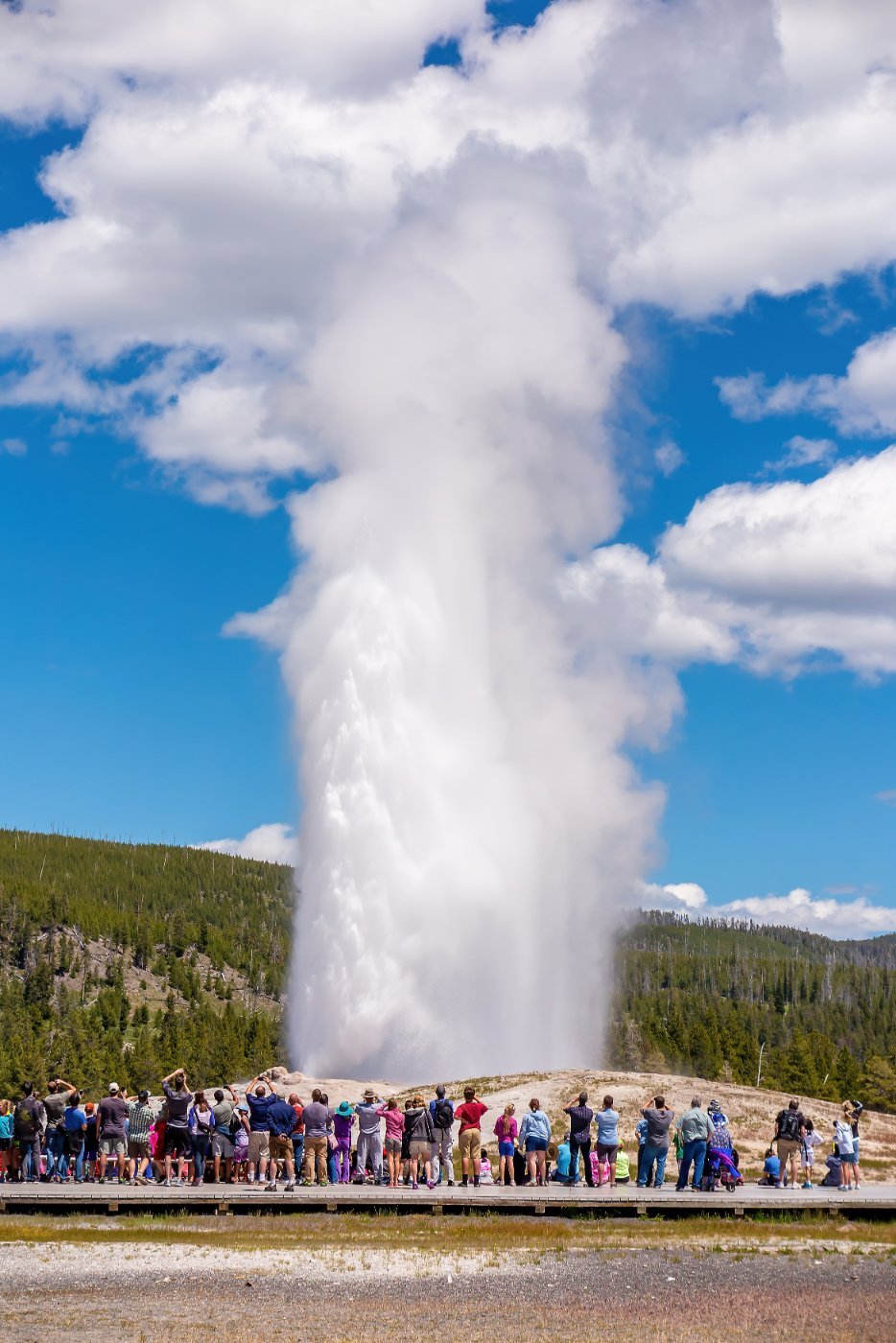
Old Faithful, Grand Prismatic, Midway Geyser Basin, Artist Point and the Fairy Falls trailhead all fill in high summer, and rangers close the entrances when they do.
The Grand Prismatic overlook car park is the worst of them. It’s small and it’s full from about 9am to 5pm.
The answer is unglamorous: be out by 7am. The park is genuinely pleasant at 7am and genuinely difficult at 11.
Evenings work too. From about 6pm the day-trippers leave and it empties out noticeably.
There’s No Phone Signal, Anywhere
Small patches near Old Faithful, Canyon and Mammoth. Nothing across most of the park.
Download offline maps before you arrive. Screenshot your reservations. Do not rely on being able to look anything up, call anyone, or use a navigation app in real time.
This catches people out badly, particularly those who planned to book dinner or check a geyser prediction from the road.
Book Accommodation a Year Ahead. Genuinely.
The in-park lodges open reservations roughly 13 months in advance and the good ones go within days.
The gateway towns are easier but still fill for summer weekends, and prices in West Yellowstone and Gardiner in July are not modest.
Campgrounds book out too. A few first-come sites exist and they’re full by early morning.
If you’re planning a July trip in April, expect to stay an hour outside the park and add two hours of driving to every day.
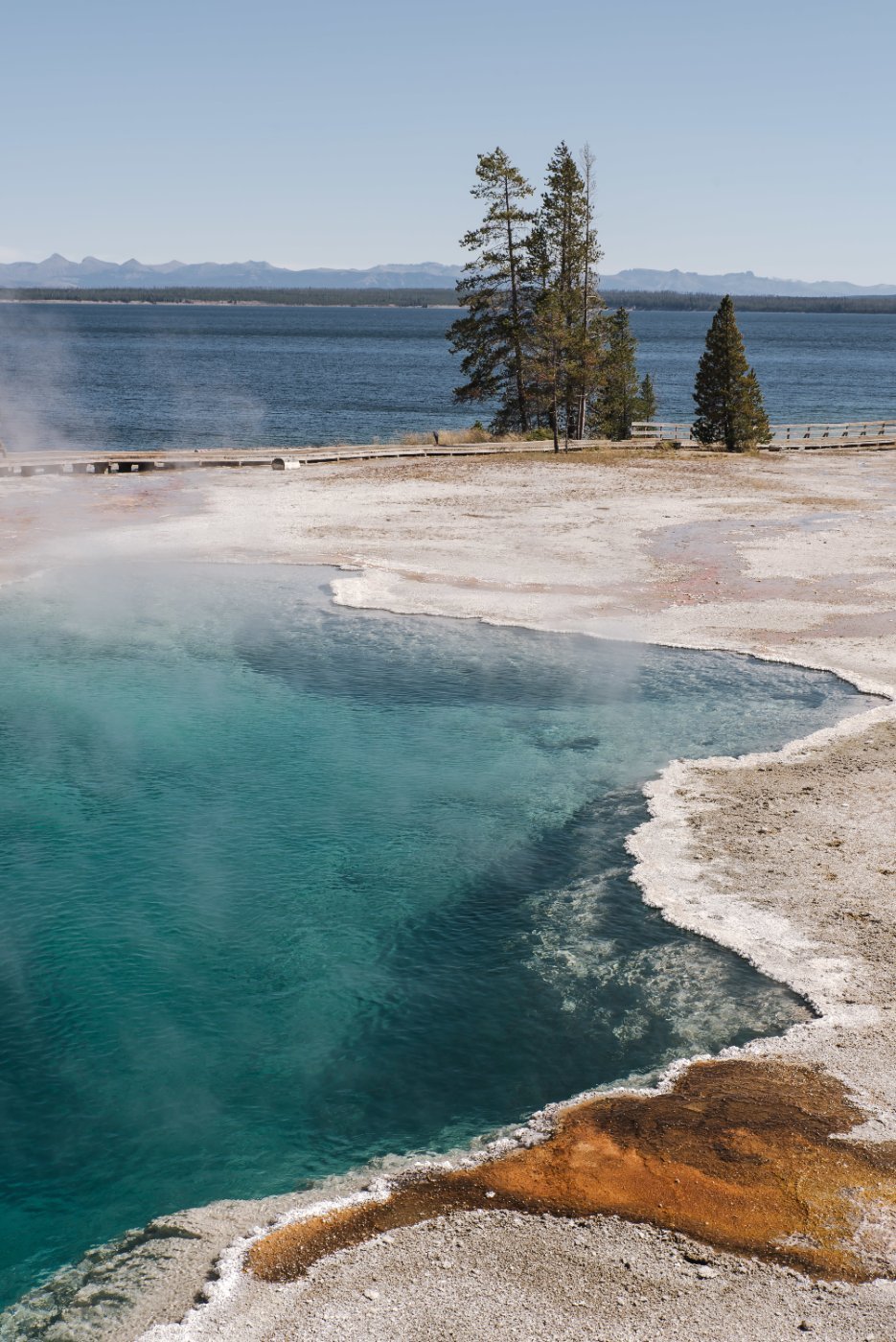
The Thermal Features Are Genuinely Dangerous
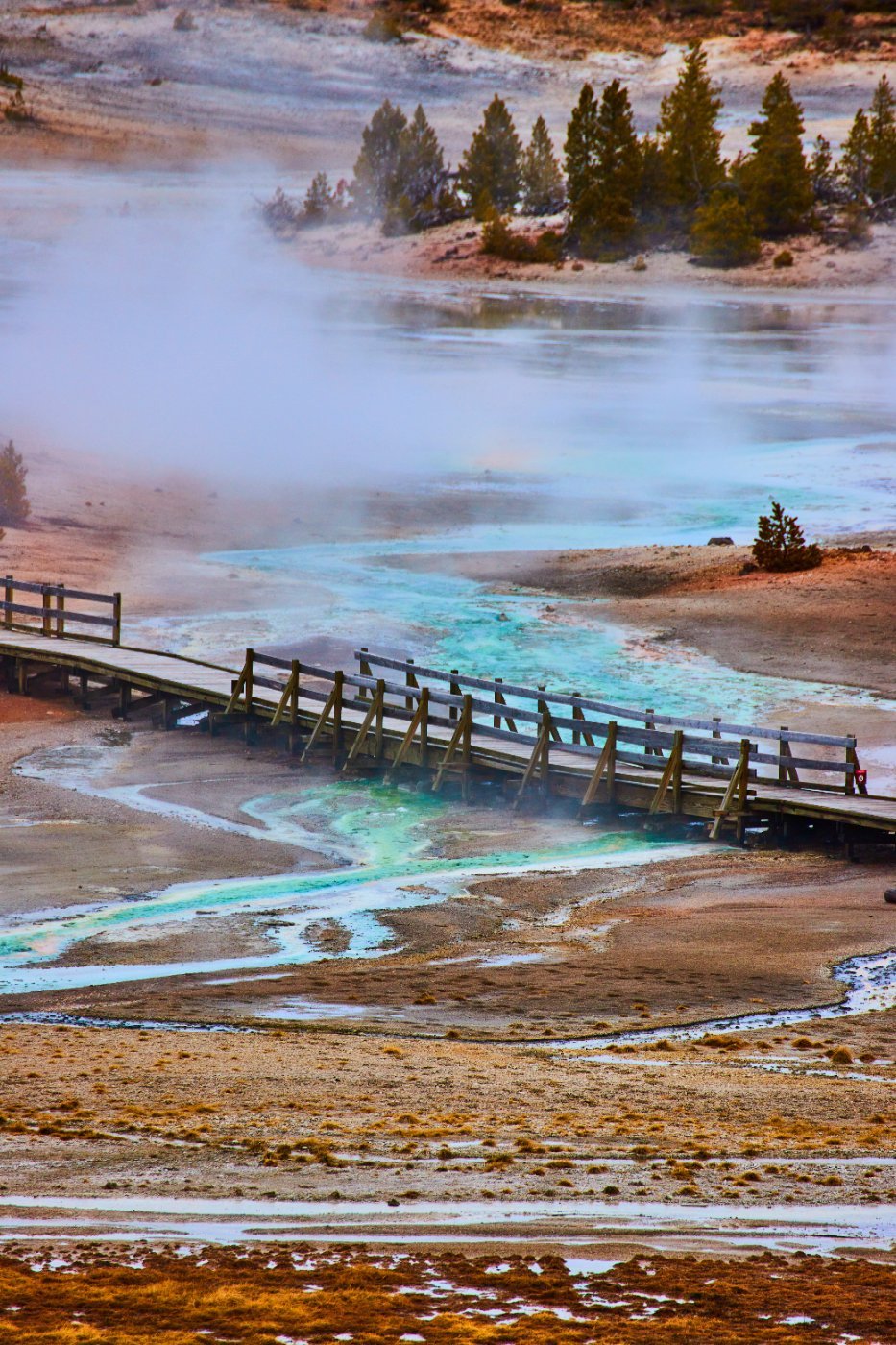
This is the one that matters most and the one people treat as a formality.
The hot springs run from near-boiling to well above it, and the ground around them is a thin crust over water that will kill you. People have died. Not many, but it happens, and it happens because they stepped off the boardwalk.
Stay on the boardwalk. All of it. Every time. There is no photograph worth it.
The same applies to pets, which is why they’re banned from thermal areas entirely.
Wildlife Distances Are Law, Not Advice
25 metres from bison and elk. 100 metres from bears and wolves.
Bison injure more people in Yellowstone than bears do, by a wide margin. They look docile and slow and they can run at 35 miles an hour and turn faster than you can.
Every year there are videos of someone getting far too close for a photo and being tossed. Don’t be the video.
Carry bear spray if you’re walking any trail, know how to use it, and make noise as you go.
Summer Weather Is Not Summer Weather
Most of the park sits above 2,300 metres. Daytime highs in July are around 25 degrees. Nights routinely drop to 3 or 4, and snow in June or September is entirely normal.
Afternoon thunderstorms build most days. Being on an exposed boardwalk during one is unpleasant and being on a ridge is dangerous.
Pack layers and a waterproof, not shorts and optimism.
Old Faithful Is Not the Best Thing There
It’s reliable, it’s impressive once, and the crowd around it is several hundred people on benches.
The Upper Geyser Basin behind it holds the largest concentration of geysers on earth, connected by miles of boardwalk, and most of the crowd never walks it. Grand Geyser is bigger than Old Faithful. Morning Glory Pool is a five minute walk further than most people go.
Watch Old Faithful, then keep walking. That’s the whole trick.
What Summer Does Get You
Everything open, which is not true for much of the year. All roads, all lodges, all services.
Wildflowers in the valleys in July. Long daylight, until nearly 10pm at the solstice. Warm enough to be outside all day.
And if you can shift by a fortnight, early June and the second half of September give you nearly all of that with a fraction of the traffic 🙂
Common Questions
How early should I start in Yellowstone? On the road by 7am in summer. It is the single most effective thing you can do.
How many days do I need? Three minimum. Five if you’re adding Grand Teton just to the south.
Is there phone signal? Almost none. Download maps and screenshot reservations before you arrive.
How far ahead do I book? In-park lodges roughly a year. Gateway towns a few months for summer.
What’s the most dangerous thing in the park? The thermal ground and the bison, in that order. Both are avoidable by following the posted rules exactly.