Everyone photographs the Colosseum. It’s a fine building and your photo will look exactly like the four hundred million that already exist.
Rome’s real photographic quality is in its smaller, stranger corners: keyholes, staircases, orange trees, courtyards you have to know about.
Here are the spots worth setting an alarm for, and roughly when the light works.
The Aventine Keyhole
On the Aventine Hill there’s a green door belonging to the Knights of Malta. Look through the keyhole and you see a hedge-lined avenue perfectly framing the dome of St Peter’s, more than a mile away.
It was designed in the 18th century to do exactly this, which makes it possibly the oldest deliberate photo opportunity in Europe.
Photographing it is hard, since you’re shooting through a small hole. Put the lens right against it, tap to focus on the dome, and accept some vignetting. Honestly, looking with your eye is better than the photo.
There’s a queue by mid morning. Go at 7am.
The Orange Garden Next Door
Two minutes from the keyhole, the Giardino degli Aranci is a walled garden of orange trees with a terrace looking straight across the rooftops to St Peter’s.
Free, open early, and one of the best sunset spots in the city. The arched entrance and the tree-lined path both photograph well.
Santa Sabina next door is a 5th century basilica with a plain interior and extraordinary light through alabaster windows.
The whole Aventine takes an hour and hardly any tourists climb it.
Worth pairing with the Circus Maximus at the bottom of the hill, which is now just a vast grass oval where Romans walk their dogs. It photographs badly as a subject and beautifully as a foreground, with the Palatine ruins rising behind it in late light.
▶ Watch This Before You Go
Trastevere’s Back Lanes
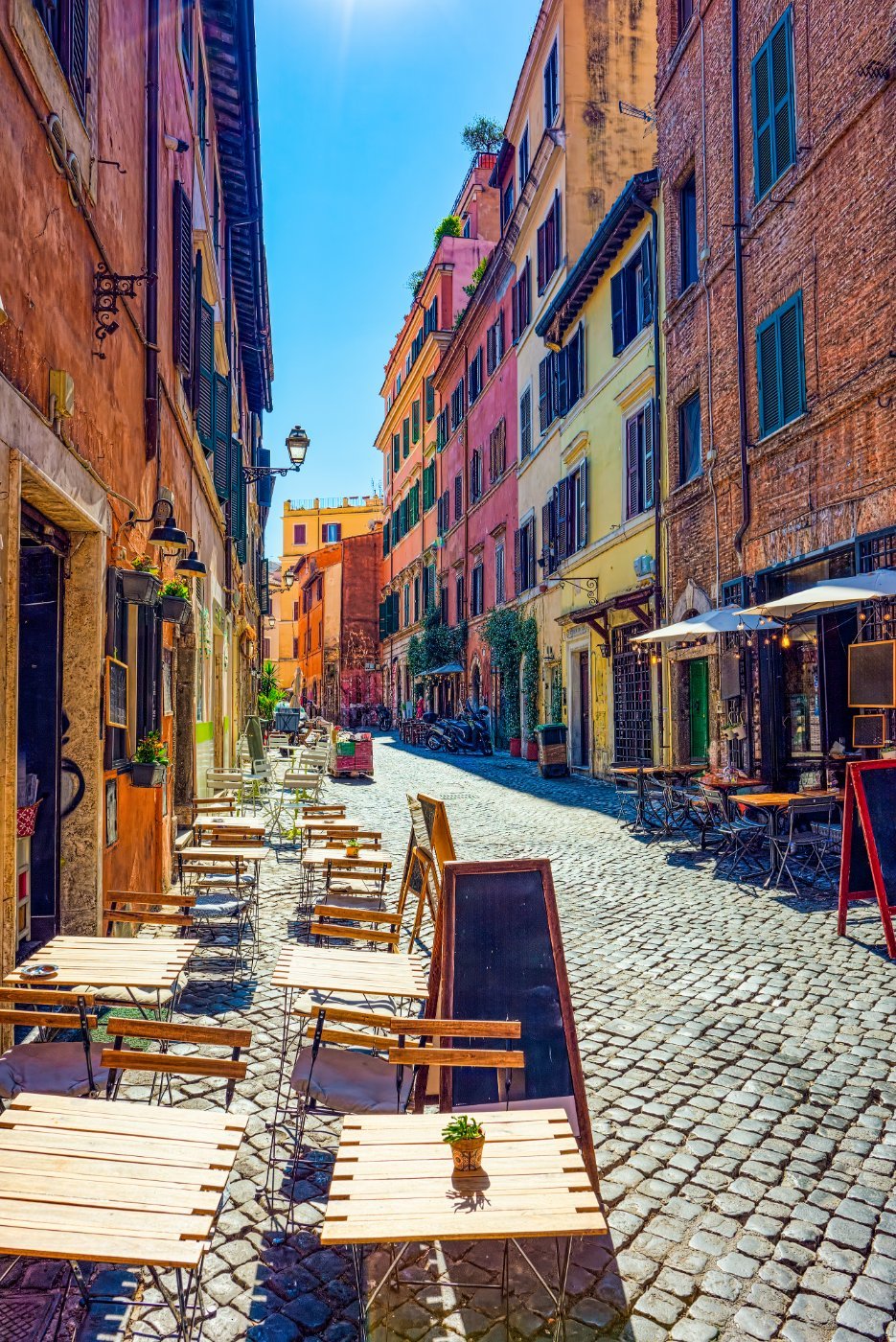
Cross the river and get off the main streets. Ivy on ochre walls, washing lines, Vespas, small shrines set into corners.
Via della Scala, Vicolo del Cinque and the lanes around Santa Maria in Trastevere are the reliable ones. Early morning, before the bars set up their tables, is when it looks like a village rather than a nightlife district.
Late evening works too, for a completely different photo: warm light, full tables, people everywhere.
The Stairs
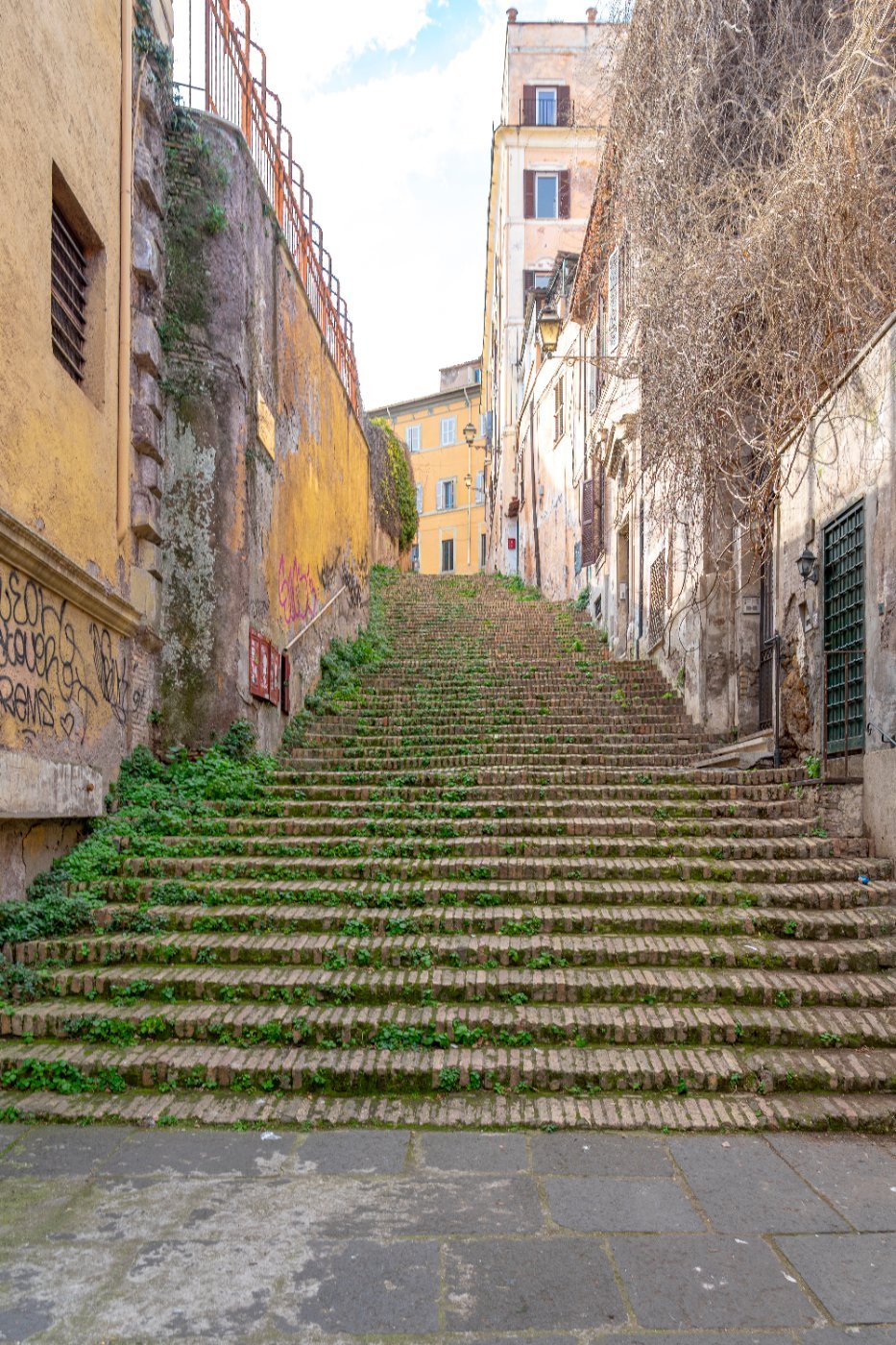
Rome is built on hills and the connecting staircases are consistently the most photogenic thing in any given neighbourhood.
Via di San Onofrio climbs the Janiculum with weeds coming through the stone. The steps up to Santa Maria in Aracoeli are steep, wide and almost always empty.
Scala Santa near San Giovanni is a different thing entirely, a staircase pilgrims climb on their knees.
Stairs give you depth, leading lines and a subject if someone walks up them. Wait thirty seconds and someone will.
The Janiculum Terrace
The Gianicolo is not one of Rome’s seven hills and it has the best view of all of them.
The terrace at Piazzale Garibaldi lays the whole city out: domes, rooftops, the hills behind. It’s free, open always, and reachable on foot from Trastevere in about fifteen minutes uphill.
Sunset is the obvious call, and blue hour just after is better, when the city lights come up but the sky still has colour.
A cannon is fired here at noon every day, which is startling if nobody warned you.
The Vatican Museums Spiral
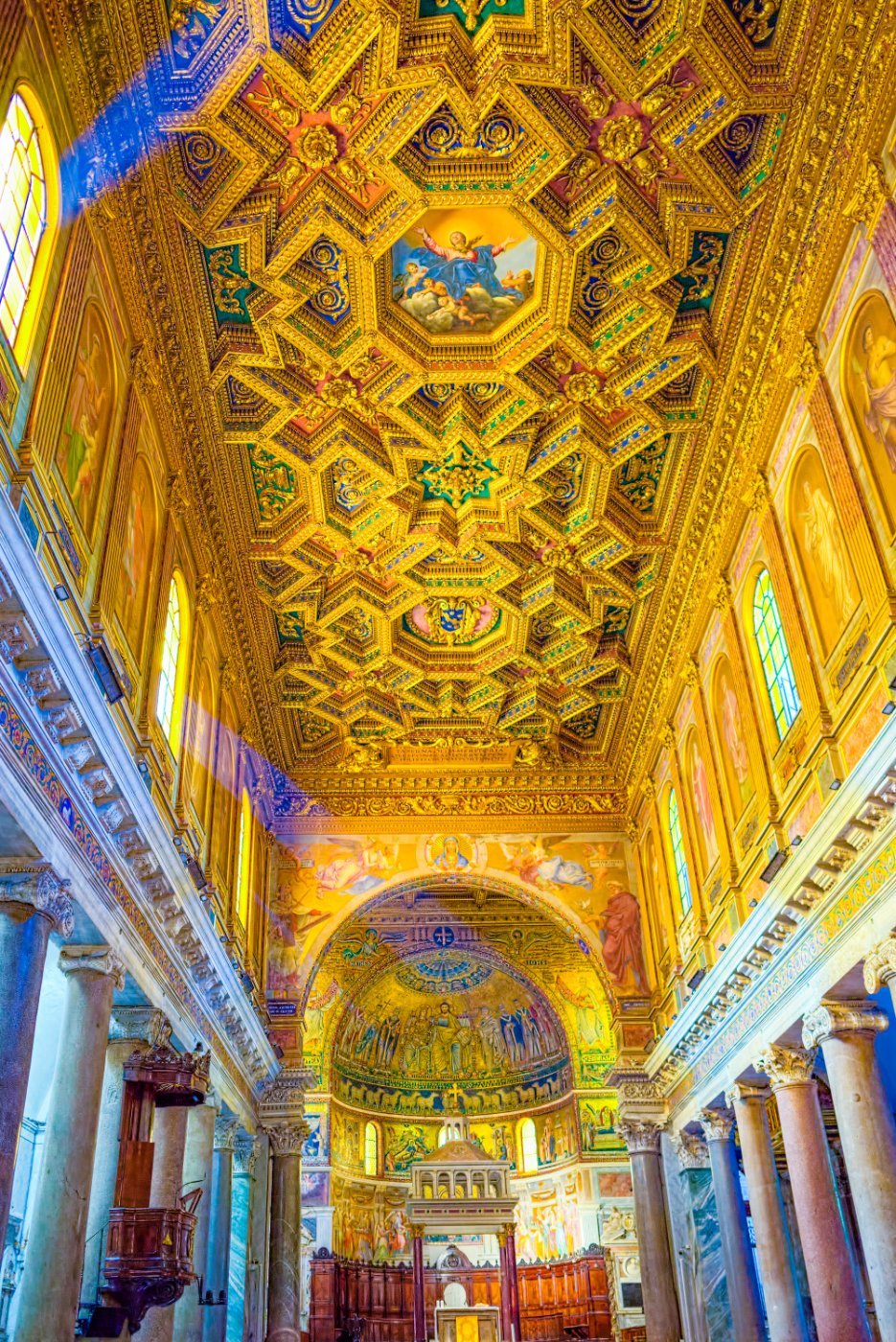
The Bramante staircase at the exit of the Vatican Museums is a double helix that photographs beautifully from directly above.
You cannot linger, because you’re in a moving crowd. Have the camera ready, shoot straight down as you reach the rail, and move on.
The Gallery of Maps on the way through is the other one. A 120 metre corridor with a painted vaulted ceiling and frescoed maps down both walls. It is spectacular and it is a crush, so shoot upward, where there are no heads.
Piazza Navona Early
Navona at 7am is empty, the fountains are running, the light comes in low along the length of the square, and there are usually a few artists setting up.
At midday it’s a wall of people and portrait sketchers. The difference between those two photos is one alarm clock.
The same applies to the Trevi Fountain, which is genuinely lovely at dawn and unphotographable by ten.
Small Details That Make Better Photos
The nasoni, cast iron street fountains with a curved spout, are everywhere and are very Roman. Someone drinking from one is a good frame.
Artichokes stacked outside restaurants in the Jewish Ghetto in spring. Laundry against ochre plaster. The cobbles, called sampietrini, catch light after rain and turn the whole street reflective.
Doorways. Rome has extraordinary doors and almost nobody photographs them.
Cats, too. The Torre Argentina sanctuary sits in a sunken square of Republican-era temple ruins in the middle of the city and is home to a colony of them, which is a genuinely odd and very Roman combination of the ancient and the domestic.
Timing, Simply
Sunrise for anywhere famous. It is the only reliable way to get a landmark without crowds, and the light is better.
Blue hour, the twenty minutes after sunset, for anything with lights on it.
Midday for interiors and narrow shaded lanes, which is when everything outdoors is at its worst anyway.
Rain is not a problem here. Wet sampietrini reflecting street lamps is one of the best photos Rome offers, and everyone else has gone inside 🙂
One last practical note: Rome is a working city and a lot of these spots are residential. Keep your voice down in Trastevere and on the Aventine early in the morning, and don’t block doorways for a shot. People live behind them.
Common Questions
Where is the Aventine Keyhole? At the Priory of the Knights of Malta on the Aventine Hill. Free, and best before about 8am.
What’s the best viewpoint in Rome? The Janiculum terrace for the whole city, the Orange Garden for a framed St Peter’s, both free.
When should I photograph the Trevi Fountain? Around dawn, or very late at night. Any other time it’s a crowd.
Can I use a tripod? On the street generally yes, inside museums and churches usually not. The Vatican Museums prohibit them.
Do I need a proper camera? No. Most of these are about being somewhere at the right hour, which a phone handles fine.