Glacier is up against the Canadian border in northern Montana, and it is the most consistently spectacular national park in the lower 48. That’s a claim, and I’ll defend it.
What it has that the others don’t: peaks that go straight up out of lakes, water in colours that look edited, and a road cut into a cliff face that ranks among the great drives anywhere.
Here’s where the views actually are, roughly in order of effort.
No Effort: Wild Goose Island Overlook
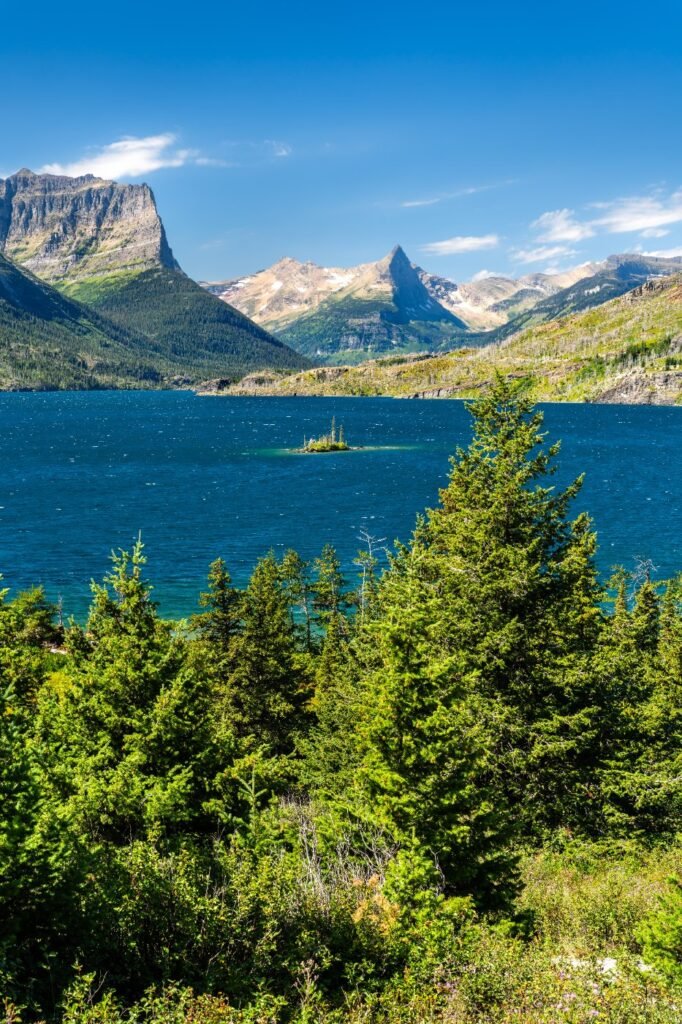
The one on the postcards. A tiny island sitting in Saint Mary Lake with mountains stacked behind it, and it’s a pull-off on Going-to-the-Sun Road with a ten metre walk.
Sunrise is the shot, when the light comes down the valley and hits the peaks first. It’s also when the pull-off is empty.
The lake sits at about 1,370 metres and is genuinely deep blue rather than the grey-green you get in a lot of mountain lakes.
If you do one thing on the east side, do this, and do it early.
No Effort: Lake McDonald
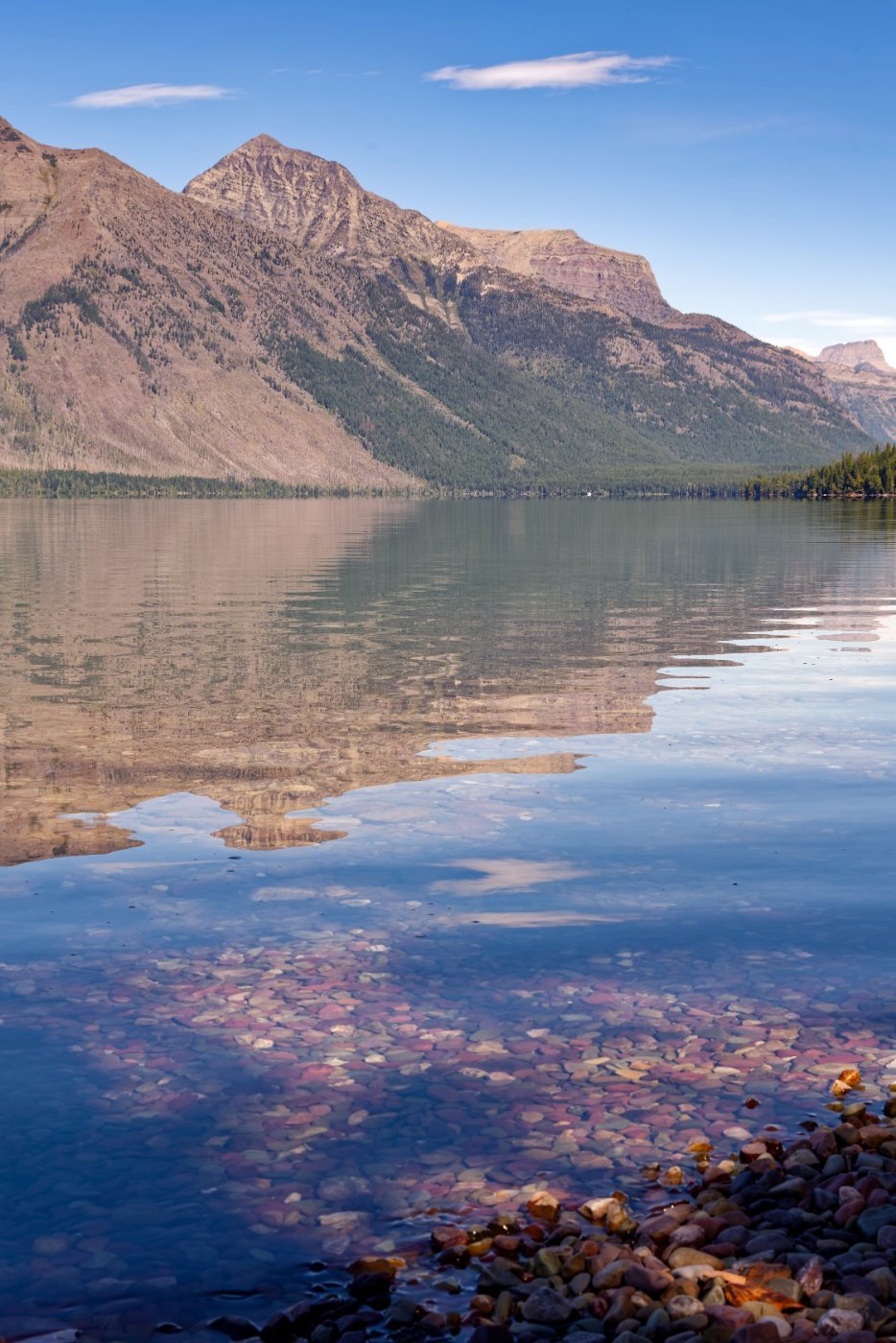
The biggest lake in the park, on the west side, and famous for the coloured stones under the water. Reds, greens, blues and purples, from the different rock the lakebed is made of.
Apgar Village at the south end has the classic view straight up the lake to the peaks. It’s a two minute walk from the car park.
Calm mornings give you a mirror reflection. Evenings give you the light on the far mountains.
Wade in a few inches and look down. The stones are the reason people photograph this lake from above rather than across.
▶ Watch This Before You Go
Low Effort: Going-to-the-Sun Road
Fifty miles across the park, over Logan Pass at 2,026 metres, and it took eleven years to build. It’s an engineering landmark as much as a road.
The Loop is a hairpin where the road doubles back and the view opens across the valley. Jackson Glacier Overlook is the easiest place to actually see one of the remaining glaciers. The Weeping Wall runs water straight onto the road in early summer.
Important: the full road only opens for a short season, usually late June or early July through mid October, depending on snow clearing. Before that you can only drive the lower sections.
Vehicle reservations are required in peak season for the west entrance and the road corridor. Book them the moment they release.
There’s also a free shuttle along the whole road, which is the better option if you want to look rather than drive.
Low Effort: Logan Pass and the Boardwalk
At the top of the road, and the highest point you can drive to in the park.
The Hidden Lake Overlook trail starts at the visitor centre, runs about 1.4 miles each way on a boardwalk and then a path, climbs a couple of hundred feet, and ends at a viewpoint over Hidden Lake with Bearhat Mountain behind it.
Mountain goats and bighorn sheep are common right by the boardwalk and are entirely unbothered by people.
The car park fills by about 8am in July and August. There is no clever workaround, you just have to be early or take the shuttle.
Moderate Effort: Avalanche Lake
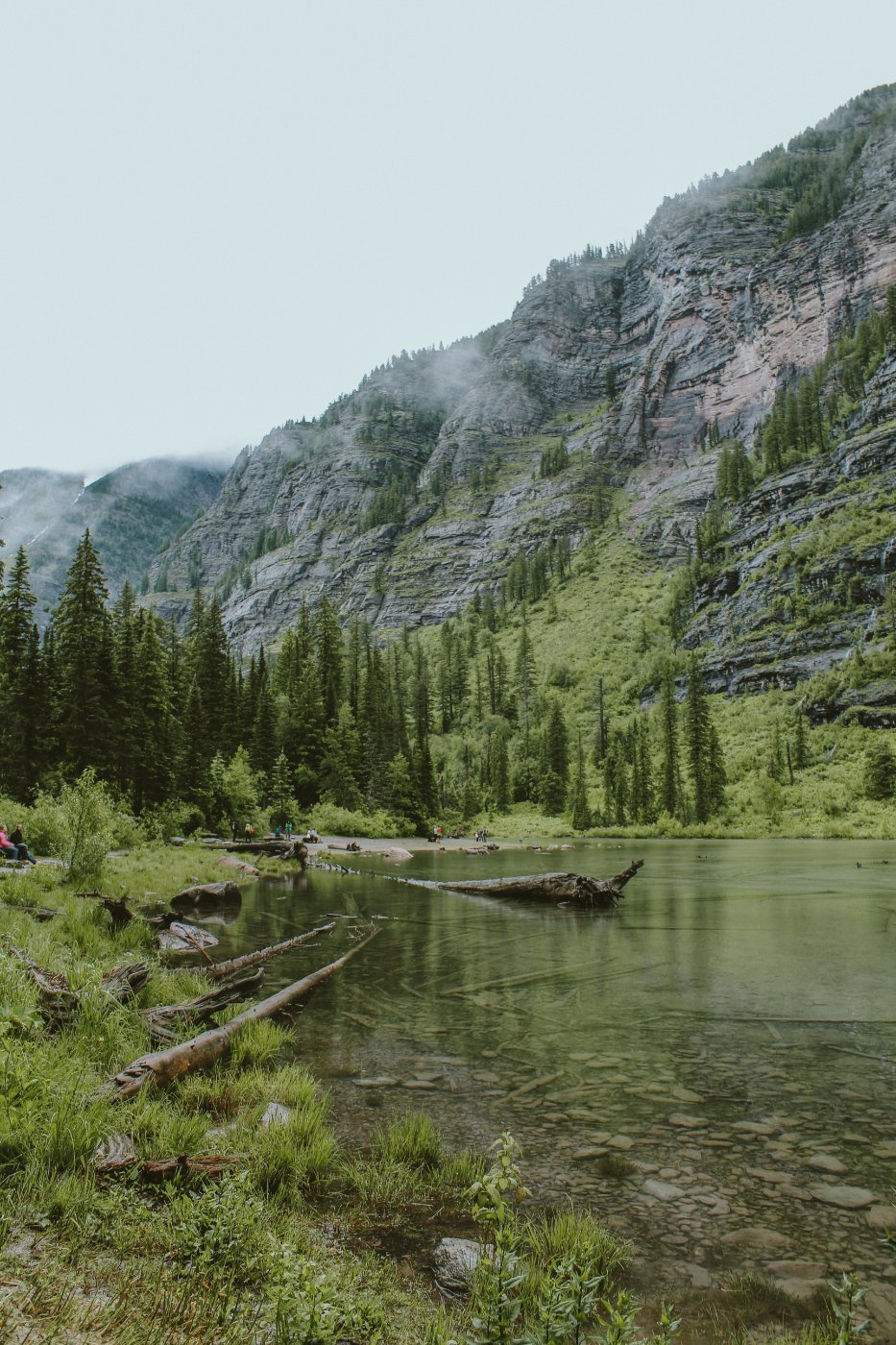
Probably the best value hike in the park. Around 4.5 miles round trip, gentle, and it starts on the Trail of the Cedars boardwalk through old growth forest.
The payoff is a lake in a bowl with cliffs rising several hundred metres on three sides and multiple waterfalls dropping into it from the snowfields above.
Go in early summer when the falls are at full power from the melt. By September there are fewer of them.
It’s popular, so start early, but it’s wide enough not to feel crowded once you’re there.
Moderate Effort: Grinnell Lake and the Many Glacier Valley
Many Glacier is a separate entrance on the east side and locals will tell you it’s the best part of the park. They’re right.
Swiftcurrent Lake sits in front of the historic hotel with mountains behind, and there’s a flat loop around it.
A boat shuttle across two lakes cuts several miles off the walk to Grinnell Lake, which is an opaque turquoise from glacial silt. With the boat it’s a fairly easy few miles.
This valley is also the best place in the park for grizzly sightings, which is a mixed blessing. Carry bear spray and know how to use it.
Real Effort: The Highline Trail
The famous one. It starts at Logan Pass and runs along the Garden Wall, a knife-edge ridge, with a drop on one side and a hand cable bolted to the rock for the first section.
Around 11.8 miles point to point if you continue down to The Loop and catch the shuttle back, and it’s mostly level rather than climbing.
It is the best day hike in the United States, in my opinion, and the exposure in the first half mile puts some people off entirely. That’s a reasonable reaction.
Add the Grinnell Glacier Overlook spur if you have the legs, which climbs steeply for about a mile and gives you the glacier from above.
The Bit People Get Wrong
The season is short and the park is genuinely unprepared for how many people want in.
Vehicle reservations, timed entry and full car parks are all normal in July and August. So is snow on Logan Pass in June.
Late September is the sleeper choice. The larches turn gold, the crowds fall away, the road is usually still open, and the light is better than in midsummer 🙂
Book accommodation almost a year out for the in-park lodges. Whitefish, Kalispell and Columbia Falls are the practical alternatives on the west side, St Mary and Babb on the east.
Common Questions
When is Going-to-the-Sun Road fully open? Typically late June or early July to mid October, entirely dependent on snow clearing. Check the park website before you travel.
Do I need a vehicle reservation? In peak season, yes, for certain entrances and the Going-to-the-Sun corridor. They release on a set schedule and go quickly.
Are there still glaciers? Yes, around 25 named ones, down from about 150 in the 1850s. Jackson Glacier is the easiest to see from the road.
What’s the best easy view? Wild Goose Island Overlook at sunrise, and Apgar on Lake McDonald in the evening. Both take minutes.
How many days do I need? Three minimum: one for the road, one for Many Glacier, one for a proper hike. Five is comfortable.