The Outer Banks are a chain of barrier islands running about 320km off the North Carolina coast, in places only a few hundred metres wide, with the Atlantic on one side and sounds on the other. They move. Storms cut new inlets and close old ones, and the map is genuinely not permanent.
It’s also where powered flight was invented, where a British pirate was killed, and where about 5,000 ships have gone down.
The islands, north to south
Knowing the order saves a lot of confusion, because “the Outer Banks” covers a four-hour drive.
Corolla and Duck — the northern end. Upmarket, quiet, big rental houses. Corolla has wild horses on the beach north of the paved road, descended from Spanish mustangs, reachable only by 4×4 tour.
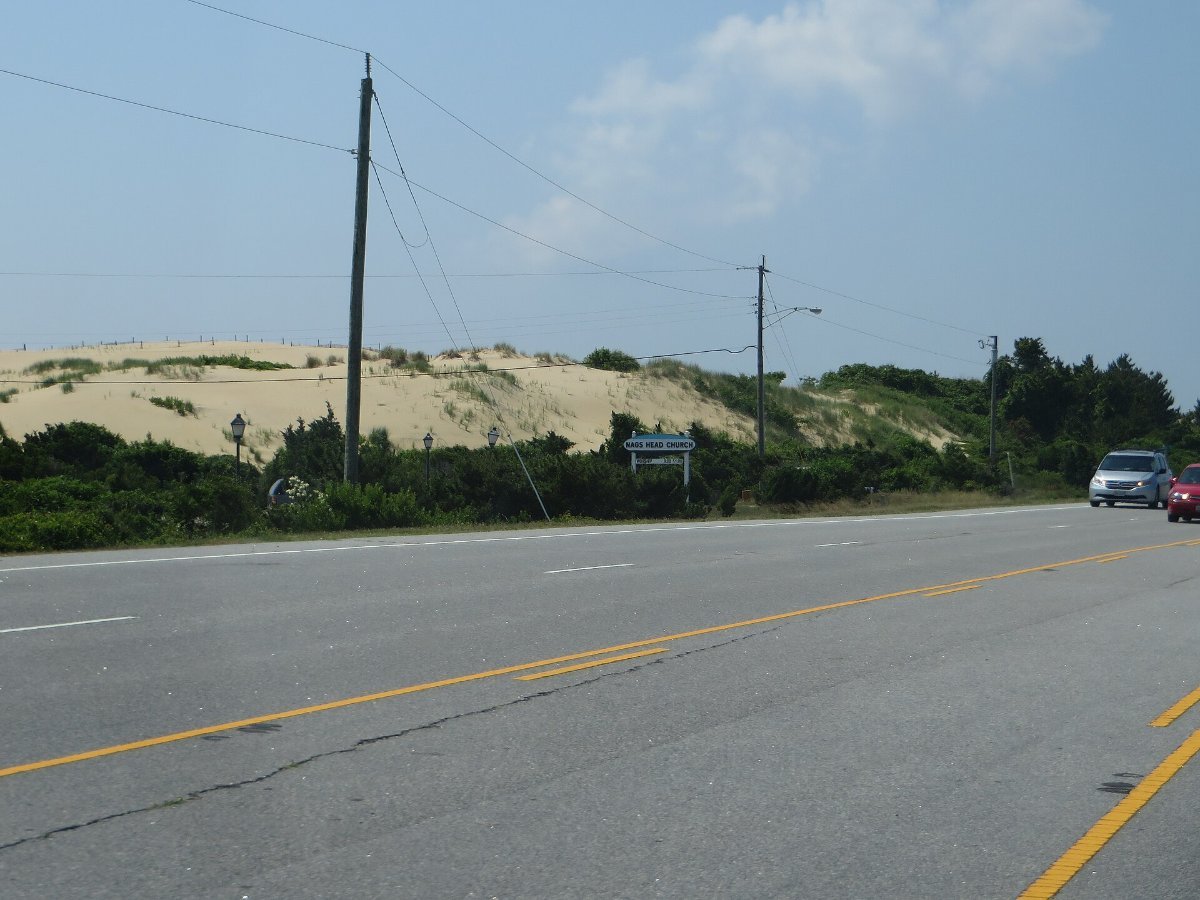
Kitty Hawk, Kill Devil Hills, Nags Head — the busiest stretch, most of the hotels and restaurants, and where the Wright Brothers flew.
Roanoke Island — on the sound side, with Manteo, the prettiest town on the Banks, and the site of the Lost Colony.
Hatteras Island — a long thin strip of national seashore. Emptier, wilder, the lighthouse, and the best surfing and kiteboarding.
Ocracoke — ferry-only, 16km long, about 900 residents, and the best reason to keep driving south.
Kitty Hawk and the first flight
The Wright Brothers came here from Ohio because they needed steady wind, soft sand and privacy, and on 17 December 1903 they flew 37 metres in 12 seconds.
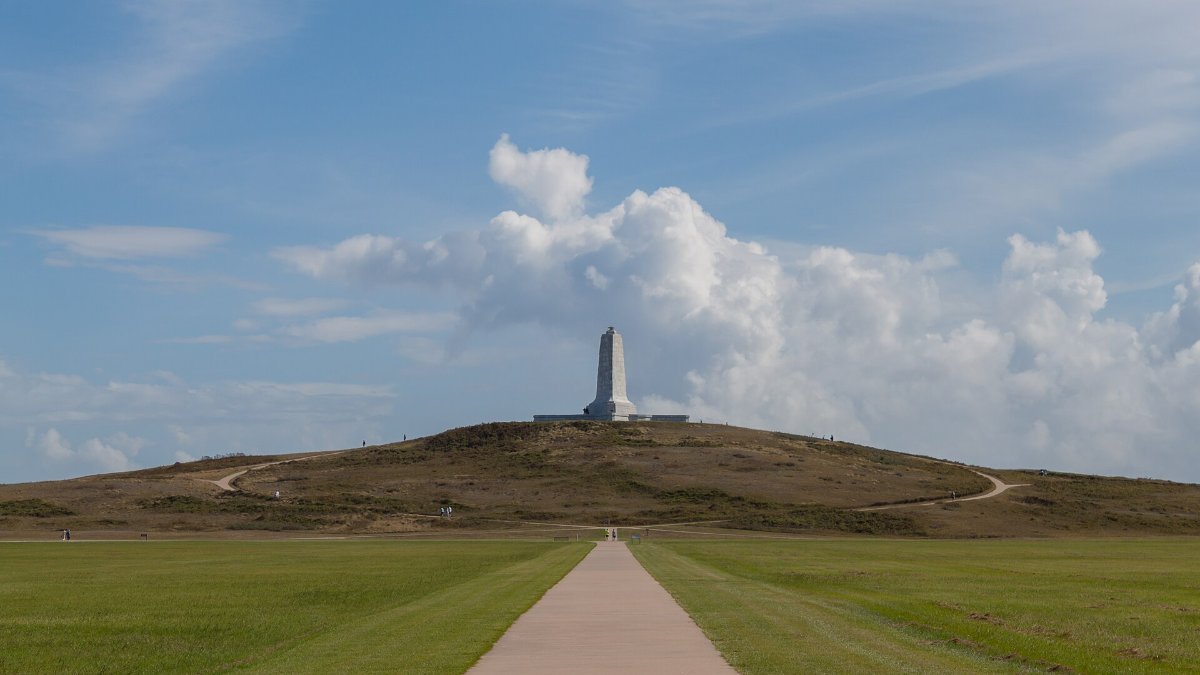
The Wright Brothers National Memorial at Kill Devil Hills marks the takeoff point and the four landing spots of that day with stone markers, which is oddly moving — you can walk the whole first flight in about fifteen seconds.
There’s a full-size reproduction of the Flyer in the visitor centre and a 60-foot granite monument on the dune. Entry is around $10.
Lighthouses and shipwrecks
The waters off Hatteras are called the Graveyard of the Atlantic, where the warm Gulf Stream meets the cold Labrador Current over shifting shoals. Roughly 5,000 wrecks.
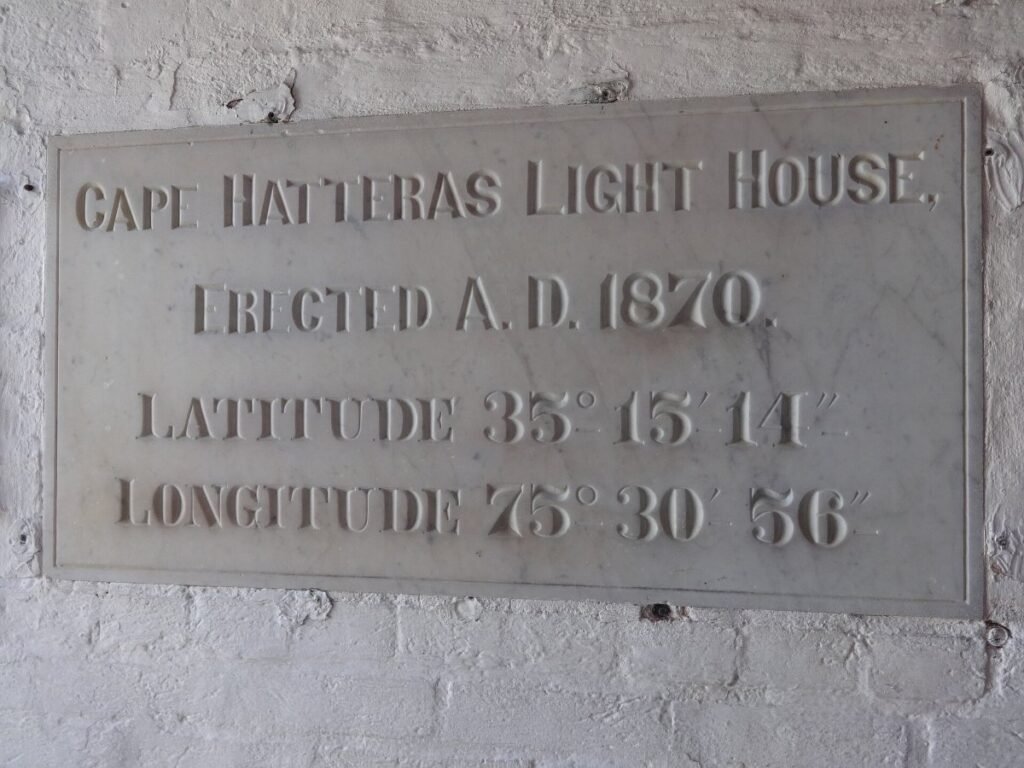
Cape Hatteras Lighthouse is the tallest brick lighthouse in America at 63 metres, with the black-and-white spiral. In 1999 the entire structure was moved 880 metres inland because the sea had come too close — an extraordinary engineering job. You can climb its 257 steps in season, though it periodically closes for restoration, so check.
Bodie Island Lighthouse (horizontal stripes) and Currituck Beach Lighthouse (bare red brick) are both climbable too.
The Graveyard of the Atlantic Museum at Hatteras village is free and better than it needs to be.
Roanoke Island is worth half a day for the other piece of history here. In 1587 a colony of about 115 English settlers was established there, and when a supply ship finally returned three years later everyone had vanished, leaving the word CROATOAN carved into a post. Nobody has ever established what happened. There’s an outdoor drama that has run every summer since 1937 telling the story, plus Elizabethan gardens and a replica 16th-century ship at Manteo.
▶ Watch This Before You Go
Ocracoke is worth the ferry
The free state ferry from Hatteras takes about an hour. Reservations aren’t taken on that route, so you queue; in summer allow for a wait.
Ocracoke village has a small harbour called Silver Lake, a lighthouse from 1823 that’s the oldest still operating in North Carolina, and about 900 people. Some older residents speak with the Hoi Toider brogue, a dialect with traces of 18th-century English that linguists have studied for decades.
Blackbeard was killed in the water just off here in 1718.
The beach on Ocracoke is regularly rated among the best in America, and because access is limited by ferry capacity it never feels crowded.
What to actually do
Jockey’s Ridge State Park — the tallest natural sand dune system on the US Atlantic coast, up to about 30 metres. Hang-gliding lessons run here, and sunset from the top is the local ritual.
Wild horses at Corolla — roughly 100 mustangs on the beaches north of the paved road. Tours around $50 to $60. It’s illegal to approach within 15 metres.
Kiteboarding and windsurfing — the sound side is shallow and consistently windy, which makes it one of the best learning spots in the world.
Cape Hatteras National Seashore — about 110km of undeveloped protected beach.
Fishing — piers, surf casting, and offshore charters out of Oregon Inlet and Hatteras.
When to go
June to August — warm water (25 to 27°C), everything open, and the busiest and priciest by a distance. Book rental houses six to twelve months out.
September and October — the best value. Ocean still warm, crowds gone, prices drop sharply. This is peak hurricane season though, so watch forecasts and take insurance seriously.
April and May — mild, quiet, water still cold.
Winter — most things close. Wild, empty and beautiful if that appeals.
Practical bits
You need a car, and it’s a long drive from anywhere. Norfolk, Virginia is the nearest sizeable airport at about 1.5 hours to the northern beaches. Raleigh is about 4 hours.
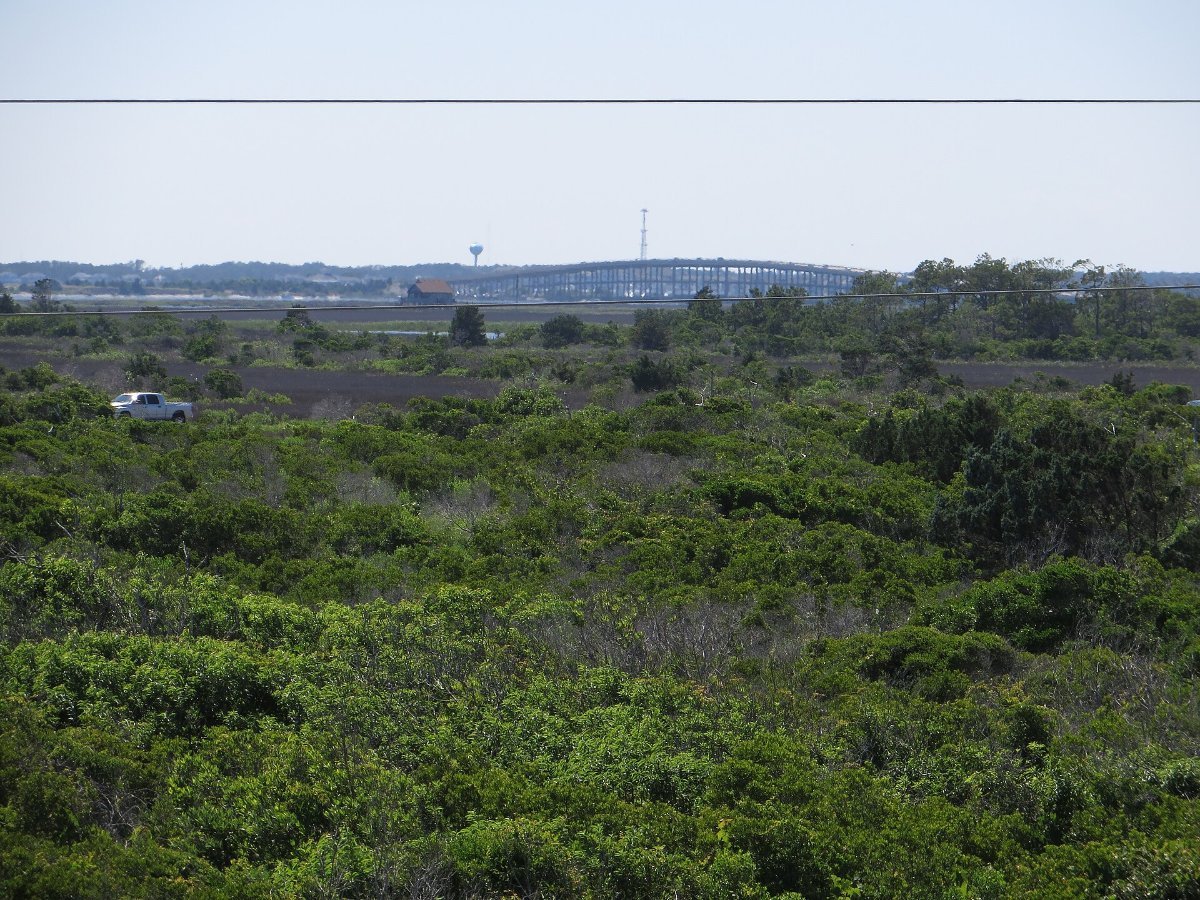
There’s essentially one road, Highway 12, running the length of the islands. It floods and occasionally washes out in storms, which can cut off Hatteras entirely for a time.
Most accommodation is weekly rental houses, usually Saturday to Saturday, which is why traffic is horrendous on Saturdays and fine on Wednesdays.
Rip currents are the real hazard here, not sharks. Swim near lifeguards and learn what a rip looks like before you get in.
FAQ
How long do I need? A week suits the rental-house rhythm. Three or four days works if you’re focused on one stretch.
Which part should I stay in? Nags Head or Kill Devil Hills for convenience and things to do, Hatteras for quiet and nature, Corolla for upmarket family rentals.
Is it expensive? Summer rentals are. Off season it’s very reasonable.
Are the wild horses guaranteed? Not guaranteed, but tour operators find them the large majority of the time.
Do I need a 4×4? Only for driving on the sand at Corolla or on permitted beach access ramps. Otherwise no.
Best single day? Cape Hatteras Lighthouse in the morning, ferry to Ocracoke, beach, ferry back at sunset.