Puglia Road Trip: The Ultimate 7-Day Itinerary
Puglia is the heel of Italy, and for about thirty years it was the bit everyone drove past on the way to somewhere else. That has changed considerably.
In this guide
What’s here: whitewashed hill towns, olive trees that are genuinely a thousand years old, a coastline with water clearer than most of the Mediterranean, and food that’s poorer and better than the north’s.
Seven days does it properly, north to south. You need a car, there’s no version of this trip on trains.
Days 1 and 2: The Gargano
Start at the top, on the spur of the boot. The Gargano peninsula is a limestone lump sticking into the Adriatic, and it’s the least visited part of Puglia by international travellers.
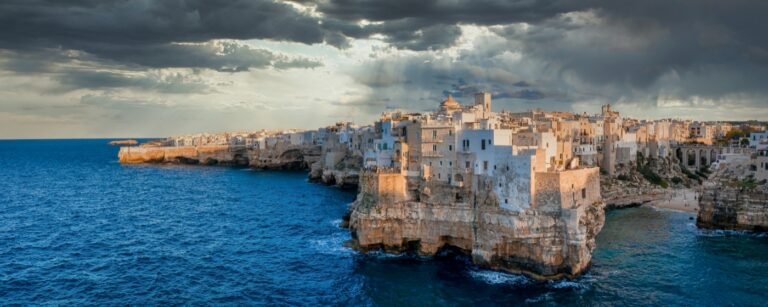
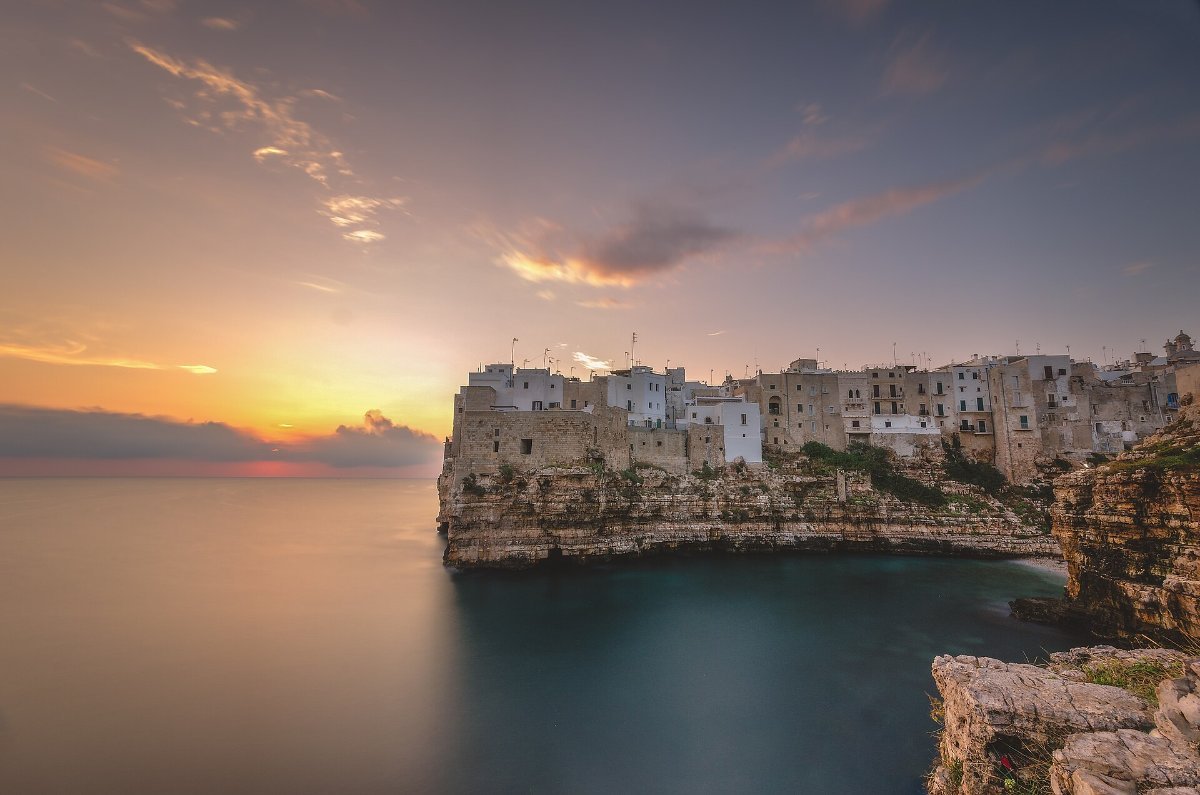
Vieste is the main town, white houses stacked on a headland with a monolith of rock standing in the sea below. Peschici is smaller and arguably prettier.
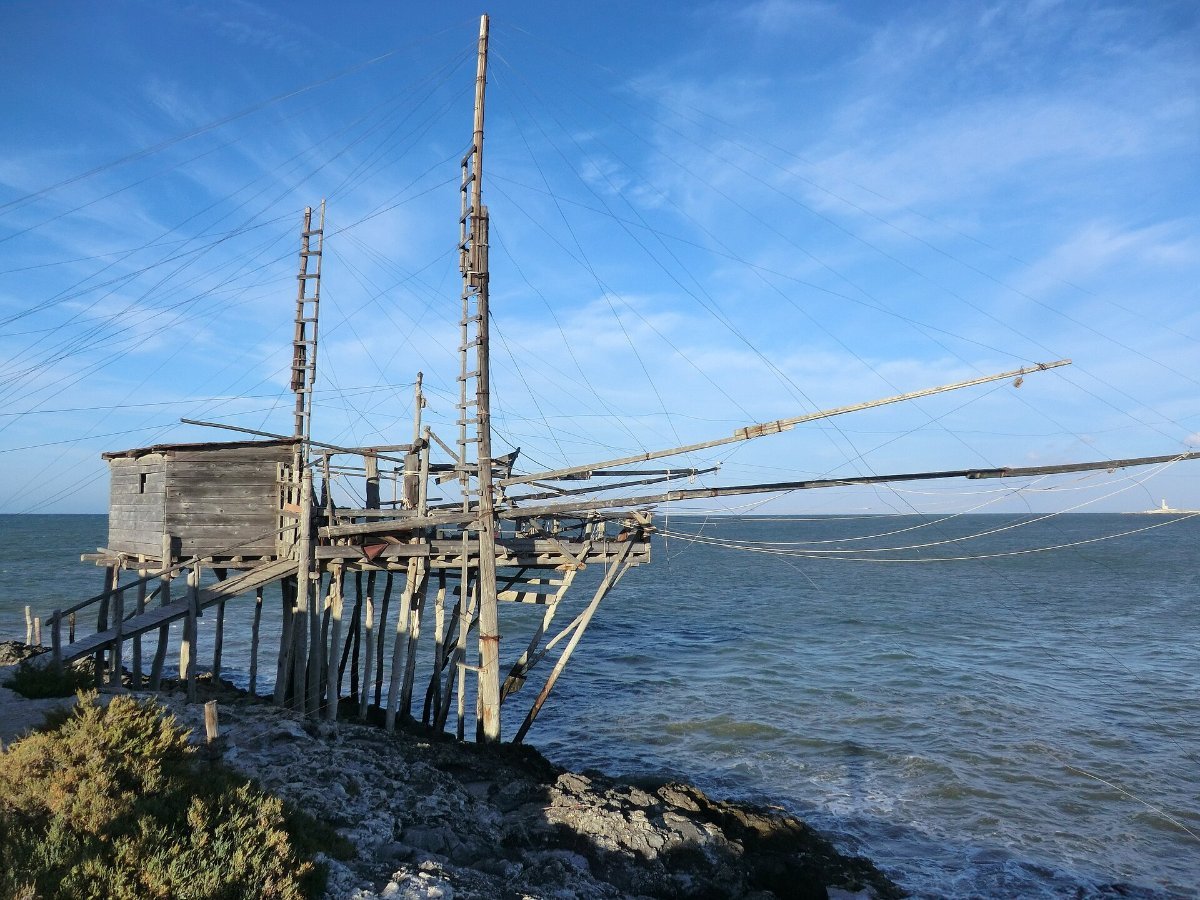
The coast between them has trabucchi, ancient wooden fishing platforms on stilts with net arms reaching out over the water. Several now operate as restaurants, which is a genuinely lovely way to eat fish.
Inland, the Foresta Umbra is a beech forest that feels like it belongs in Germany rather than southern Italy. Good on a hot day.
Day 3: Down to the Valle d’Itria
Drive south past Bari and into the Valle d’Itria, which is the bit you’ve seen on Instagram.
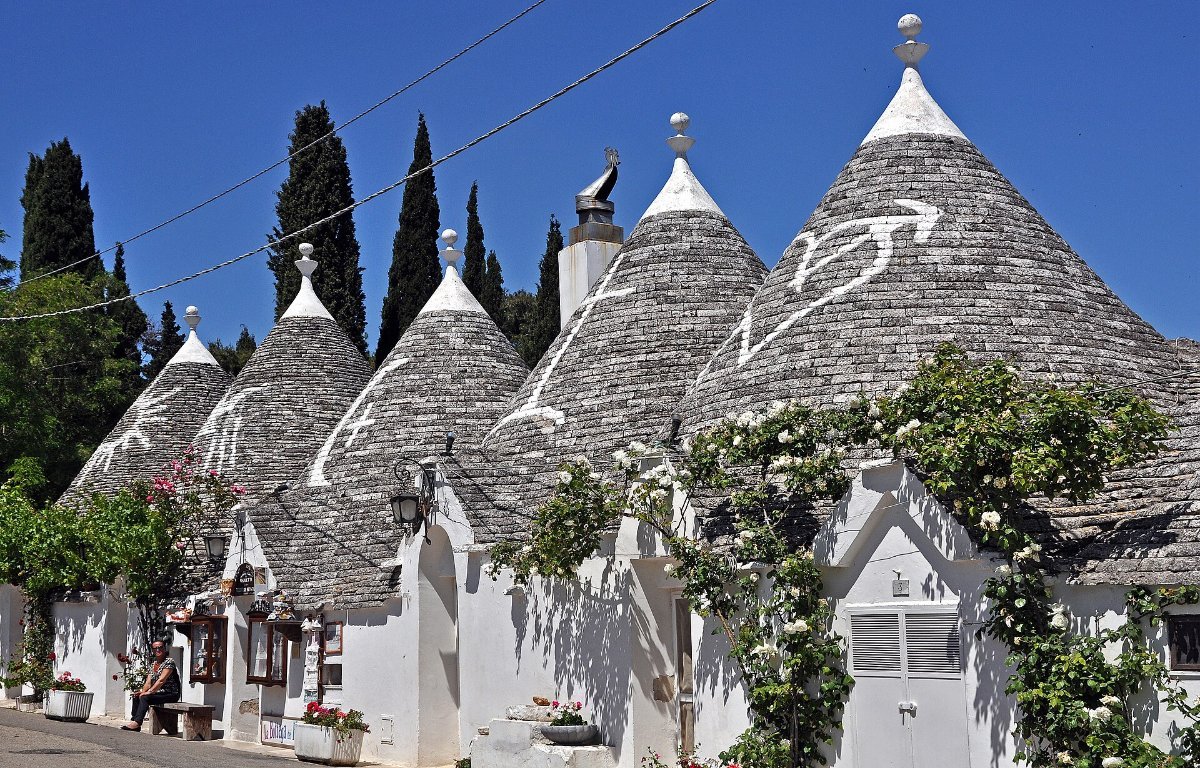
Alberobello is the trulli town: over 1,500 conical drystone houses, a UNESCO site, and completely unlike anything else in Europe. They were built without mortar so they could be dismantled quickly when the tax inspector came, which is a very southern Italian origin story.
Yes it’s touristy. Go early or late, walk up into the Rione Aia Piccola quarter where people still live, and it’s still remarkable.
Locorotondo and Cisternino nearby are round white hill towns with a fraction of the visitors. Cisternino’s butchers grill your meat while you wait, which is dinner sorted.
▶ Watch This Before You Go
Day 4: Ostuni and the Olive Groves
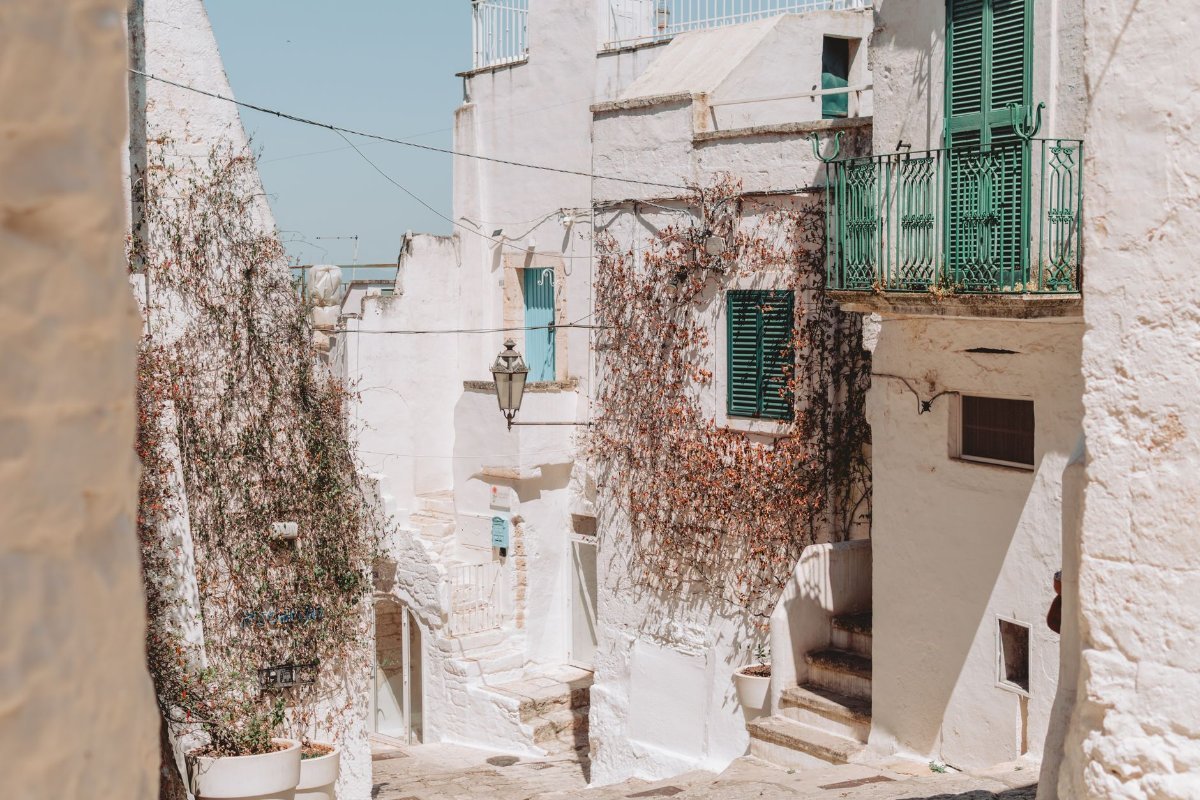
Ostuni is called the White City and it sits on a hill eight kilometres from the sea, visible for miles as a pale smudge above the green.
Wander the old town without a plan. It’s a maze of whitewashed lanes, arches and staircases, and getting lost is the activity. The cathedral has a rose window that’s worth the climb.
The plain below is covered in olive trees, some of them 1,500 years old, gnarled into shapes that look sculpted. Several estates do tastings, and Puglian olive oil is the reason Italy has olive oil.
Note that Xylella disease has killed millions of trees down here since 2013, and you’ll see the dead groves. It’s genuinely sad and worth understanding.
Day 5: Lecce
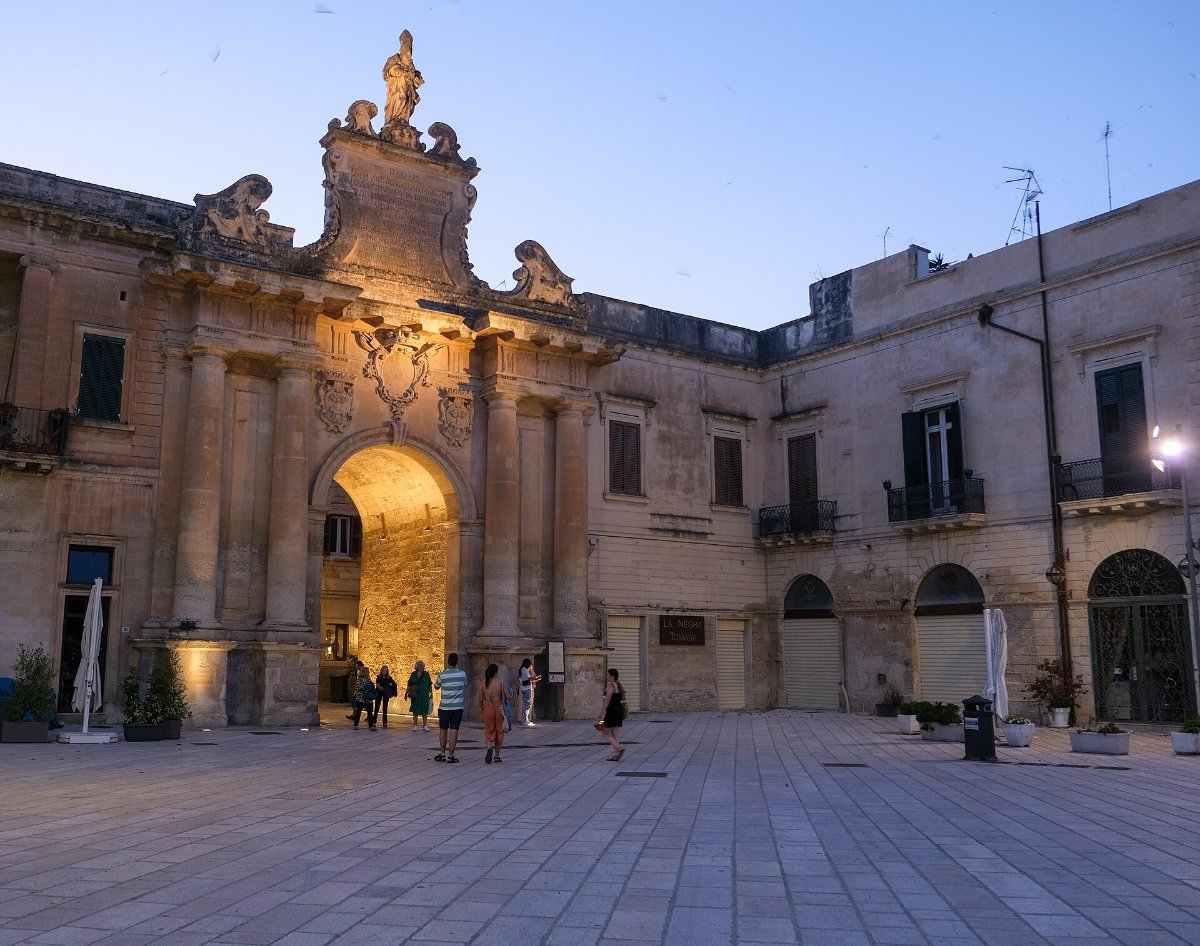
Called the Florence of the South, which is a lazy comparison but you can see why. The local limestone is soft enough to carve like butter, and in the 17th century they went absolutely mad with it.
Barocco leccese covers every church front in cherubs, gargoyles, fruit and animals, and the Basilica di Santa Croce is the maximalist peak of it. It’s almost too much, which is the point.
There’s also a Roman amphitheatre in the main square, half excavated, sitting there casually under the cafe tables.
Lecce is a university town so it’s lively at night in a way most southern towns aren’t. Best evening of the trip.
Day 6: The Salento Coast
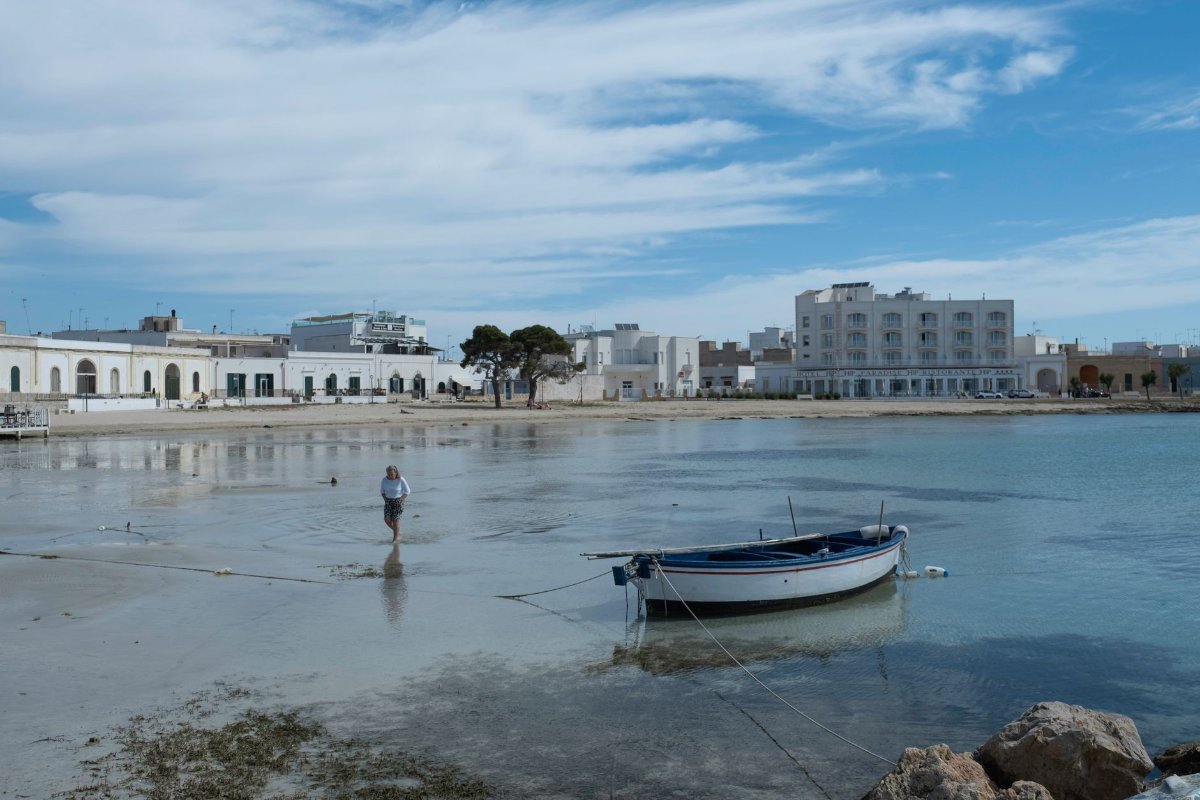
The very bottom, where the Adriatic meets the Ionian and the water goes properly Caribbean.
Otranto on the east coast is the easternmost town in Italy, with a Norman cathedral containing a vast 12th century floor mosaic. Santa Maria di Leuca at the actual tip is where the two seas meet.
The west coast around Gallipoli and Porto Cesareo has the sandy beaches and warmer, calmer water. The east coast has rocky coves and clearer water.
Pescoluse gets called the Maldives of Salento, which is overselling it slightly and is still a very good beach.
Day 7: Matera
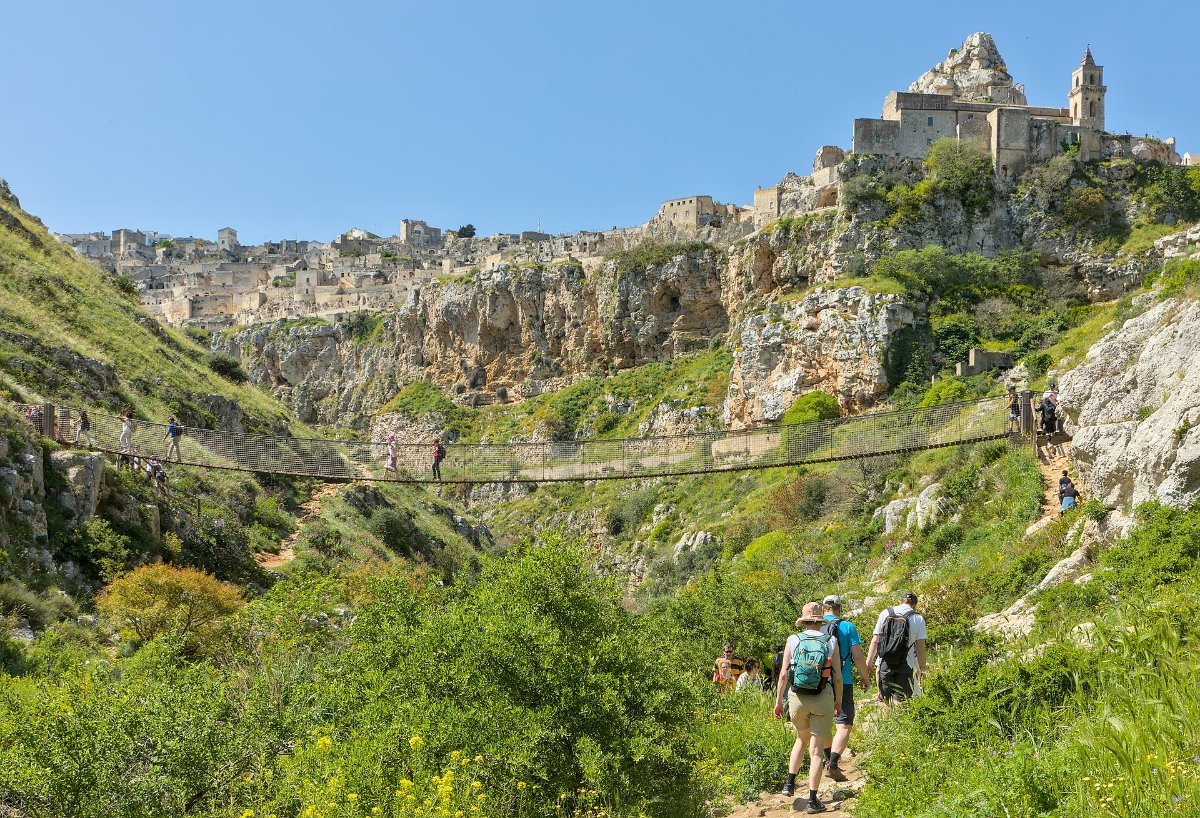
Technically Basilicata rather than Puglia, and you’d be daft to be this close and skip it.
Matera’s sassi are cave dwellings carved into a limestone gorge, continuously inhabited for around 9,000 years, which makes it one of the oldest lived-in settlements on earth. Until the 1950s families lived there in genuine poverty with animals, and the government forcibly relocated everyone.
Now it’s a UNESCO site, restored, with hotels inside the caves. The turnaround is remarkable and slightly uncomfortable.
Go at dusk when the lights come on across the gorge. It’s one of the great views in Italy.
Eating in Puglia
This is cucina povera, poor cooking, and it’s better for it. Orecchiette, little ear-shaped pasta, usually with turnip tops and anchovy. Burrata, invented here, and eaten within a day of being made.
Raw fish is a Puglian thing that surprises people. Sea urchins, raw prawns, marinated anchovies, all along the Adriatic coast.
Primitivo and Negroamaro are the local reds and they’re big, warm and cheap. A very good bottle costs less than a mediocre one in Tuscany.
The Practical Bits
Fly into Bari or Brindisi. Bari for the north of this route, Brindisi if you want to start in the south and run it backwards.
Hire a small car. The old town streets were built for donkeys and the ZTL restricted zones will fine you by post months later.
Go in May, June, September or October. July and August are very hot and the coast fills with Italian holidaymakers, since Puglia is where Italy holidays 🙂
Common Questions
How many days do you need in Puglia?
Seven for the full north-to-south route. Five works if you skip the Gargano and start in the Valle d’Itria.
Do I need a car in Puglia?
Yes. Trains link the bigger towns slowly, but the hill towns, coast and masserie are unreachable without one.
Is Puglia cheaper than Tuscany?
Considerably, for food, wine and accommodation. It’s one of the best value regions in Italy.
What is a masseria?
A fortified farmhouse, many now converted into hotels. Staying in one is the classic Puglia experience and worth doing for at least a couple of nights.
When is the sea warm enough to swim?
June through to early October, with September usually the best combination of warm water and thinner crowds.