
Most people bolt Grand Teton onto a Yellowstone trip and give it a day. That’s backwards. Yellowstone has the geysers and the crowds; Grand Teton has mountains that come straight up out of a flat valley with no foothills in the way, which is why every photograph of it looks slightly unreal.
They’re 50km apart and connected by one road. Do both. Just don’t treat this one as the warm-up.
Why it looks like that
The Tetons rise about 2,100 metres directly off the valley floor with nothing in between. Most mountain ranges ease you in with foothills. This one doesn’t, because it’s a fault-block range — the valley dropped and the range rose along the same fault line.
The practical effect: you get the full mountain view from the road, from your hotel, from the petrol station. You don’t have to hike for it.
It also means the park rewards low-effort travellers unusually well. In most mountain parks the good stuff is a day’s walk away and the roadside version is a compromise. Here the roadside version is the postcard. If someone in your group can’t or doesn’t want to hike, they will still see the thing everybody came for, which is not something you can say about many places on this scale.
The stops that actually matter
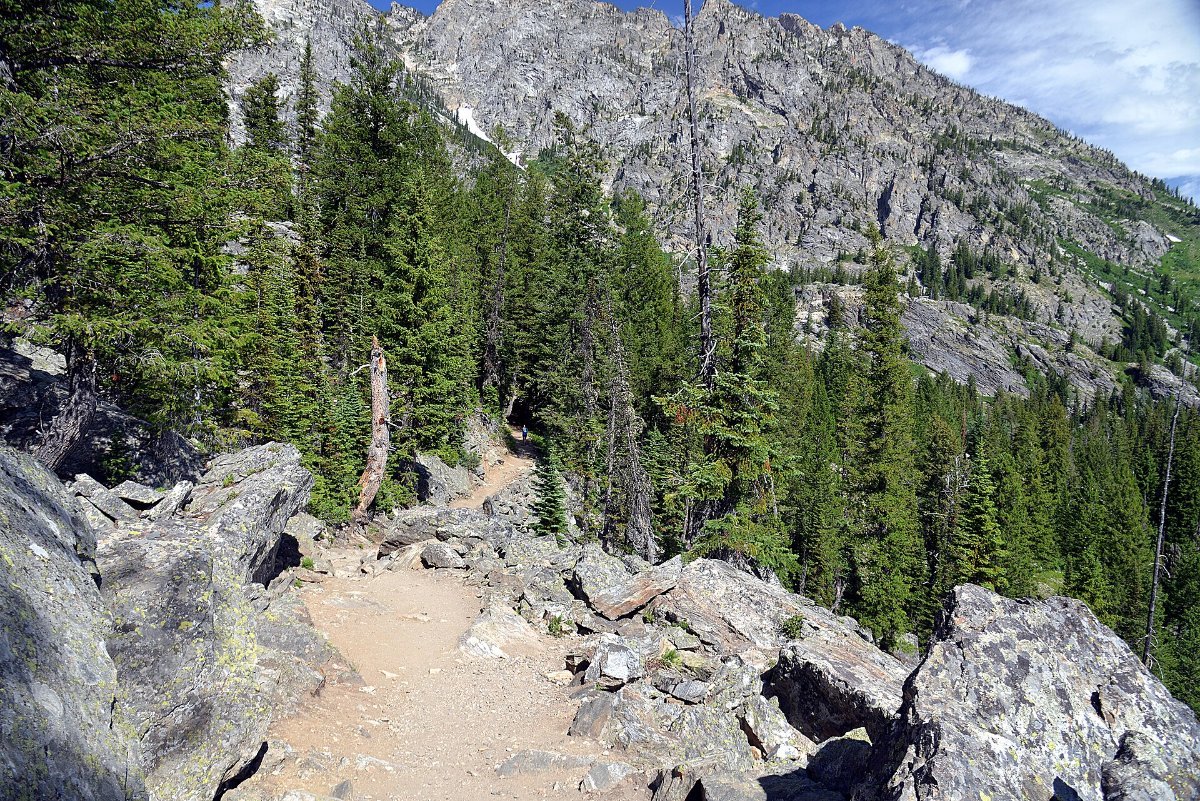
- Jenny Lake — the centre of the park. Take the shuttle boat across (about $20 return) and walk to Hidden Falls and Inspiration Point. That’s roughly 2km from the boat dock and it’s the best short hike here.
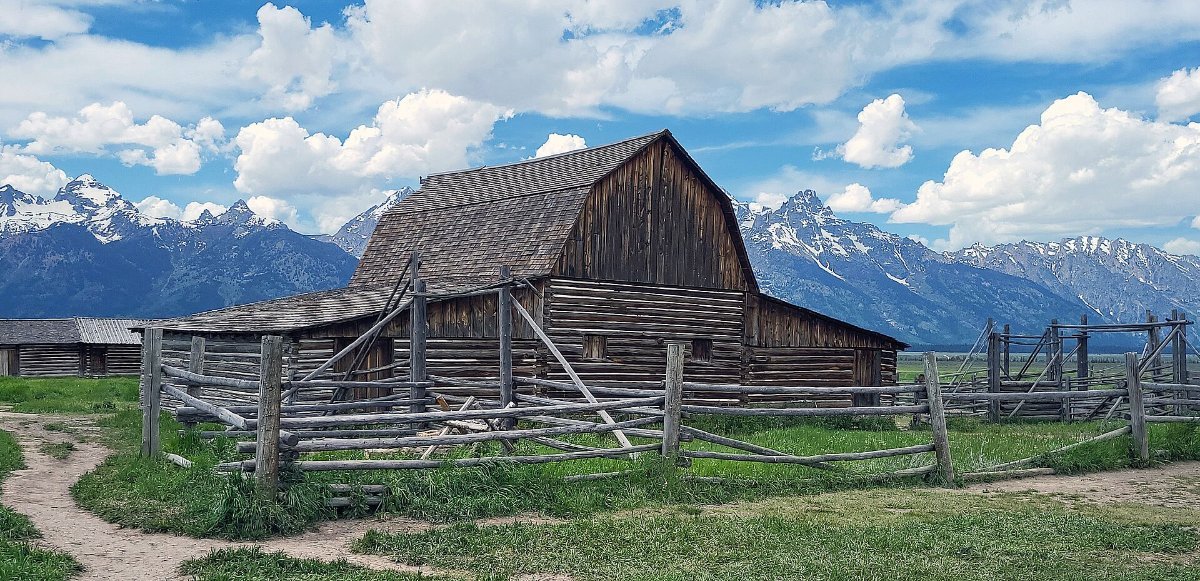
- Mormon Row — the historic barns with the Tetons behind. The most photographed barn in America, and yes it’s worth going at sunrise.
- Schwabacher Landing — beaver ponds with a mirror reflection of the range on a still morning. Short walk from the car park.
- Oxbow Bend — the classic Snake River bend with Mount Moran behind. Sunrise, and superb in late September when the aspens turn.
- Signal Mountain Summit Road — five miles up for a view over the whole valley.
- Jackson Lake — the big one at the north end, with boat rentals and the best sunset light.
Hiking, by effort
Easy: Taggart Lake, 5km return, gentle, ends at a lake with the mountains right behind it. String Lake for a flat walk and the warmest swimming in the park.
Moderate: Cascade Canyon from the Jenny Lake boat, as far as you like — it opens into a proper alpine canyon and most people turn around after an hour or two.
Hard: Delta Lake, about 13km with a steep unofficial scramble at the end, and a glacial lake so blue it looks edited. Amphitheater Lake, 15km and 900 metres of climbing.
Bear spray is not optional here. Both black and grizzly bears are present, it costs about $50, and you can rent it in Jackson. Know how to use it before you set off.
▶ Watch This Before You Go
Wildlife, and where to actually see it
This park is better for wildlife than Yellowstone in some ways because the valley is open and you can see across it.
Moose — Gros Ventre River, Moose-Wilson Road, and the willows around Schwabacher. Dawn and dusk.
Bison and pronghorn — Antelope Flats, easily.
Bears — Moose-Wilson Road most often, though it closes periodically for bear activity.
Elk — the National Elk Refuge just north of Jackson holds thousands over winter, with sleigh rides from December to early April.
Stay 25 metres from most wildlife and 100 metres from bears and wolves. People get this wrong every year and it goes badly for everyone involved.
The moose are the ones people underestimate. They look slow and faintly comic and they injure more people in North America each year than bears do. A cow with a calf in the willows will charge without much warning, and they move far faster than something that shape has any right to. Give them a very wide berth, especially on the Moose-Wilson Road where the vegetation puts you close before you’ve seen them.
Jackson is a proper town
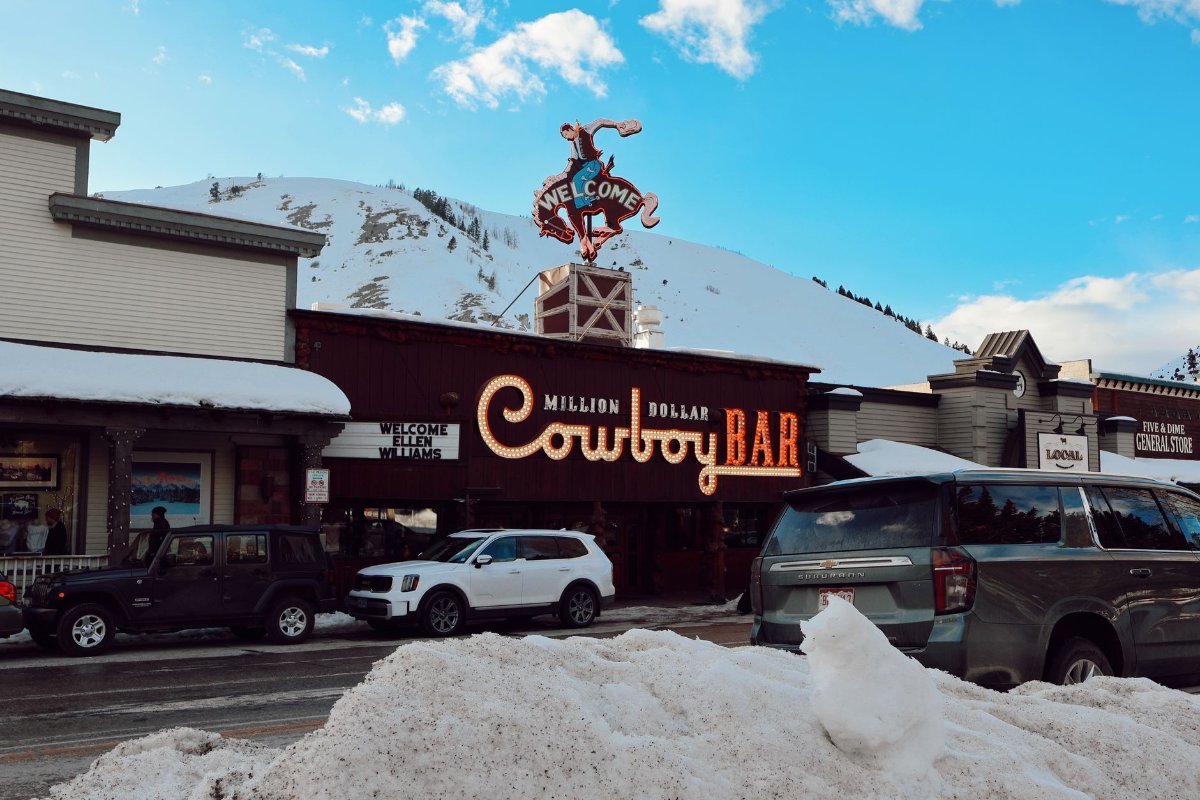
Jackson (the town) sits in Jackson Hole (the valley). The town square has four arches made of shed elk antlers, which is exactly as odd as it sounds.
It’s a ski town with a serious side — Jackson Hole Mountain Resort is one of the most difficult mountains in North America — and a gallery-and-restaurant side that reflects the fact that Teton County is one of the wealthiest in the US.
Eat and drink here, then sleep somewhere cheaper if your budget isn’t infinite.
When to go
Late June to August — everything open, wildflowers, long days, busiest.
September — the best month. Aspens turn gold, elk are bugling, crowds drop sharply, weather usually holds.
Winter — the park road closes and becomes a ski and snowshoe route. Jackson is in full ski season. Beautiful and a completely different trip.
Spring — muddy, many roads and trails still closed into May. Skip unless you want bears just out of hibernation.
Practical bits
Entry is $35 per vehicle for seven days and covers Grand Teton only; Yellowstone is separate. The $80 annual pass makes sense if you’re doing both.
Jackson Hole Airport is inside the national park — the only commercial airport in a US national park — and you land with the Tetons out the window. It’s small and flights are expensive. Salt Lake City is 4.5 hours and much cheaper.
Lodging inside the park (Jenny Lake Lodge, Jackson Lake Lodge, Signal Mountain) books a year ahead. Jackson has more options at high prices. Victor and Driggs in Idaho, over Teton Pass, are the budget play.
Altitude is around 2,000 metres in the valley. Take the first day easy.
Weather here changes fast and hard. Afternoon thunderstorms roll off the range through July and August, and being caught above the treeline on Amphitheater Lake in one is genuinely dangerous. The local rule is to be off exposed ground by early afternoon. Mornings are also calmer, which is when the lakes go glassy and the reflections happen, so the safe plan and the good plan are the same plan.
FAQ
How many days? Two to three for the park. Add three or four if you’re doing Yellowstone as well.
Teton or Yellowstone first? Teton, if you’re flying into Jackson. You’ll appreciate the mountains more before Yellowstone’s crowds wear you down.
Do I need a car? Yes. There’s a limited shuttle in Jackson but nothing useful inside the park.
Is it good with kids? Very. String Lake, the Jenny Lake boat, and the wildlife are all easy wins.
What’s the one thing not to miss? Sunrise at Schwabacher Landing on a still morning. Nothing else in the park comes close.