Acadia National Park in 2 Days: What’s Actually Worth Your Time
Acadia is small for a national park. About 49,000 acres, most of it on an island you can drive around in ninety minutes, and yet somehow it packs in granite cliffs, a fjord, twenty-six mountains and a working fishing town.
In this guide
Two days is genuinely enough here, which you cannot say about most parks. You can see the headline stuff properly and still have time to sit somewhere with a lobster roll.
Here’s the plan.
First, the Reservation Thing
If you want to drive up Cadillac Mountain, you need a timed vehicle reservation. Not a park pass, a separate booking, and they sell out.
They’re released in two batches: most of them 90 days ahead, and a smaller pool at 10am the day before. That second batch is your safety net if you’re planning late.
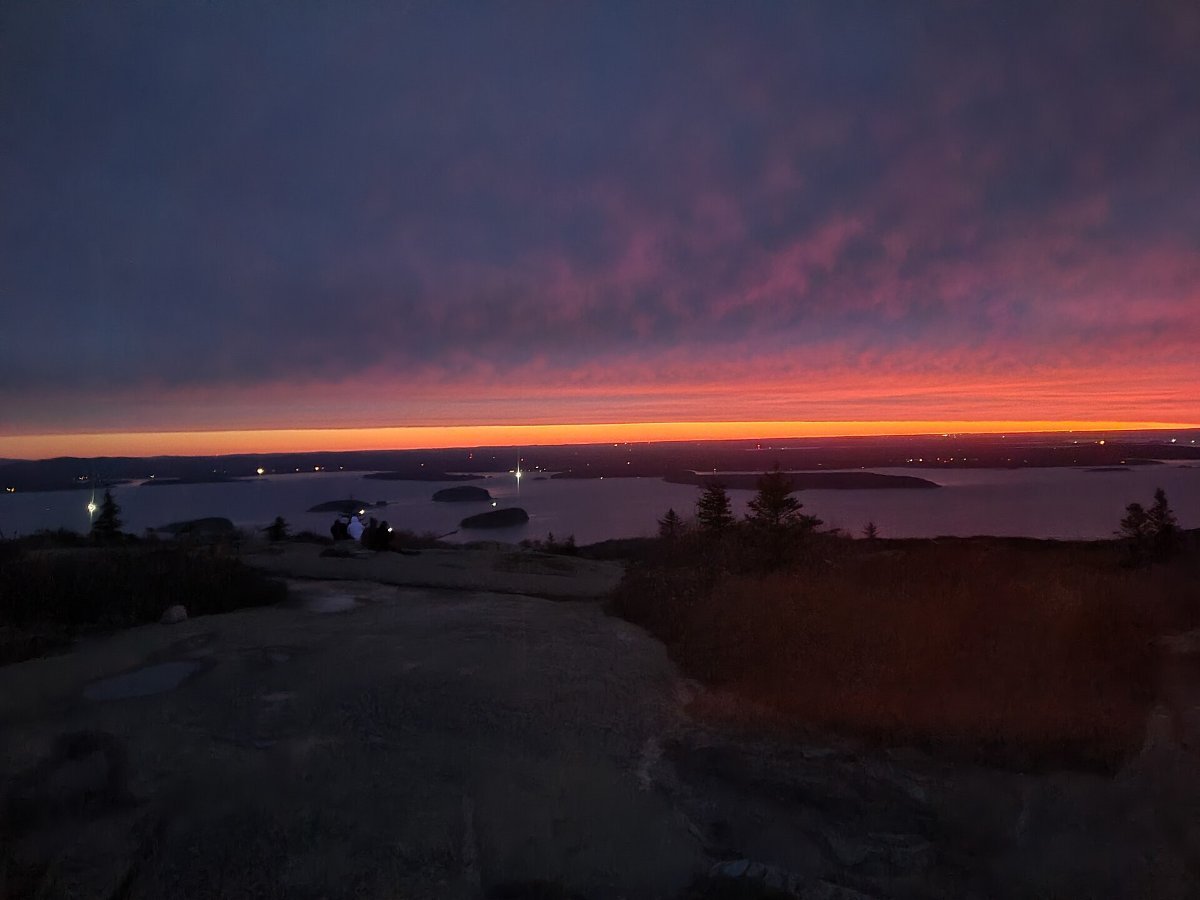
Sunrise slots go fastest, because from early October to early March Cadillac is the first place in the United States to see the sun come up, and everybody wants that.
No reservation? You can hike up. The North Ridge Trail is 4.4 miles round trip and you’ll have earned the view considerably more than the people who drove.
Day 1, Early: Cadillac Mountain
1,530 feet, which is not much, except it starts at sea level and it’s the highest point on the eastern seaboard of the US. The summit is bare pink granite with views over Frenchman Bay and a scattering of islands.
Sunrise is the famous version and involves getting up at an unreasonable hour in the dark and the cold. It’s worth doing once.
Honestly though? Sunset up here is nearly as good, considerably warmer, and you don’t have to set an alarm for 4am on your holiday 🙂
▶ Watch This Before You Go
Day 1, Morning: The Park Loop Road
27 miles, mostly one-way, and it links almost everything on the eastern side of the island. This is the backbone of any Acadia visit.
Sand Beach is a small crescent of shell-sand between granite headlands, and the water sits at about 12 degrees Celsius in August, which is a temperature that makes decisions for you.
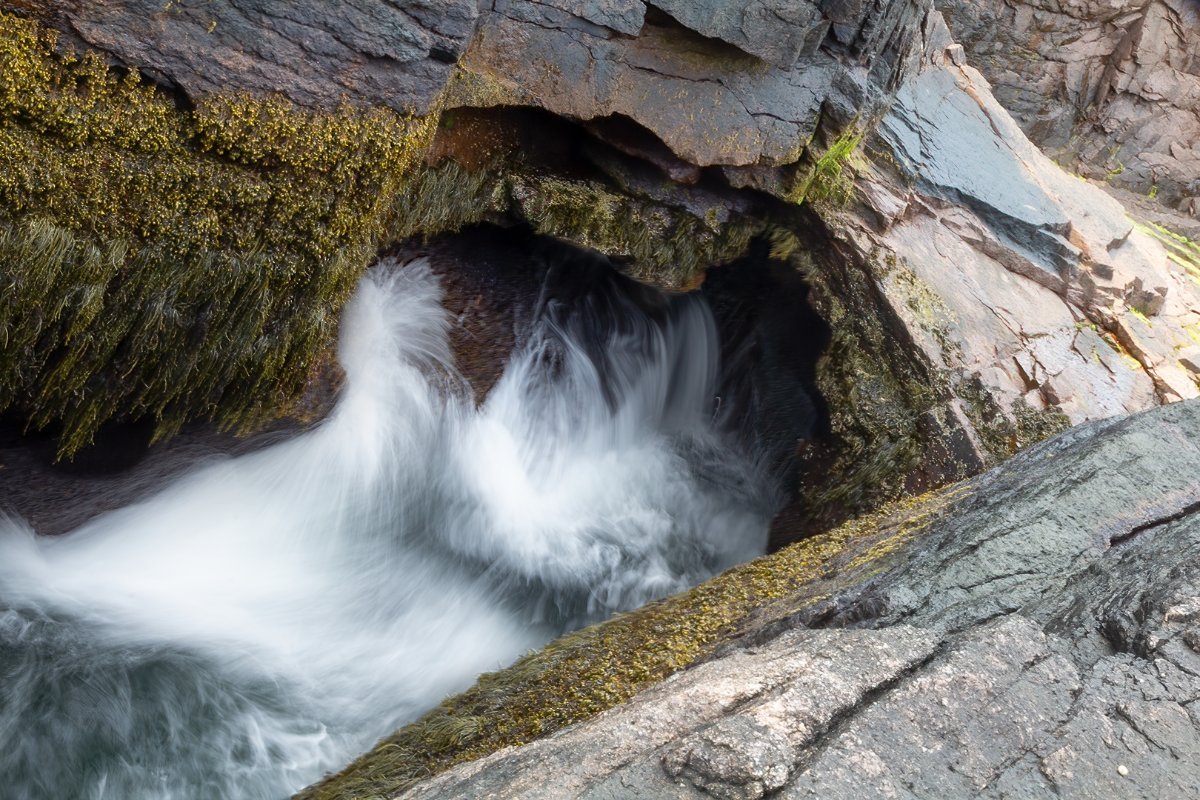
Thunder Hole is a narrow inlet where waves compress into a chamber and boom. Timing matters enormously: go about two hours before high tide with some swell running, or you’ll be looking at a wet rock wondering what the fuss is.
Otter Cliff just beyond is 110 feet of sheer granite straight into the Atlantic, and it’s the single most photogenic spot on the loop.
Day 1, Afternoon: The Ocean Path
Walk it rather than drive it. The Ocean Path runs 2.2 miles from Sand Beach to Otter Point, flat, along the clifftop, and it takes in everything above at walking pace.
Do it one way and take the free Island Explorer shuttle back. The shuttle runs late June to mid October and is genuinely good, which matters because parking at these stops is brutal by 10am.
This is the walk I’d recommend if someone said they only had two hours in Acadia.
Day 1, Evening: Bar Harbor
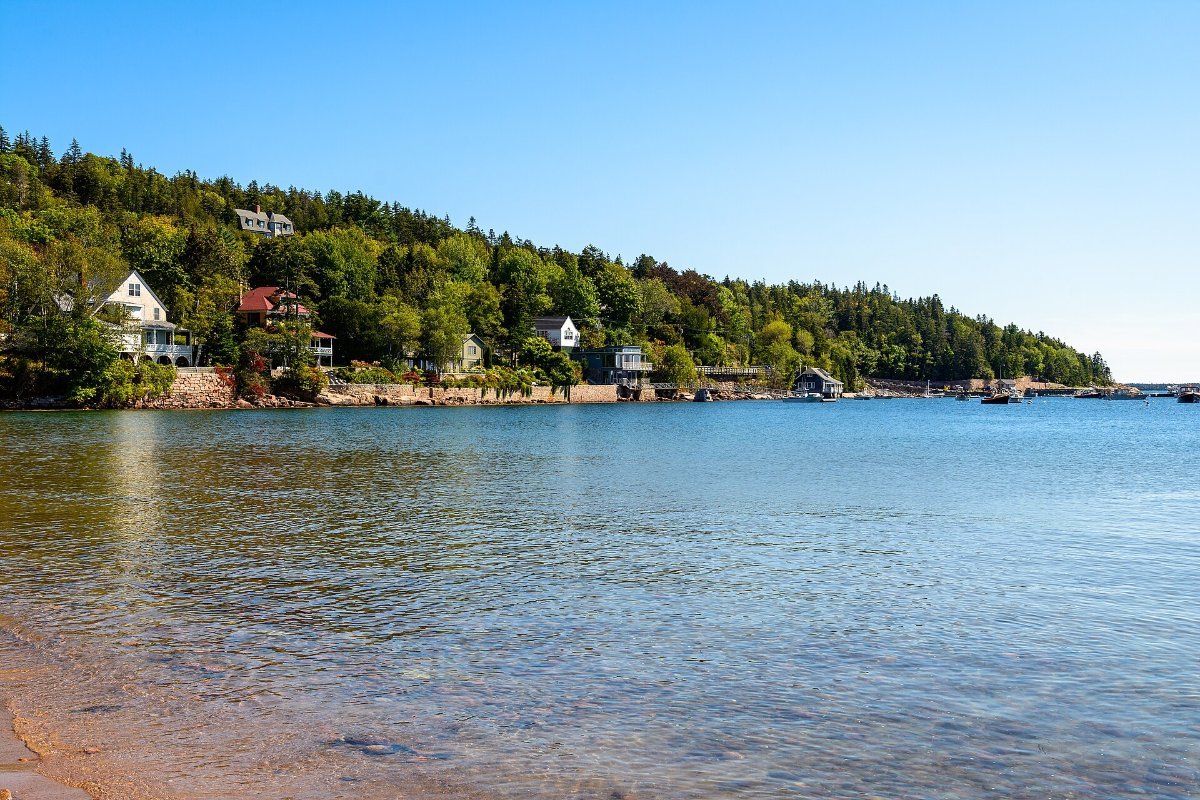
Bar Harbor is where you’ll sleep, eat and buy the fleece you didn’t think you’d need.
It’s touristy, obviously, and it’s also a proper town with a working waterfront and a genuinely nice green looking out over the bay. Cruise ships turn up in summer and the population briefly triples.
The bar itself is worth timing. At low tide a gravel bar emerges connecting the town to Bar Island and you can walk across the sea floor. You get about ninety minutes either side of low water, and every year somebody misjudges it and needs a boat.
Eat lobster. It’s cheaper here than anywhere and arguing about which shack does it best is a local sport.
Day 2, Morning: Jordan Pond
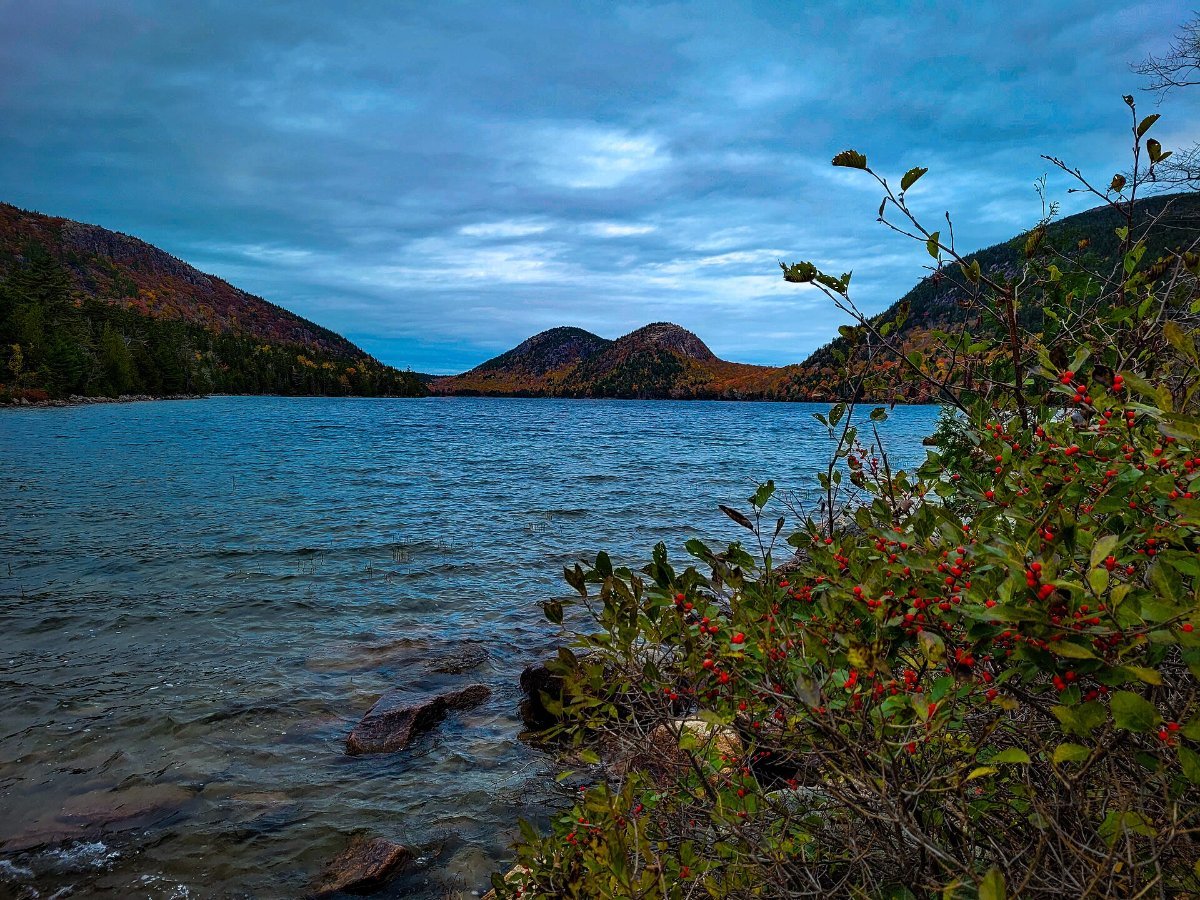
A glacial pond so clear you can see 15 metres down, with two rounded mountains called the Bubbles sitting at the far end like something from a children’s book.
The loop trail is 3.3 miles, flat, and half of it is on wooden planks across boggy ground. Ninety minutes at a stroll and it’s the prettiest easy walk in the park.
Then popovers at Jordan Pond House. It’s a tradition going back to the 1890s, they’re enormous hollow rolls served with jam and butter on a lawn overlooking the water, and yes it’s twee and yes you should do it.
Get there early or book. The queue at lunchtime is properly silly.
Day 2, Midday: The Carriage Roads
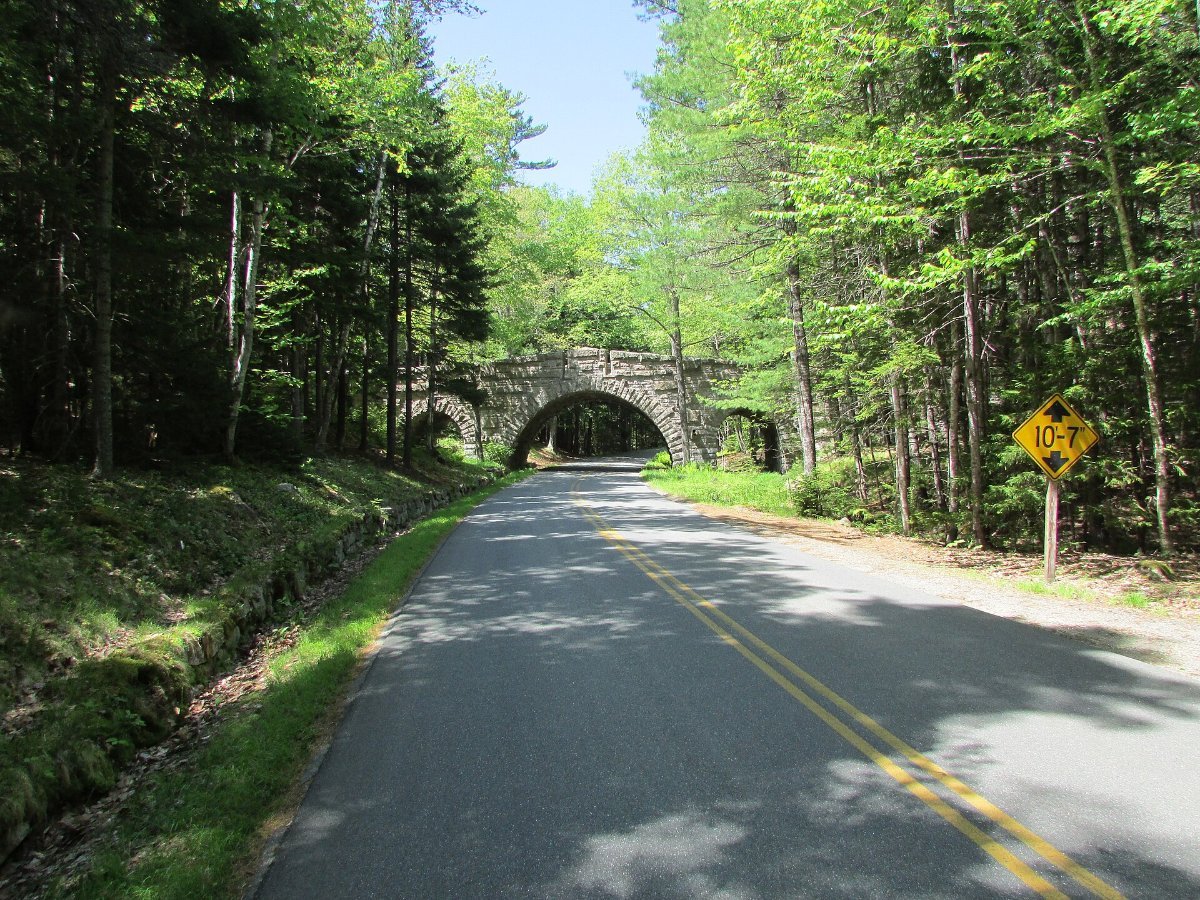
Here’s the thing that makes Acadia unusual. John D. Rockefeller Jr. hated cars, so between 1913 and 1940 he built 45 miles of broken-stone roads through the park with no motor vehicles allowed. They’re still car-free.
Sixteen hand-cut granite bridges, gentle gradients, and a surface that suits bikes, walkers and horses. Rent a bike in Bar Harbor and do the Eagle Lake loop, which is about six miles and almost entirely flat.
It’s the most civilised couple of hours in any national park I can think of. Genuinely, this is the bit people remember.
Day 2, Afternoon: The Quiet Side
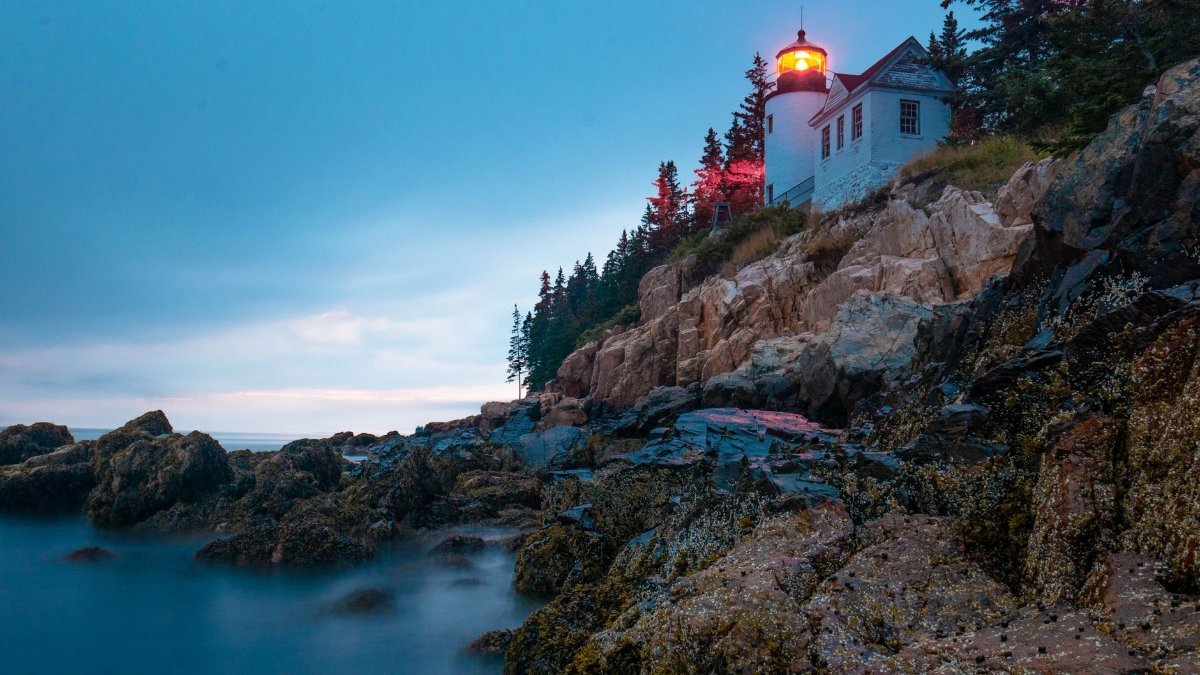
The western half of Mount Desert Island gets a fraction of the visitors and locals actually call it the quiet side.
Bass Harbor Head Light sits on the rocks at the southern tip and is the most photographed lighthouse in Maine. Small car park, short walk, best at sunset.
Southwest Harbor and Bernard are working fishing villages rather than tourist towns. Echo Lake actually warms up enough to swim in, unlike the ocean.
If you have a third day, this is where I’d spend it.
When to Go
September is the answer. Warm days, cold nights, the crowds thin out after Labor Day, and the colour starts at the end of the month.
October is beautiful and busy, and the park is at its most photogenic. July and August are peak everything. Winter is stunning and most facilities close, with the Park Loop Road shut to cars.
Fog is a permanent possibility. Maine coast in June is famously grey, and a foggy day on the Ocean Path is atmospheric rather than ruined.
Common Questions
Do I need a car in Acadia?
Useful but not essential in summer, when the free Island Explorer shuttle covers most of the park and Bar Harbor. Outside that season, yes.
How much does Acadia cost?
35 dollars per vehicle for seven days, plus the separate Cadillac Mountain vehicle reservation if you want to drive up.
Is 2 days enough for Acadia?
Yes, comfortably, for the main sights. Three days lets you add the quiet side and a proper mountain hike like the Beehive or Precipice.
When is the best time for sunrise on Cadillac?
From roughly 7 October to 6 March it’s the first sunrise in the country, which is when the reservations are hardest to get.
Are the carriage roads suitable for kids?
Very. Gentle gradients, no traffic and a crushed stone surface. It’s the easiest family cycling in any national park.